
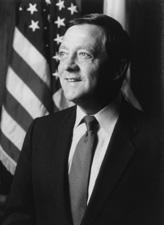
Historical · U.S. Senate · California
John Seymour
Former U.S. Senator from California · 1991–1993 · Republican · Class 1
John Seymour represented California in the United States Senate (1991–1993) for the Republican party. The page below collects sourced biographical facts, term history, committee roles, and provenance for Seymour.
Bioguide ID: S000269
Key facts
- Full name
- John Seymour
- State
- California
- Party
- Republican
- Senate class
- Class I
- Senate service
- 1991–1993
- First Senate term
- 1991
- Status
- Left office
- Current term ends
- —
- Born
- 1937
- Bioguide ID
- S000269
- Committee assignments
- —
- Dataset version
- 1.20260602
Biographical narrative
892 words · sourced from the Wikipedia REST extract
John Seymour is a former United States Senator from California, representing the Republican Party. He served in the Senate from 1991 until the conclusion of his term on January 3, 1993. A member of Senate Class 1, Seymour's tenure in the Senate was marked by his involvement in various legislative initiatives and his representation of California's interests at the federal level. Born on December 3, 1937, Seymour's political career and contributions to public service are notable aspects of his biography.
Early life and career
John Seymour was born in December 1937, which places his formative years during a time of significant social and political change in the United States. Growing up in the mid-20th century, he would have been influenced by the events surrounding the post-World War II era, the civil rights movement, and the evolving landscape of American politics. While specific details about his early education and family background are not provided, it is common for individuals in public service to have experiences that shape their perspectives and values.
Before entering the political arena, Seymour likely engaged in various professional endeavors that would prepare him for a career in public service. Many politicians have backgrounds in business, law, or community service, which can provide them with the skills necessary for governance and leadership. However, the specifics of Seymour's early career prior to his Senate election are not detailed in the available information.
Seymour's political career began to take shape when he decided to run for the United States Senate. His campaign was part of a broader Republican strategy to gain influence in California, a state that has historically been a significant battleground for both major political parties. The political landscape in California during the late 20th century was characterized by a diverse electorate and a range of pressing issues, including economic growth, environmental concerns, and social policy debates. These factors likely influenced Seymour's approach to his campaign and his subsequent legislative priorities.
Senate tenure
John Seymour's Senate career commenced in 1991 when he was elected to represent California. His election came at a time when the Republican Party was seeking to solidify its presence in a state that had seen a shift in political dynamics. During his time in the Senate, Seymour was part of a larger body that was tasked with addressing critical national issues, including economic policy, healthcare, and foreign relations.
Seymour served in the Senate until January 3, 1993, marking a relatively brief tenure in comparison to many of his contemporaries. The early 1990s were a period of significant change in American politics, with the end of the Cold War and the emergence of new global challenges. Senators during this time were often involved in discussions about the implications of these changes for domestic policy and international relations.
Throughout his time in the Senate, Seymour participated in various legislative activities and contributed to debates on key issues facing the nation. While specific details about the bills he sponsored or supported are not provided, it is typical for senators to engage in a range of legislative efforts that reflect their party's platform and the interests of their constituents. The Senate operates as a deliberative body where members work collaboratively and sometimes in opposition to advance their legislative agendas.
Seymour's tenure concluded in January 1993, and he did not seek re-election. The reasons for his departure from the Senate are not specified, but it is common for politicians to step down due to a variety of factors, including personal decisions, changes in political climate, or the desire to pursue other opportunities.
Legislative focus and committees
During his time in the Senate, John Seymour was involved in various legislative initiatives that reflected the priorities of the Republican Party and the interests of his constituents in California. Although specific legislative achievements are not detailed in the available information, senators typically focus on issues that resonate with their electorate, such as economic development, education, healthcare, and environmental policy.
Seymour's role in the Senate likely included participation in committee work, which is a critical aspect of the legislative process. Senators are often assigned to committees that align with their interests and expertise, allowing them to influence legislation in specific areas. Committees play a vital role in reviewing proposed legislation, conducting hearings, and making recommendations to the full Senate. While the specific committees Seymour served on are not mentioned, it is common for senators to engage in committees related to finance, foreign relations, or other areas pertinent to their state's needs.
In addition to committee work, senators often engage in outreach to their constituents, advocating for policies that address local concerns. This engagement is essential for maintaining a connection with the electorate and ensuring that their voices are heard in the legislative process. Seymour's tenure would have included efforts to communicate with Californians about federal initiatives and to represent their interests in Washington, D.C.
Overall, John Seymour's time in the Senate was characterized by his participation in a dynamic political environment and his engagement with a range of legislative issues. His contributions to the Senate and the state of California reflect the complexities of governance and the responsibilities of elected officials in representing the interests of their constituents. Following his departure from the Senate in 1993, Seymour's political career transitioned, but his time in office remains a part of California's legislative history.
Notable legislation
Sponsored and co-sponsored legislation for John Seymour is pending operator curation. The biographical narrative above carries the same provenance trail until per-bill rows are written.
Sources
- [1]https://en.wikipedia.org/wiki/John_Seymour_(California_politician)Wikipedia · retrieved 2026-06-02
Notable quotes
Sourced quotes for John Seymour are pending operator curation. Narrative-scope provenance remains attached below.
Sources
- [1]https://en.wikipedia.org/wiki/John_Seymour_(California_politician)Wikipedia · retrieved 2026-06-02
Key positions
Curated policy positions for John Seymour are pending operator review. The biographical narrative above carries the same provenance trail until per-topic positions are written.
Sources
- [1]https://en.wikipedia.org/wiki/John_Seymour_(California_politician)Wikipedia · retrieved 2026-06-02
Terms served
- 1991–1993U.S. Senate · Term 1 · Republican · Class I
Sources & provenance
Every attributable claim above carries a per-section [N] marker that resolves to the corresponding URL below. Each entry records the upstream provider, the canonical URL, and the timestamp at which the source was retrieved by the ingest pipeline.
Key facts
- https://bioguide.congress.gov/search/bio/S000269bioguide · retrieved 2026-06-02
- https://www.govtrack.us/congress/members/409770govtrack · retrieved 2026-06-02
Biographical narrative
- https://en.wikipedia.org/wiki/John_Seymour_(California_politician)wikipedia · retrieved 2026-06-02
Find your senator
Every U.S. state elects two senators. Browse California’s delegation, the full former-senator roster, or explore the role and term length.
Related on The Candidate
- Preceded by Pete WilsonEarlier holder of the California Class I Senate seat · Republican.Open
- Succeeded by Laphonza ButlerLater holder of the California Class I Senate seat · Democratic.Open
- Aaron SargentFormer U.S. Senator from California · RepublicanOpen
- Abram WilliamsFormer U.S. Senator from California · RepublicanOpen
- Alan CranstonFormer U.S. Senator from California · DemocraticOpen
- Barbara BoxerFormer U.S. Senator from California · DemocraticOpen