
Historical · U.S. Senate · Connecticut
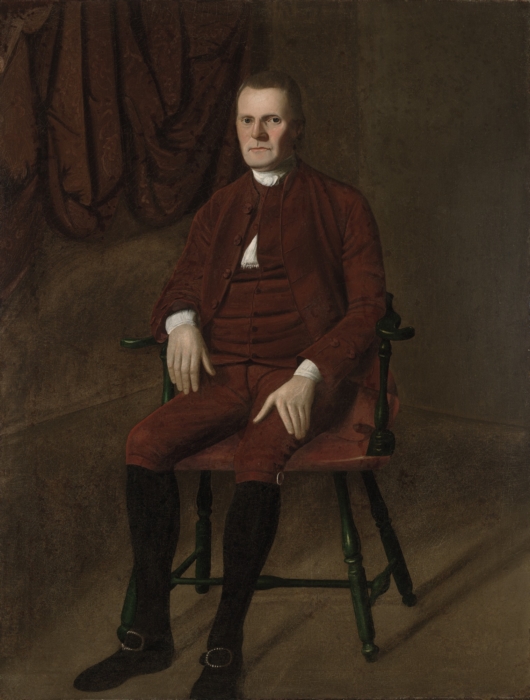
Roger Sherman
Former U.S. Senator from Connecticut · 1791–1793 · Pro-Administration · Class 3
Roger Sherman represented Connecticut in the United States Senate (1791–1793) for the Pro-Administration party. The page below collects sourced biographical facts, term history, committee roles, and provenance for Sherman.
Bioguide ID: S000349
Key facts
- Full name
- Roger Sherman
- State
- Connecticut
- Party
- Pro-Administration
- Senate class
- Class III
- Senate service
- 1791–1793
- First Senate term
- 1791
- Status
- Left office
- Current term ends
- —
- Born
- 1721
- Bioguide ID
- S000349
- Committee assignments
- —
- Dataset version
- 1.20260602
Biographical narrative
1,055 words · sourced from the Wikipedia REST extract
Roger Sherman was a prominent early American politician, lawyer, and a Founding Father of the United States, known for his significant contributions to the formation of the nation. Serving as a U.S. Senator from Connecticut, Sherman was a member of the Pro-Administration party and held office from 1791 until his death in 1793. He is notably recognized as the only individual to have signed all four of the foundational documents of the United States: the Continental Association, the Declaration of Independence, the Articles of Confederation, and the Constitution.
Early life and career
Roger Sherman was born on April 19, 1721, in Newton, Massachusetts, into a family of farmers. His parents, William and Mehetabel Sherman, moved the family to Stoughton, Massachusetts, when Roger was two years old. His educational background was limited, primarily consisting of informal instruction from his father's library and local grammar schools. Despite this lack of formal education, Sherman demonstrated a strong aptitude for learning, aided by the mentorship of Rev. Samuel Dunbar, a Harvard-educated minister who recognized his potential.
Following the death of his father in 1743, Sherman relocated with his mother and siblings to New Milford, Connecticut. There, he partnered with his brother William to establish the town's first store, which also served as a cobbler shop. His early career included a role as the county surveyor, a position he secured in 1745. This role provided him with a steady income, allowing him to acquire land and gain a favorable reputation within the community. In addition to his surveying work, Sherman published a series of almanacs between 1750 and 1761, which showcased his skills in astronomical calculations.
Sherman's legal career began in earnest when he studied law independently and passed the bar examination in 1754, despite lacking formal legal training. He quickly became involved in local governance, serving as a representative for New Milford in the Connecticut House of Representatives during the late 1750s and early 1760s. His political career advanced as he was appointed as a justice of the peace in 1762 and later as a judge of the court of common pleas in 1765. By 1766, he was elected to the Governor's Council of the Connecticut General Assembly, a position he held until 1785. Additionally, he served as a Justice of the Superior Court of Connecticut from 1766 to 1789.
Sherman was also active in higher education, serving as treasurer of Yale College and receiving an honorary Master of Arts degree. His engagement in religious matters included lengthy correspondences with prominent theologians of the time. In February 1776, he was part of a committee that established guidelines for U.S. Embassy officials in Canada, emphasizing the importance of religious freedom and civil rights for all Christian denominations.
Sherman's personal life included two marriages and a total of 15 children, with 12 surviving to adulthood. His first marriage to Elizabeth Hartwell in 1749 produced six children, but she passed away in 1760. He later married Rebecca Prescott in 1763, with whom he had nine children. Rebecca Prescott was a second cousin of Samuel Prescott, who is known for his role in Paul Revere's midnight ride. Roger Sherman passed away on July 23, 1793, leaving behind a legacy as a significant figure in early American history.
Senate tenure
Roger Sherman began his Senate career in 1791, representing Connecticut as a member of the Pro-Administration party. His tenure in the Senate was marked by his commitment to the principles of the newly established federal government and his involvement in shaping early legislative actions. Sherman was part of the Senate Class 3, and his term lasted until December 31, 1793, when he passed away.
During his time in the Senate, Sherman contributed to discussions and decisions that would influence the direction of the young nation. His extensive experience in various political roles, including his previous service in the Continental Congress and the House of Representatives, provided him with a unique perspective on the challenges facing the federal government. Although specific legislative achievements during his Senate term are not detailed, his prior involvement in the drafting of the Constitution and other foundational documents underscored his commitment to the principles of governance that would guide the United States.
Sherman's Senate career was relatively brief, as he served for only two years before his death. However, his earlier contributions to the nation, particularly during the Revolutionary War and the formation of the Constitution, established him as a respected figure in American politics. His role in the Senate was a continuation of his lifelong dedication to public service and the development of the United States.
Legislative focus and committees
Throughout his political career, Roger Sherman demonstrated a strong commitment to the principles of governance and representation. His legislative focus included advocating for the federal government's ability to raise revenue and regulate commerce, reflecting his understanding of the economic needs of the nation. During the Constitutional Convention in 1787, he played a pivotal role in addressing the concerns of both populous and less populous states, introducing the Connecticut Compromise, which helped shape the structure of Congress.
Sherman's involvement in various committees throughout his career highlighted his dedication to the foundational principles of the United States. As a member of the First Continental Congress, he signed the Continental Association, which aimed to impose an economic boycott on British trade. His participation in the Second Continental Congress included his appointment to the Committee of Five, which was responsible for drafting the Declaration of Independence. Additionally, he was a member of the committee that prepared a draft constitution for the new nation.
In the Senate, Sherman continued to engage in legislative matters that aligned with his earlier experiences. His commitment to the principles of representation and governance remained central to his work. Although specific committee assignments during his Senate tenure are not detailed, his extensive background in law and governance likely informed his contributions to legislative discussions and decisions.
Roger Sherman's legacy as a Founding Father and early American politician is marked by his significant contributions to the establishment of the United States. His ability to navigate complex political landscapes and advocate for the interests of his constituents established him as a key figure in the early years of the nation. His role in signing foundational documents and participating in critical legislative processes underscores his importance in American history.
Notable legislation
Sponsored and co-sponsored legislation for Roger Sherman is pending operator curation. The biographical narrative above carries the same provenance trail until per-bill rows are written.
Sources
- [1]https://en.wikipedia.org/wiki/Roger_ShermanWikipedia · retrieved 2026-06-02
Notable quotes
Sourced quotes for Roger Sherman are pending operator curation. Narrative-scope provenance remains attached below.
Sources
- [1]https://en.wikipedia.org/wiki/Roger_ShermanWikipedia · retrieved 2026-06-02
Key positions
Curated policy positions for Roger Sherman are pending operator review. The biographical narrative above carries the same provenance trail until per-topic positions are written.
Sources
- [1]https://en.wikipedia.org/wiki/Roger_ShermanWikipedia · retrieved 2026-06-02
Terms served
- 1789–1791U.S. House · District -1 · Term 1 · Pro-Administration
- 1791–1793U.S. Senate · Term 2 · Pro-Administration · Class III
Sources & provenance
Every attributable claim above carries a per-section [N] marker that resolves to the corresponding URL below. Each entry records the upstream provider, the canonical URL, and the timestamp at which the source was retrieved by the ingest pipeline.
Key facts
- https://bioguide.congress.gov/search/bio/S000349bioguide · retrieved 2026-06-02
- https://www.govtrack.us/congress/members/409845govtrack · retrieved 2026-06-02
Biographical narrative
- https://en.wikipedia.org/wiki/Roger_Shermanwikipedia · retrieved 2026-06-02
Find your senator
Every U.S. state elects two senators. Browse Connecticut’s delegation, the full former-senator roster, or explore the role and term length.
Related on The Candidate
- Preceded by William JohnsonEarlier holder of the Connecticut Class III Senate seat · Pro-Administration.Open
- Succeeded by Stephen MitchellLater holder of the Connecticut Class III Senate seat · Pro-Administration.Open
- Abraham RibicoffFormer U.S. Senator from Connecticut · DemocraticOpen
- Augustine LonerganFormer U.S. Senator from Connecticut · DemocraticOpen
- Brien McMahonFormer U.S. Senator from Connecticut · DemocraticOpen
- Calvin WilleyFormer U.S. Senator from Connecticut · AdamsOpen