
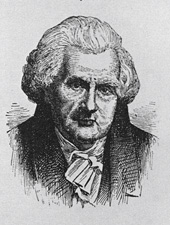
Historical · U.S. Senate · Connecticut
Stephen Mitchell
Former U.S. Senator from Connecticut · 1793–1795 · Pro-Administration · Class 3
Stephen Mitchell represented Connecticut in the United States Senate (1793–1795) for the Pro-Administration party. The page below collects sourced biographical facts, term history, committee roles, and provenance for Mitchell.
Bioguide ID: M000828
Key facts
- Full name
- Stephen Mitchell
- State
- Connecticut
- Party
- Pro-Administration
- Senate class
- Class III
- Senate service
- 1793–1795
- First Senate term
- 1793
- Status
- Left office
- Current term ends
- —
- Born
- 1743
- Bioguide ID
- M000828
- Committee assignments
- —
- Dataset version
- 1.20260602
Biographical narrative
850 words · sourced from the Wikipedia REST extract
Stephen Mix Mitchell was an American lawyer, jurist, and statesman who served as a U.S. Senator from Connecticut. A member of the Pro-Administration party, he held office in the Senate from 1793 until 1795. In addition to his legislative role, Mitchell was also a prominent figure in Connecticut's judicial system, eventually becoming the Chief Justice of the state's Supreme Court. His career spanned significant periods in American history, including the founding of the nation and the early years of its constitutional government.
Early life and career
Stephen Mix Mitchell was born on December 9, 1743, in Wethersfield, Connecticut, to James and Rebecca Mitchell. He pursued an education that culminated in his graduation from Yale College in 1763. Following his graduation, he served as a tutor at Yale from 1766 to 1769 while simultaneously studying law in New Haven and under the mentorship of Jared Ingersoll. After completing his legal studies, he was admitted to the bar in 1770 and began his legal practice in Newton, Connecticut.
In 1772, Mitchell returned to Wethersfield, where he continued to practice law. His legal career coincided with a period of political upheaval in the American colonies. He became actively involved in local governance, serving as a member of the Connecticut state house of representatives from 1778 to 1784. During this time, he played a role in shaping state policy amidst the backdrop of the American Revolutionary War.
Mitchell's political involvement extended to the national level when he was elected as a delegate to the Continental Congress, representing Connecticut from 1783 to 1788. His participation in the Continental Congress placed him among the early leaders who contributed to the formation of the United States government. He also served on the Connecticut council of assistants from 1784 to 1792, with a brief interruption in 1786. Additionally, he held the position of associate justice of the county court of Hartford County from 1779 until 1790, after which he became the presiding judge until 1793.
In 1788, Mitchell was a member of the state convention that ratified the United States Constitution, a pivotal moment in American history. His commitment to public service continued as he sought election to the U.S. Congress in 1790, where he ran for Connecticut's five at-large congressional seats. Although he did not succeed in this election, finishing ninth, he later participated in a special election due to the refusal of Pierpont Edwards to serve, where he finished fifth.
Senate tenure
Mitchell's tenure in the U.S. Senate began on December 2, 1793, following the death of Senator Roger Sherman. He was appointed by Governor Jonathan Trumbull Huntington to fill the vacancy. During his time in the Senate, which lasted until March 3, 1795, Mitchell was part of a critical period in the early years of the United States government. His role in the Senate was marked by the challenges of establishing a functioning federal government and addressing the needs of a young nation.
Despite his contributions, Mitchell did not seek re-election in 1794. After concluding his Senate term, he returned to Connecticut, where he continued his public service in the judicial system. His decision not to pursue another term in the Senate reflects the fluid nature of early American politics, where many leaders transitioned between legislative and judicial roles.
Legislative focus and committees
While specific details about Mitchell's legislative activities in the Senate are not extensively documented, his broader career suggests a focus on issues pertinent to the establishment of the United States. His experience as a lawyer and judge likely informed his perspectives on law and governance during his time in the Senate. Mitchell's involvement in the Continental Congress and the Connecticut state convention that ratified the Constitution indicates his commitment to foundational legal principles and the development of the nation’s legal framework.
After leaving the Senate, Mitchell returned to the judiciary, where he was appointed to the Connecticut Supreme Court in 1795. He served in this capacity until he was elevated to Chief Justice in 1807, a position he held until his retirement in 1814. This judicial role allowed him to continue influencing the legal landscape of Connecticut and to uphold the principles of justice and governance he had championed throughout his career.
In addition to his judicial duties, Mitchell was active in other civic roles. He served as a presidential elector on the Federalist ticket in 1800 and participated as a delegate in the Connecticut state constitutional convention of 1818. These activities further illustrate his ongoing engagement in the political and legal arenas of his state and the nation.
Stephen Mix Mitchell passed away on September 30, 1835, in Wethersfield, Connecticut, at the age of 91. He is interred at Wethersfield Cemetery. His legacy includes not only his contributions to the Senate and the judiciary but also his role as a father and grandfather, with his family continuing to impact American culture, notably through his grandson, author Donald Grant Mitchell. Mitchell's life reflects the complexities and challenges of the early American republic, as he navigated the evolving landscape of law and governance in a formative period of U.S. history.
Notable legislation
Sponsored and co-sponsored legislation for Stephen Mitchell is pending operator curation. The biographical narrative above carries the same provenance trail until per-bill rows are written.
Sources
- [1]https://en.wikipedia.org/wiki/Stephen_Mix_MitchellWikipedia · retrieved 2026-06-02
Notable quotes
Sourced quotes for Stephen Mitchell are pending operator curation. Narrative-scope provenance remains attached below.
Sources
- [1]https://en.wikipedia.org/wiki/Stephen_Mix_MitchellWikipedia · retrieved 2026-06-02
Key positions
Curated policy positions for Stephen Mitchell are pending operator review. The biographical narrative above carries the same provenance trail until per-topic positions are written.
Sources
- [1]https://en.wikipedia.org/wiki/Stephen_Mix_MitchellWikipedia · retrieved 2026-06-02
Terms served
- 1793–1795U.S. Senate · Term 1 · Pro-Administration · Class III
Sources & provenance
Every attributable claim above carries a per-section [N] marker that resolves to the corresponding URL below. Each entry records the upstream provider, the canonical URL, and the timestamp at which the source was retrieved by the ingest pipeline.
Key facts
- https://bioguide.congress.gov/search/bio/M000828bioguide · retrieved 2026-06-02
- https://www.govtrack.us/congress/members/407803govtrack · retrieved 2026-06-02
Biographical narrative
- https://en.wikipedia.org/wiki/Stephen_Mix_Mitchellwikipedia · retrieved 2026-06-02
Find your senator
Every U.S. state elects two senators. Browse Connecticut’s delegation, the full former-senator roster, or explore the role and term length.
Related on The Candidate
- Preceded by Roger ShermanEarlier holder of the Connecticut Class III Senate seat · Pro-Administration.Open
- Succeeded by Jonathan Trumbull Jr.Later holder of the Connecticut Class III Senate seat · Federalist.Open
- Abraham RibicoffFormer U.S. Senator from Connecticut · DemocraticOpen
- Augustine LonerganFormer U.S. Senator from Connecticut · DemocraticOpen
- Brien McMahonFormer U.S. Senator from Connecticut · DemocraticOpen
- Calvin WilleyFormer U.S. Senator from Connecticut · AdamsOpen