
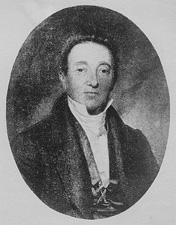
Historical · U.S. Senate · Connecticut
Samuel Foot
Former U.S. Senator from Connecticut · 1827–1833 · Adams · Class 1
Samuel Foot represented Connecticut in the United States Senate (1827–1833) for the Adams party. The page below collects sourced biographical facts, term history, committee roles, and provenance for Foot.
Bioguide ID: F000247
Key facts
- Full name
- Samuel Foot
- State
- Connecticut
- Party
- Adams
- Senate class
- Class I
- Senate service
- 1827–1833
- First Senate term
- 1827
- Status
- Left office
- Current term ends
- —
- Born
- 1780
- Bioguide ID
- F000247
- Committee assignments
- —
- Dataset version
- 1.20260602
Biographical narrative
832 words · sourced from the Wikipedia REST extract
Samuel Foot was a prominent American politician who served as a U.S. Senator from Connecticut and held various political offices throughout his career. He was a member of the Adams Party, which later evolved into the Anti-Jacksonian faction within the Democratic-Republican Party. Foot's political career spanned several decades, during which he also served as a governor and a member of the U.S. House of Representatives. His legislative contributions and political activities were significant during a transformative period in American history.
Early life and career
Samuel Foot was born on November 8, 1780, in Cheshire, Connecticut, to John and Abigail Foot. He exhibited academic promise from a young age, entering Yale College at the age of thirteen. Foot graduated in 1797 as the youngest member of his class. Following his graduation, he pursued legal studies at Litchfield Law School when he was seventeen years old. However, due to health issues, he discontinued his legal education and shifted his focus to commerce.
Foot became involved in trade, specifically as a West India trader, which required him to undertake numerous voyages. This line of work was partly motivated by his health, as the sea voyages were believed to be beneficial for his well-being. In 1803, he married Eudocia Hull, and together they had seven children, one of whom was Andrew Hull Foote, who would also become notable in his own right.
The War of 1812 had a significant impact on Foot's business, particularly the Embargo Act, which severely affected trade. As a result, he returned to his family's farm in Cheshire in 1813, where he engaged in agricultural activities while also becoming involved in local politics. His political career began to take shape when he was elected to the Connecticut House of Representatives in 1817 and 1818. Following his initial service in the state legislature, Foot was elected to the Sixteenth Congress, where he served from March 4, 1819, to March 3, 1821. He continued to be active in state politics, returning to the Connecticut House of Representatives from 1821 to 1823 and again from 1825 to 1826, during which time he served as speaker.
Senate tenure
Samuel Foot's tenure in the U.S. Senate began when he was elected by the Connecticut General Assembly as an Adams man, a faction that later became known as the Anti-Jacksonians. He served in the Senate from March 4, 1827, until March 3, 1833. During his time in the Senate, Foot was involved in various legislative discussions and is particularly noted for introducing the "Foot Resolution" on December 29, 1829. This resolution aimed to limit the sale of public lands, a topic that was contentious at the time. The debate surrounding this resolution was significant, as it included a famous speech by Senator Daniel Webster, who articulated the principle of "Liberty and Union, one and inseparable, now and forever."
Despite his contributions, Foot faced challenges in his political career. He was unsuccessful in his bid for re-election in 1832, which marked the end of his Senate term. Following his departure from the Senate, Foot continued his public service by being elected to the Twenty-third Congress, where he served from March 4, 1833, until May 9, 1834. He resigned from this position to assume the role of Governor of Connecticut, a position he held for a brief period in 1834 and 1835. His governorship was followed by an unsuccessful campaign for re-election in 1835.
Legislative focus and committees
Throughout his congressional career, Samuel Foot was involved in various legislative matters, with a particular focus on issues related to public lands and pensions. He served as the chairman of the Committee on Pensions during the Twenty-first and Twenty-second Congresses, where he oversaw matters related to veterans' benefits and pensions. His work on this committee reflected a commitment to addressing the needs of those who had served in the military, a topic that was becoming increasingly important in the early 19th century as the nation expanded and veterans returned from conflicts.
Foot's legislative activities were shaped by the political dynamics of his time, particularly the shifting allegiances within the Democratic-Republican Party. As the party fractured, Foot aligned himself with the Adams faction, which was characterized by its opposition to the policies of President Andrew Jackson. This alignment influenced his legislative priorities and the issues he championed during his time in office.
In addition to his legislative work, Foot's political career included participation in the electoral process beyond his congressional duties. He served as a presidential elector on the Clay-Frelinghuysen ticket in the 1844 presidential election, further demonstrating his ongoing engagement in national politics.
Samuel Foot passed away on September 15, 1846, in Cheshire, Connecticut. He is interred at Hillside Cemetery in his hometown. His political legacy includes his contributions to the governance of Connecticut and his role in the U.S. Senate during a pivotal era in American history. His life and career reflect the complexities of early American politics and the evolving landscape of governance in the United States.
Notable legislation
Sponsored and co-sponsored legislation for Samuel Foot is pending operator curation. The biographical narrative above carries the same provenance trail until per-bill rows are written.
Sources
- [1]https://en.wikipedia.org/wiki/Samuel_A._FootWikipedia · retrieved 2026-06-02
Notable quotes
Sourced quotes for Samuel Foot are pending operator curation. Narrative-scope provenance remains attached below.
Sources
- [1]https://en.wikipedia.org/wiki/Samuel_A._FootWikipedia · retrieved 2026-06-02
Key positions
Curated policy positions for Samuel Foot are pending operator review. The biographical narrative above carries the same provenance trail until per-topic positions are written.
Sources
- [1]https://en.wikipedia.org/wiki/Samuel_A._FootWikipedia · retrieved 2026-06-02
Terms served
- 1819–1821U.S. House · District -1 · Term 1 · Adams
- 1823–1825U.S. House · District -1 · Term 2 · Adams
- 1827–1833U.S. Senate · Term 3 · Adams · Class I
- 1833–1834U.S. House · District -1 · Term 4 · Anti-Jacksonian
Sources & provenance
Every attributable claim above carries a per-section [N] marker that resolves to the corresponding URL below. Each entry records the upstream provider, the canonical URL, and the timestamp at which the source was retrieved by the ingest pipeline.
Key facts
- https://bioguide.congress.gov/search/bio/F000247bioguide · retrieved 2026-06-02
- https://www.govtrack.us/congress/members/404205govtrack · retrieved 2026-06-02
Biographical narrative
- https://en.wikipedia.org/wiki/Samuel_A._Footwikipedia · retrieved 2026-06-02
Find your senator
Every U.S. state elects two senators. Browse Connecticut’s delegation, the full former-senator roster, or explore the role and term length.
Related on The Candidate
- Preceded by Henry EdwardsEarlier holder of the Connecticut Class I Senate seat · Jackson.Open
- Succeeded by Nathan SmithLater holder of the Connecticut Class I Senate seat · Anti-Jacksonian.Open
- Abraham RibicoffFormer U.S. Senator from Connecticut · DemocraticOpen
- Augustine LonerganFormer U.S. Senator from Connecticut · DemocraticOpen
- Brien McMahonFormer U.S. Senator from Connecticut · DemocraticOpen
- Calvin WilleyFormer U.S. Senator from Connecticut · AdamsOpen