
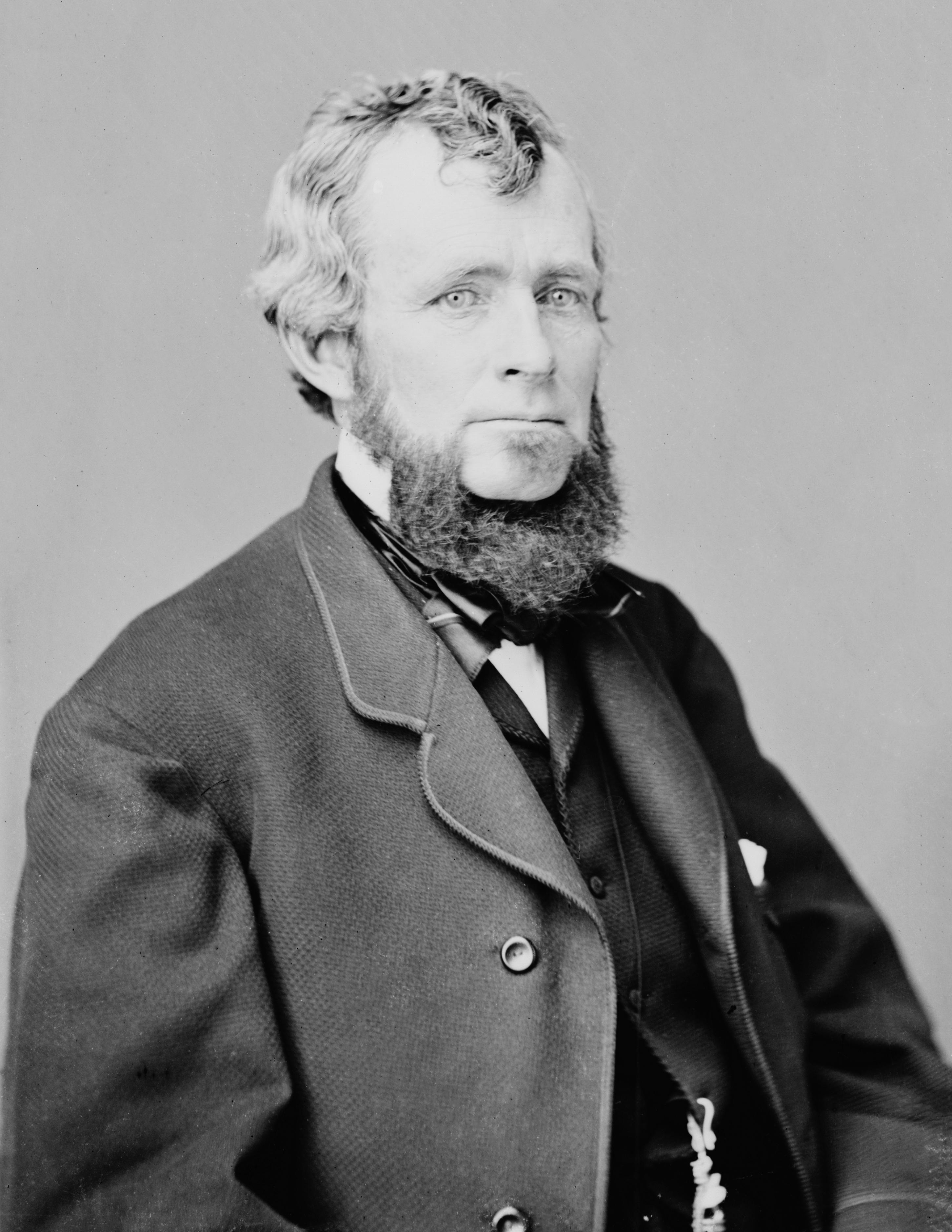
Historical · U.S. Senate · Delaware
George Riddle
Former U.S. Senator from Delaware · 1864–1867 · Democratic · Class 1
George Riddle represented Delaware in the United States Senate (1864–1867) for the Democratic party. The page below collects sourced biographical facts, term history, committee roles, and provenance for Riddle.
Bioguide ID: R000239
Key facts
- Full name
- George Riddle
- State
- Delaware
- Party
- Democratic
- Senate class
- Class I
- Senate service
- 1864–1867
- First Senate term
- 1864
- Status
- Left office
- Current term ends
- —
- Born
- —
- Bioguide ID
- R000239
- Committee assignments
- —
- Dataset version
- 1.20260602
Biographical narrative
862 words · sourced from the Wikipedia REST extract
George Riddle was a prominent American engineer, lawyer, and politician who served as a U.S. Senator from Delaware. A member of the Democratic Party, he held office during a tumultuous period in American history, including the Civil War. Riddle's career spanned various roles, including a term in the U.S. House of Representatives and a significant tenure in the Senate, where he contributed to the legislative process until his death in 1867.
Early life and career
George Riddle was born around 1817 in New Castle, Delaware. He pursued an education in civil engineering at Delaware College, which is now known as the University of Delaware. In addition to his engineering studies, Riddle also studied law, gaining admission to the Delaware Bar in 1848. Following his admission, he established a legal practice in Wilmington, Delaware, where he became well-known in both engineering and legal circles.
Riddle's engineering expertise led to his appointment as a commissioner to retrace the Mason-Dixon line in 1849, a significant task that underscored the importance of accurate boundary delineation in the context of regional disputes. His work in engineering extended to the construction of railroads and canals, which were crucial for transportation and commerce during that era. Notably, in 1844, he was commissioned to design the Wilmington and Brandywine Cemetery, showcasing his skills in civil engineering and design.
In addition to his engineering and legal pursuits, Riddle served in a military capacity during the Civil War. He was a member of the Home Guard of Wilmington, a local militia formed to protect the community during the conflict. His involvement in the Home Guard reflects the civic responsibility many citizens felt during this period of national strife.
Riddle was married to Margaret, and together they navigated the complexities of life in Delaware during the mid-19th century. His early career laid a foundation for his later political ambitions, as he transitioned from engineering and law into public service.
Senate tenure
George Riddle's political career began in earnest when he served as Deputy Attorney General of the United States from 1849 to 1850. Following this role, he was elected to the U.S. House of Representatives in 1850, where he served two consecutive terms from March 4, 1851, until March 3, 1855. During his time in the House, Riddle held the position of Chairman of the Committee on Engraving during the 33rd Congress. However, his bid for a third term in 1854 was unsuccessful, as he was defeated by Elisha D. Cullen.
In the years following his time in the House, Riddle remained active in Delaware's political landscape. In 1864, he was elected to the United States Senate to fill the vacancy left by the resignation of Senator James A. Bayard Jr. This election marked the beginning of Riddle's Senate tenure, which lasted until his death in 1867. His time in the Senate was characterized by the challenges of the Civil War and the political dynamics of the era.
Riddle's Senate career was relatively brief, as he served from February 2, 1864, until his passing on March 28, 1867. His death while in office was a significant event, marking the end of his contributions to the legislative process during a critical time in American history. Riddle was buried in the Wilmington and Brandywine Cemetery, a final resting place that reflects his deep ties to the Delaware community.
Legislative focus and committees
During his time in the Senate, George Riddle's legislative focus was shaped by the pressing issues of the Civil War and its aftermath. While specific details of his legislative initiatives and voting record are not extensively documented, it is clear that his background in law and engineering informed his approach to governance. As a member of the Democratic Party, Riddle was part of a political faction that faced significant challenges during the war, including debates over civil rights, state sovereignty, and the future of the Union.
Riddle's previous experience as a U.S. Representative likely influenced his work in the Senate, as he navigated the complexities of federal legislation and the political landscape of the time. The Senate, being a body that often dealt with broader national issues, provided Riddle with a platform to engage in discussions that were critical to the nation’s recovery and reconstruction efforts.
While serving in the Senate, Riddle was part of a legislative body that was tasked with addressing the aftermath of the Civil War, including issues related to the reintegration of Southern states, civil rights for formerly enslaved individuals, and the economic challenges facing the nation. His contributions, although not extensively recorded, would have been part of the larger dialogue and legislative efforts aimed at healing the nation and establishing a framework for future governance.
In summary, George Riddle's career as a U.S. Senator was marked by his commitment to public service and his engagement with the pressing issues of his time. His background in engineering and law provided him with a unique perspective as he navigated the complexities of legislative work during a pivotal moment in American history. Riddle's legacy is reflected in his contributions to Delaware and the nation, as he served in various capacities that shaped the political landscape of his era.
Notable legislation
Sponsored and co-sponsored legislation for George Riddle is pending operator curation. The biographical narrative above carries the same provenance trail until per-bill rows are written.
Sources
- [1]https://en.wikipedia.org/wiki/George_R._RiddleWikipedia · retrieved 2026-06-02
Notable quotes
Sourced quotes for George Riddle are pending operator curation. Narrative-scope provenance remains attached below.
Sources
- [1]https://en.wikipedia.org/wiki/George_R._RiddleWikipedia · retrieved 2026-06-02
Key positions
Curated policy positions for George Riddle are pending operator review. The biographical narrative above carries the same provenance trail until per-topic positions are written.
Sources
- [1]https://en.wikipedia.org/wiki/George_R._RiddleWikipedia · retrieved 2026-06-02
Terms served
- 1851–1853U.S. House · District 0 · Term 1 · Democratic
- 1853–1855U.S. House · District 0 · Term 2 · Democratic
- 1864–1867U.S. Senate · Term 3 · Democratic · Class I
Sources & provenance
Every attributable claim above carries a per-section [N] marker that resolves to the corresponding URL below. Each entry records the upstream provider, the canonical URL, and the timestamp at which the source was retrieved by the ingest pipeline.
Key facts
- https://bioguide.congress.gov/search/bio/R000239bioguide · retrieved 2026-06-02
- https://www.govtrack.us/congress/members/409215govtrack · retrieved 2026-06-02
Biographical narrative
- https://en.wikipedia.org/wiki/George_R._Riddlewikipedia · retrieved 2026-06-02
Find your senator
Every U.S. state elects two senators. Browse Delaware’s delegation, the full former-senator roster, or explore the role and term length.
Related on The Candidate
- Preceded by John WalesEarlier holder of the Delaware Class I Senate seat · Whig.Open
- Succeeded by Thomas Bayard Sr.Later holder of the Delaware Class I Senate seat · Democratic.Open
- Anthony HigginsFormer U.S. Senator from Delaware · RepublicanOpen
- Arnold NaudainFormer U.S. Senator from DelawareOpen
- Caesar RodneyFormer U.S. Senator from Delaware · RepublicanOpen
- Clayton BuckFormer U.S. Senator from Delaware · RepublicanOpen