
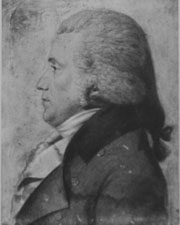
Historical · U.S. Senate · Delaware
William Wells
Former U.S. Senator from Delaware · 1799–1817 · Federalist · Class 2
William Wells represented Delaware in the United States Senate (1799–1817) for the Federalist party. The page below collects sourced biographical facts, term history, committee roles, and provenance for Wells.
Bioguide ID: W000287
Key facts
- Full name
- William Wells
- State
- Delaware
- Party
- Federalist
- Senate class
- Class II
- Senate service
- 1799–1817
- First Senate term
- 1799
- Status
- Left office
- Current term ends
- —
- Born
- 1769
- Bioguide ID
- W000287
- Committee assignments
- —
- Dataset version
- 1.20260602
Biographical narrative
837 words · sourced from the Wikipedia REST extract
William Wells was a prominent lawyer and politician from Delaware, serving as a U.S. Senator representing the Federalist Party. His political career spanned several years, during which he was involved in various legislative activities and held multiple positions within the Delaware government. Wells was born in 1769 and passed away in 1829, leaving behind a legacy that includes his contributions to both state and national politics.
Early life and career
William Wells was born on January 7, 1769, in Burlington, New Jersey. He spent his formative years in Sussex County, Delaware, where his family relocated during his childhood. His father, Richard Wells, established a successful mercantile business in Dagsboro, which provided a stable foundation for the family. William Wells was the son of Rachel Hill and Richard Wells, who had emigrated from Kingston upon Hull in England.
As a young man, Wells pursued a legal education, studying law and eventually gaining admission to the Delaware Bar in 1791. He began his legal practice in Georgetown, Delaware, and later expanded his work to include Dover. His legal career coincided with his growing involvement in local politics.
In addition to his professional endeavors, Wells's marriage to Elizabeth Dagworthy Aydelott significantly enhanced his financial standing. Elizabeth was the ward of Revolutionary War General John Dagworthy and inherited substantial timberland in Sussex County, which contributed to the family's wealth. This combination of legal acumen and familial connections positioned Wells favorably within the community.
Wells's political career began in the Delaware General Assembly, where he represented Sussex County. He served in the State House from the 1795 session through the 1799 session, gaining experience and recognition as a member of the legislature. His early involvement in state politics laid the groundwork for his future roles at the national level.
Senate tenure
William Wells's tenure in the U.S. Senate began when he was elected as a Federalist to fill the vacancy left by the death of Senator Joshua Clayton. He took office on January 17, 1799, marking the beginning of his first term. During this period, Wells aligned himself with his Federalist colleagues, who were notably opposed to the Louisiana Purchase, a significant territorial expansion of the United States at that time.
Wells's first Senate term lasted until November 6, 1804, when he resigned before the completion of his term. His resignation was motivated by a desire to pursue opportunities in the oil business in northern Pennsylvania, reflecting a shift in his professional focus. Following his resignation, he returned to Delaware politics, serving again in the State House during the 1811 and 1812 sessions, and later in the State Senate during the 1813 session.
In a subsequent political comeback, Wells was again elected to the U.S. Senate as a Federalist, this time to fill the vacancy created by the resignation of James A. Bayard. He served in this capacity from May 28, 1813, until March 3, 1817. His second term in the Senate allowed him to further engage in national legislative matters, although specific details regarding his contributions during this period are less documented.
After concluding his second Senate term, Wells returned to the Delaware General Assembly for one more session in 1819, demonstrating his continued commitment to public service at the state level. Throughout his political career, Wells maintained his legal practice in Dagsboro and Millsboro, Delaware, while also expanding his involvement in the oil industry.
Legislative focus and committees
Throughout his time in the Senate, William Wells was primarily associated with the Federalist Party, which was known for its support of a strong central government and opposition to rapid territorial expansion. His opposition to the Louisiana Purchase during his first term exemplified the Federalist stance on issues of national importance at the time. The Federalists were concerned about the implications of such an expansion for the balance of power within the government and the potential impact on existing states.
Wells's legislative focus during his Senate tenure included a range of issues pertinent to the early years of the United States. While specific legislative initiatives or committee assignments are not detailed in the available records, his participation in the Senate during a formative period for the nation positioned him to influence discussions on governance, state rights, and economic development.
In addition to his legislative responsibilities, Wells's involvement in the Delaware General Assembly and his legal practice provided him with a comprehensive understanding of both state and national issues. His dual roles as a lawyer and politician allowed him to navigate the complexities of lawmaking and public policy effectively.
Wells's legacy is marked by his contributions to Delaware's political landscape and his engagement in national affairs during a critical period in American history. His career reflects the challenges and opportunities faced by early American politicians as they sought to shape the future of the nation. After his death on March 11, 1829, near Dagsboro, Delaware, Wells was buried in the churchyard of Prince George's Chapel, leaving behind a history of public service and legal practice that would influence future generations.
Notable legislation
Sponsored and co-sponsored legislation for William Wells is pending operator curation. The biographical narrative above carries the same provenance trail until per-bill rows are written.
Sources
- [1]https://en.wikipedia.org/wiki/William_H._WellsWikipedia · retrieved 2026-06-02
Notable quotes
Sourced quotes for William Wells are pending operator curation. Narrative-scope provenance remains attached below.
Sources
- [1]https://en.wikipedia.org/wiki/William_H._WellsWikipedia · retrieved 2026-06-02
Key positions
Curated policy positions for William Wells are pending operator review. The biographical narrative above carries the same provenance trail until per-topic positions are written.
Sources
- [1]https://en.wikipedia.org/wiki/William_H._WellsWikipedia · retrieved 2026-06-02
Terms served
- 1799–1805U.S. Senate · Term 1 · Federalist · Class II
- 1813–1817U.S. Senate · Term 2 · Federalist · Class II
Sources & provenance
Every attributable claim above carries a per-section [N] marker that resolves to the corresponding URL below. Each entry records the upstream provider, the canonical URL, and the timestamp at which the source was retrieved by the ingest pipeline.
Key facts
- https://bioguide.congress.gov/search/bio/W000287bioguide · retrieved 2026-06-02
- https://www.govtrack.us/congress/members/411452govtrack · retrieved 2026-06-02
Biographical narrative
- https://en.wikipedia.org/wiki/William_H._Wellswikipedia · retrieved 2026-06-02
Find your senator
Every U.S. state elects two senators. Browse Delaware’s delegation, the full former-senator roster, or explore the role and term length.
Related on The Candidate
- Preceded by John ViningEarlier holder of the Delaware Class II Senate seat · Federalist.Open
- Succeeded by Nicholas Van DykeLater holder of the Delaware Class II Senate seat · Adams.Open
- Anthony HigginsFormer U.S. Senator from Delaware · RepublicanOpen
- Arnold NaudainFormer U.S. Senator from DelawareOpen
- Caesar RodneyFormer U.S. Senator from Delaware · RepublicanOpen
- Clayton BuckFormer U.S. Senator from Delaware · RepublicanOpen