
Historical · U.S. Senate · Georgia
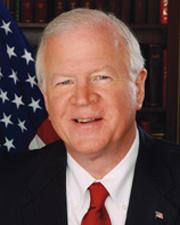
Saxby Chambliss
Former U.S. Senator from Georgia · 2003–2015 · Republican · Class 2
Saxby Chambliss represented Georgia in the United States Senate (2003–2015) for the Republican party. The page below collects sourced biographical facts, term history, committee roles, and provenance for Chambliss.
Bioguide ID: C000286
Key facts
- Full name
- Saxby Chambliss
- State
- Georgia
- Party
- Republican
- Senate class
- Class II
- Senate service
- 2003–2015
- First Senate term
- 2003
- Status
- Left office
- Current term ends
- —
- Born
- 1943
- Bioguide ID
- C000286
- Committee assignments
- —
- Dataset version
- 1.20260601-3
Biographical narrative
886 words · sourced from the Wikipedia REST extract
Saxby Chambliss is a former United States senator from Georgia who served from 2003 until 2015. A member of the Republican Party, Chambliss previously represented Georgia's 8th congressional district in the U.S. House of Representatives from 1995 to 2003. His political career is marked by his involvement in national security issues and agricultural policy, as well as his participation in bipartisan legislative efforts.
Early life and career
Saxby Chambliss was born on November 10, 1943, in Warrenton, North Carolina. He is the son of Emma Baker and Alfred Parker Chambliss Jr., an Episcopal priest. Chambliss completed his secondary education at C.E. Byrd High School in Shreveport, Louisiana, graduating in 1961. He began his higher education at Louisiana Tech University before transferring to the University of Georgia, where he earned a Bachelor of Business Administration from the Terry College of Business in 1966. While attending college, he worked at a bakery in Athens to support himself. Chambliss later obtained his Juris Doctor from the University of Tennessee College of Law in 1968. He was also a member of the Sigma Chi fraternity during his college years.
During the Vietnam War, Chambliss received student deferments and was later granted a medical deferment due to knee issues resulting from a football injury. This aspect of his life has been noted in discussions about his military service and political career.
Chambliss entered politics in the mid-1990s, aligning himself with the conservative movement that was gaining momentum in the United States. He was elected to the U.S. House of Representatives in 1994, as part of a wave of Republican candidates who contributed to the party's majority in Congress. Representing Georgia's 8th congressional district, Chambliss succeeded six-term incumbent J. Roy Rowland, winning the election with a significant majority. His tenure in the House was characterized by his focus on national security issues, particularly in the aftermath of the September 11 attacks, during which he chaired the House Intelligence Subcommittee on Terrorism and Homeland Security.
Senate tenure
Chambliss was elected to the U.S. Senate in 2002, succeeding Democratic incumbent Max Cleland. His campaign was notable for its focus on defense and homeland security, themes that resonated with voters in the wake of national security concerns. Chambliss won the election with a majority of the votes, marking the beginning of his Senate career.
During his time in the Senate, Chambliss served on several important committees. He chaired the Senate Committee on Agriculture, Nutrition, and Forestry during the 109th Congress, which spanned from 2005 to 2007. In this role, he was involved in shaping agricultural policy and addressing issues related to nutrition and food security. Chambliss was later appointed as the ranking Republican on the Senate Select Committee on Intelligence during the 112th Congress, which took place from 2011 to 2013. His experience in intelligence matters from his time in the House informed his contributions to national security discussions in the Senate.
Chambliss was re-elected to the Senate in 2008, defeating Democratic challenger Jim Martin in a runoff election after neither candidate secured a majority in the initial vote. His second term continued to focus on agricultural and intelligence issues, as well as other areas of public policy.
Despite his conservative voting record, Chambliss engaged in bipartisan efforts throughout his Senate career. He was involved in significant legislative initiatives, including the 2007 Farm Bill and various immigration reform proposals. His willingness to work across party lines was recognized during his tenure, particularly in relation to efforts aimed at addressing the national deficit and other pressing issues.
Chambliss chose not to seek re-election in 2014, concluding his Senate career when his term ended on January 3, 2015. His decision not to run again reflected a broader trend among some lawmakers at the time, as they navigated the changing political landscape.
Legislative focus and committees
Throughout his congressional career, Chambliss maintained a focus on several key areas, including national security, agriculture, and intelligence oversight. His early work in the House, particularly as chair of the House Intelligence Subcommittee on Terrorism and Homeland Security, positioned him as a significant figure in post-9/11 national security discussions. The subcommittee's investigations into intelligence failures following the September 11 attacks were critical in shaping policies aimed at improving the United States' intelligence capabilities.
In the Senate, Chambliss's role as chair of the Senate Committee on Agriculture, Nutrition, and Forestry allowed him to influence agricultural policy at a national level. The committee's work involved addressing issues related to farming, food production, and nutrition programs, which are vital to both rural and urban constituents in Georgia and across the nation.
Chambliss's participation in the Senate Select Committee on Intelligence further underscored his commitment to national security. In this capacity, he contributed to discussions on intelligence operations and oversight, particularly in an era marked by heightened concerns about terrorism and cybersecurity.
Overall, Chambliss's legislative focus reflected a blend of conservative principles and a willingness to engage in bipartisan dialogue. His career in the Senate was characterized by his efforts to balance the interests of his constituents with the broader needs of the nation, particularly in areas of agriculture and national security. His departure from the Senate in 2015 marked the end of a significant chapter in Georgia's political landscape, leaving a legacy shaped by his contributions to both state and national issues.
Notable legislation
Sponsored and co-sponsored legislation for Saxby Chambliss is pending operator curation. The biographical narrative above carries the same provenance trail until per-bill rows are written.
Sources
- [1]https://en.wikipedia.org/wiki/Saxby_ChamblissWikipedia · retrieved 2026-06-01
Notable quotes
Sourced quotes for Saxby Chambliss are pending operator curation. Narrative-scope provenance remains attached below.
Sources
- [1]https://en.wikipedia.org/wiki/Saxby_ChamblissWikipedia · retrieved 2026-06-01
Key positions
Curated policy positions for Saxby Chambliss are pending operator review. The biographical narrative above carries the same provenance trail until per-topic positions are written.
Sources
- [1]https://en.wikipedia.org/wiki/Saxby_ChamblissWikipedia · retrieved 2026-06-01
Terms served
- 1995–1997U.S. House · District 8 · Term 1 · Republican
- 1997–1999U.S. House · District 8 · Term 2 · Republican
- 1999–2001U.S. House · District 8 · Term 3 · Republican
- 2001–2003U.S. House · District 8 · Term 4 · Republican
- 2003–2009U.S. Senate · Term 5 · Republican · Class II
- 2009–2015U.S. Senate · Term 6 · Republican · Class II
Sources & provenance
Every attributable claim above carries a per-section [N] marker that resolves to the corresponding URL below. Each entry records the upstream provider, the canonical URL, and the timestamp at which the source was retrieved by the ingest pipeline.
Key facts
- https://bioguide.congress.gov/search/bio/C000286bioguide · retrieved 2026-06-01
- http://www.chambliss.senate.govsenate.gov · retrieved 2026-06-01
Biographical narrative
- https://en.wikipedia.org/wiki/Saxby_Chamblisswikipedia · retrieved 2026-06-01
Find your senator
Every U.S. state elects two senators. Browse Georgia’s delegation, the full former-senator roster, or explore the role and term length.
Related on The Candidate
- Preceded by J. ClelandEarlier holder of the Georgia Class II Senate seat · Democratic.Open
- Succeeded by David PerdueLater holder of the Georgia Class II Senate seat · Republican.Open
- Abraham BaldwinFormer U.S. Senator from Georgia · RepublicanOpen
- Alexander ClayFormer U.S. Senator from Georgia · DemocraticOpen
- Alfred ColquittFormer U.S. Senator from Georgia · DemocraticOpen
- Alfred CuthbertFormer U.S. Senator from Georgia · DemocraticOpen