
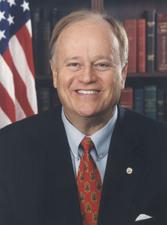
Historical · U.S. Senate · Georgia
J. Cleland
Former U.S. Senator from Georgia · 1997–2003 · Democratic · Class 2
J. Cleland represented Georgia in the United States Senate (1997–2003) for the Democratic party. The page below collects sourced biographical facts, term history, committee roles, and provenance for Cleland.
Bioguide ID: C001034
Key facts
- Full name
- J. Cleland
- State
- Georgia
- Party
- Democratic
- Senate class
- Class II
- Senate service
- 1997–2003
- First Senate term
- 1997
- Status
- Left office
- Current term ends
- —
- Born
- 1942
- Bioguide ID
- C001034
- Committee assignments
- —
- Dataset version
- 1.20260602
Biographical narrative
1,030 words · sourced from the Wikipedia REST extract
Max Cleland is a former United States Senator from Georgia, representing the Democratic Party. He served in the Senate from 1997 until 2003, during which time he was known for his commitment to various issues, particularly those affecting veterans and public health. Cleland's political career was marked by his dedication to public service, shaped by his experiences and background.
Early life and career
Max Cleland was born on August 24, 1942. His early life laid the foundation for his future endeavors in public service and politics. Cleland grew up in a family that valued civic engagement and community involvement, which influenced his later career choices. After completing high school, he pursued higher education, earning a degree that would prepare him for a life dedicated to serving others.
Following his education, Cleland enlisted in the United States Army and served during the Vietnam War. His military service was a significant aspect of his life, as he faced considerable challenges during his time in combat. Cleland's experiences in the war had a profound impact on him, shaping his views on service, sacrifice, and the needs of veterans. He sustained serious injuries during the conflict, which resulted in the loss of three limbs. This experience not only influenced his personal life but also became a central theme in his political career, as he advocated for veterans' rights and healthcare.
After returning from the war, Cleland transitioned into public service. He began his political career in Georgia, where he was elected to the Georgia State Senate. His tenure in state politics provided him with valuable experience and insight into the legislative process, as well as the needs of his constituents. Cleland's commitment to public service continued to grow, leading him to seek higher office.
In 1996, Cleland successfully ran for the United States Senate, marking the beginning of his federal political career. His election to the Senate was seen as a significant achievement, particularly given his background and the challenges he had overcome. Cleland's victory represented a broader narrative of resilience and determination, resonating with many voters in Georgia.
Senate tenure
Max Cleland's Senate career began in 1997, when he took office as a member of the Democratic Party. During his time in the Senate, Cleland focused on a range of issues that were important to his constituents and the nation. His tenure was characterized by a commitment to improving the lives of veterans, advocating for healthcare reform, and addressing the needs of working families.
Throughout his Senate career, Cleland served on several committees that allowed him to influence legislation on key issues. His work on these committees provided him with a platform to advocate for policies that aligned with his values and the needs of his constituents. Cleland's experience as a veteran informed much of his legislative focus, as he sought to improve services and support for those who had served in the military.
Cleland's approach to governance was marked by collaboration and bipartisanship. He often worked with colleagues across the aisle to advance legislation that would benefit the public. His ability to build relationships with other senators was an essential aspect of his effectiveness in office.
During his time in the Senate, Cleland faced various challenges, including political opposition and the complexities of navigating a divided Congress. Despite these challenges, he remained committed to his principles and continued to advocate for the issues he believed were vital to the well-being of his constituents and the country as a whole.
In 2002, Cleland sought re-election but faced a competitive race. The political landscape in Georgia was shifting, and he encountered significant opposition during the campaign. Ultimately, Cleland's tenure in the Senate concluded when he lost his bid for re-election in 2002. His last day in office was January 3, 2003, marking the end of his time as a U.S. Senator.
Legislative focus and committees
During his Senate tenure, Max Cleland was involved in a variety of legislative initiatives that reflected his commitment to public service and advocacy for specific groups. His primary focus areas included veterans' affairs, healthcare, and economic development. Cleland's background as a veteran informed much of his work, as he sought to ensure that those who served in the military received the support and resources they needed.
Cleland served on several key committees during his time in the Senate, which allowed him to influence legislation in critical areas. His participation in these committees provided him with the opportunity to address issues related to national security, healthcare access, and economic growth. Cleland's work on these committees was characterized by a focus on improving the quality of life for all Americans, particularly those who were underserved.
One of Cleland's notable legislative efforts involved advocating for improved healthcare services for veterans. He worked to expand access to medical care and support services, recognizing the unique challenges faced by those who had served in the armed forces. His commitment to veterans' issues was a defining aspect of his Senate career, and he sought to ensure that their sacrifices were acknowledged and supported through comprehensive policy measures.
In addition to his work on veterans' affairs, Cleland also focused on economic development initiatives aimed at improving job opportunities and supporting working families. He recognized the importance of fostering a strong economy and sought to implement policies that would benefit both individuals and communities across Georgia.
Cleland's legislative focus was not limited to veterans and economic issues; he also addressed broader public health concerns. His commitment to healthcare reform was evident in his efforts to promote access to affordable healthcare for all Americans. He believed that access to quality healthcare was a fundamental right and worked to advance policies that aligned with this belief.
Overall, Max Cleland's tenure in the Senate was marked by a dedication to public service, advocacy for veterans, and a commitment to improving the lives of his constituents. His experiences and background shaped his legislative priorities, and he sought to make a positive impact on the lives of those he represented. Although his time in the Senate came to an end in 2003, Cleland's legacy as a public servant continues to resonate in discussions about veterans' rights and healthcare policy.
Notable legislation
Sponsored and co-sponsored legislation for J. Cleland is pending operator curation. The biographical narrative above carries the same provenance trail until per-bill rows are written.
Sources
- [1]https://en.wikipedia.org/wiki/Max_ClelandWikipedia · retrieved 2026-06-02
Notable quotes
Sourced quotes for J. Cleland are pending operator curation. Narrative-scope provenance remains attached below.
Sources
- [1]https://en.wikipedia.org/wiki/Max_ClelandWikipedia · retrieved 2026-06-02
Key positions
Curated policy positions for J. Cleland are pending operator review. The biographical narrative above carries the same provenance trail until per-topic positions are written.
Sources
- [1]https://en.wikipedia.org/wiki/Max_ClelandWikipedia · retrieved 2026-06-02
Terms served
- 1997–2003U.S. Senate · Term 1 · Democratic · Class II
Sources & provenance
Every attributable claim above carries a per-section [N] marker that resolves to the corresponding URL below. Each entry records the upstream provider, the canonical URL, and the timestamp at which the source was retrieved by the ingest pipeline.
Key facts
- https://bioguide.congress.gov/search/bio/C001034bioguide · retrieved 2026-06-02
- https://www.govtrack.us/congress/members/300152govtrack · retrieved 2026-06-02
Biographical narrative
- https://en.wikipedia.org/wiki/Max_Clelandwikipedia · retrieved 2026-06-02
Find your senator
Every U.S. state elects two senators. Browse Georgia’s delegation, the full former-senator roster, or explore the role and term length.
Related on The Candidate
- Preceded by Samuel NunnEarlier holder of the Georgia Class II Senate seat · Democratic.Open
- Succeeded by Saxby ChamblissLater holder of the Georgia Class II Senate seat · Republican.Open
- Abraham BaldwinFormer U.S. Senator from Georgia · RepublicanOpen
- Alexander ClayFormer U.S. Senator from Georgia · DemocraticOpen
- Alfred ColquittFormer U.S. Senator from Georgia · DemocraticOpen
- Alfred CuthbertFormer U.S. Senator from Georgia · DemocraticOpen