
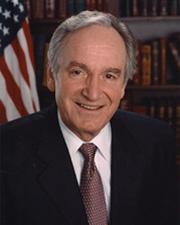
Historical · U.S. Senate · Iowa
Tom Harkin
Former U.S. Senator from Iowa · 1985–2015 · Democratic · Class 2
Tom Harkin represented Iowa in the United States Senate (1985–2015) for the Democratic party. The page below collects sourced biographical facts, term history, committee roles, and provenance for Harkin.
Bioguide ID: H000206
Key facts
- Full name
- Tom Harkin
- State
- Iowa
- Party
- Democratic
- Senate class
- Class II
- Senate service
- 1985–2015
- First Senate term
- 1985
- Status
- Left office
- Current term ends
- —
- Born
- 1939
- Bioguide ID
- H000206
- Committee assignments
- —
- Dataset version
- 1.20260601-3
Biographical narrative
1,142 words · sourced from the Wikipedia REST extract
Thomas Richard Harkin is a former United States Senator from Iowa, serving from 1985 until 2015. A member of the Democratic Party, Harkin previously represented Iowa's 5th congressional district in the U.S. House of Representatives from 1975 to 1985. Known for his advocacy on various issues, he played a significant role in shaping legislation related to health, education, labor, and disability rights during his tenure in the Senate. Harkin is recognized for being the longest-serving U.S. Senator from Iowa and for his contributions to the Americans with Disabilities Act of 1990.
Early life and career
Harkin was born on November 19, 1939, in Cumming, Iowa. He grew up in a modest household; his father, Patrick Francis Harkin, was a coal miner of Irish descent, while his mother, Franciska Frances Valentine, was a Slovene immigrant. Tragically, his mother passed away when he was just ten years old. Harkin was raised alongside his five siblings in a home that lacked modern amenities such as hot running water and central heating. This upbringing in a working-class family would later influence his political perspectives and priorities.
Harkin attended Dowling Catholic High School in West Des Moines, Iowa, before pursuing higher education at Iowa State University. He was awarded a Navy ROTC scholarship, which facilitated his enrollment at the university, where he joined the Delta Sigma Phi fraternity. Harkin graduated in 1962 with a degree in government and economics. Following his graduation, he served in the United States Navy as an active-duty jet pilot from 1962 to 1967. During this time, he was stationed at Naval Air Facility Atsugi in Japan, where he participated in various missions, including ferrying aircraft and supporting reconnaissance operations related to the Vietnam War. After his active duty, he spent three years in the Ready Reserves and transitioned to the Naval Reserves in 1970, ultimately retiring in 1989 with the rank of commander.
In 1969, Harkin relocated to Washington, D.C., where he began his political career as an aide to Democratic Congressman Neal Smith. His work in this role included accompanying a congressional delegation to South Vietnam in 1970. Harkin documented his experiences and published photographs in Life Magazine, highlighting the inhumane conditions faced by prisoners in the "Tiger cages" at Côn Đảo Prison. He earned his Juris Doctor degree from The Catholic University of America's Columbus School of Law in 1972, which further solidified his qualifications for a career in public service.
Harkin's initial foray into electoral politics came in 1972 when he ran against incumbent Republican Congressman William J. Scherle. Despite losing the election, he garnered a significant percentage of the vote, which set the stage for his future political endeavors. After practicing law in Ames, Iowa, he sought a rematch against Scherle in 1974. Capitalizing on the political climate influenced by the Watergate scandal, Harkin won the election by a narrow margin and subsequently secured re-election four more times without facing serious opposition.
Senate tenure
Harkin's transition to the U.S. Senate began in 1984 when he won the Democratic nomination and subsequently defeated freshman Republican Senator Roger Jepsen by a substantial margin. His Senate career spanned five terms, during which he became the longest-serving U.S. Senator in Iowa's history. Notably, Harkin spent his entire Senate tenure as the state's junior senator, as his colleague Chuck Grassley had been serving since 1981. Despite their differing political ideologies, Harkin and Grassley maintained a cordial working relationship, which contributed to Iowa's influence in national politics.
Throughout his Senate career, Harkin was involved in various legislative initiatives and was known for his advocacy on issues related to health, education, and labor. He was an early frontrunner for the Democratic presidential nomination in 1992 but withdrew in support of Bill Clinton, who ultimately secured the nomination and the presidency. Harkin's legislative influence was particularly evident in his role as chair of the Senate Committee on Health, Education, Labor, and Pensions towards the end of his tenure.
Harkin's commitment to disability rights is perhaps best exemplified by his authorship of the Americans with Disabilities Act of 1990, a landmark piece of legislation aimed at prohibiting discrimination against individuals with disabilities. His personal connection to the issue was highlighted when he delivered part of his introduction speech in sign language, a gesture intended for his deaf brother. This act underscored his dedication to advocating for the rights and inclusion of people with disabilities.
In addition to his work on disability rights, Harkin was involved in various other legislative efforts. He was one of the few Senate Democrats to support a resolution to censure President George W. Bush in 2006. He also played a role in introducing the BioFuels Security Act in 2006, reflecting his interest in alternative energy sources. Harkin's efforts extended to increasing research funding for alternative medicine, leading to the establishment of the U.S. Office of Alternative Medicine in 1992, which later evolved into the National Center for Complementary and Alternative Medicine.
In January 2013, Harkin announced that he would not seek re-election in 2014, marking the end of his long and impactful Senate career. He officially concluded his service on January 3, 2015.
Legislative focus and committees
During his time in the Senate, Harkin was a member of several key committees, which allowed him to influence a wide range of policy areas. His role as chair of the Senate Committee on Health, Education, Labor, and Pensions was particularly significant, as it positioned him at the forefront of discussions and legislation related to health care, education reform, and labor rights. Harkin's leadership on this committee enabled him to advocate for policies that aligned with his priorities, particularly those benefiting vulnerable populations.
Harkin's legislative focus included a strong commitment to education, where he worked on initiatives aimed at improving access and quality in educational institutions. His efforts in health policy were marked by a focus on expanding access to health care and addressing public health issues. He was also a proponent of labor rights, advocating for workers' protections and fair labor practices.
In addition to his committee work, Harkin's legislative initiatives often reflected his personal experiences and values. His advocacy for disability rights, exemplified by the Americans with Disabilities Act, was a cornerstone of his legacy. Harkin's ability to connect personal narratives with broader legislative goals helped to humanize the issues he championed and engage his colleagues in meaningful discussions.
Throughout his Senate career, Harkin maintained a focus on bipartisanship, often collaborating with colleagues across the aisle on various initiatives. His relationships with fellow senators, including Chuck Grassley, exemplified his commitment to working collaboratively for the benefit of Iowa and the nation.
In summary, Tom Harkin's career in the U.S. Senate was marked by significant legislative achievements and a dedication to public service. His contributions to health, education, labor, and disability rights have left a lasting impact on American policy and society.
Notable legislation
Sponsored and co-sponsored legislation for Tom Harkin is pending operator curation. The biographical narrative above carries the same provenance trail until per-bill rows are written.
Sources
- [1]https://en.wikipedia.org/wiki/Tom_HarkinWikipedia · retrieved 2026-06-01
Notable quotes
Sourced quotes for Tom Harkin are pending operator curation. Narrative-scope provenance remains attached below.
Sources
- [1]https://en.wikipedia.org/wiki/Tom_HarkinWikipedia · retrieved 2026-06-01
Key positions
Curated policy positions for Tom Harkin are pending operator review. The biographical narrative above carries the same provenance trail until per-topic positions are written.
Sources
- [1]https://en.wikipedia.org/wiki/Tom_HarkinWikipedia · retrieved 2026-06-01
Terms served
- 1975–1977U.S. House · District 5 · Term 1 · Democratic
- 1977–1979U.S. House · District 5 · Term 2 · Democratic
- 1979–1981U.S. House · District 5 · Term 3 · Democratic
- 1981–1983U.S. House · District 5 · Term 4 · Democratic
- 1983–1985U.S. House · District 5 · Term 5 · Democratic
- 1985–1991U.S. Senate · Term 6 · Democratic · Class II
- 1991–1997U.S. Senate · Term 7 · Democratic · Class II
- 1997–2003U.S. Senate · Term 8 · Democratic · Class II
- 2003–2009U.S. Senate · Term 9 · Democratic · Class II
- 2009–2015U.S. Senate · Term 10 · Democratic · Class II
Sources & provenance
Every attributable claim above carries a per-section [N] marker that resolves to the corresponding URL below. Each entry records the upstream provider, the canonical URL, and the timestamp at which the source was retrieved by the ingest pipeline.
Key facts
- https://bioguide.congress.gov/search/bio/H000206bioguide · retrieved 2026-06-01
- http://www.harkin.senate.govsenate.gov · retrieved 2026-06-01
Biographical narrative
- https://en.wikipedia.org/wiki/Tom_Harkinwikipedia · retrieved 2026-06-01
Find your senator
Every U.S. state elects two senators. Browse Iowa’s delegation, the full former-senator roster, or explore the role and term length.
Related on The Candidate
- Preceded by Roger JepsenEarlier holder of the Iowa Class II Senate seat · Republican.Open
- Albert CumminsFormer U.S. Senator from Iowa · RepublicanOpen
- Augustus DodgeFormer U.S. Senator from Iowa · DemocraticOpen
- Bourke HickenlooperFormer U.S. Senator from Iowa · RepublicanOpen
- Charles RawsonFormer U.S. Senator from Iowa · RepublicanOpen
- Democratic PartyFederal candidates and office holders on the Democratic line.Open