
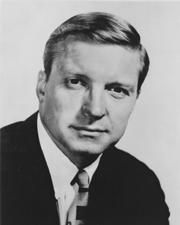
Historical · U.S. Senate · Illinois
Charles Percy
Former U.S. Senator from Illinois · 1967–1985 · Republican · Class 2
Charles Percy represented Illinois in the United States Senate (1967–1985) for the Republican party. The page below collects sourced biographical facts, term history, committee roles, and provenance for Percy.
Bioguide ID: P000222
Key facts
- Full name
- Charles Percy
- State
- Illinois
- Party
- Republican
- Senate class
- Class II
- Senate service
- 1967–1985
- First Senate term
- 1967
- Status
- Left office
- Current term ends
- —
- Born
- 1919
- Bioguide ID
- P000222
- Committee assignments
- —
- Dataset version
- 1.20260602
Biographical narrative
949 words · sourced from the Wikipedia REST extract
Charles H. Percy was a prominent American politician who served as a United States Senator from Illinois. A member of the Republican Party, Percy held office for nearly two decades, from 1967 until 1985. His tenure in the Senate was marked by a focus on various issues, including foreign policy, health care, and education. Percy was known for his moderate stance within the Republican Party and played a significant role in shaping legislative initiatives during his time in office.
Early life and career
Charles H. Percy was born on September 27, 1919. He grew up in a time of significant social and economic change in the United States. Percy pursued higher education, attending the University of Illinois, where he earned a degree in business. Following his graduation, he entered the business world, where he found success as an executive in the manufacturing sector. His business acumen and leadership skills helped him establish a reputation as a capable and effective manager.
Percy’s professional journey was interrupted by World War II, during which he served in the United States Navy. His military service contributed to his understanding of national security issues, a perspective that would later influence his political career. After the war, Percy returned to the business world and continued to build his career, eventually becoming the president of a successful manufacturing company.
His entry into politics was motivated by a desire to serve his community and address the challenges facing the nation. Percy began his political career in local government, where he gained experience and built a network of supporters. His reputation as a pragmatic problem-solver and his commitment to public service led him to seek higher office. In 1966, he successfully ran for the United States Senate, marking the beginning of his long legislative career.
Senate tenure
Charles H. Percy was elected to the U.S. Senate in 1966, beginning his first term in January 1967. He was a member of the Senate Class 2, which designates the cycle in which senators are elected. Throughout his time in the Senate, Percy was known for his moderate Republican views, which often placed him at the center of political debates. He was re-elected twice, serving a total of three terms in the Senate until his last term ended on January 3, 1985.
During his tenure, Percy was involved in numerous legislative initiatives and discussions on a wide range of issues. His approach to governance was characterized by a willingness to collaborate across party lines, which was particularly important in an era of increasing political polarization. Percy’s ability to work with colleagues from both parties allowed him to contribute to significant legislative achievements.
Percy was known for his focus on economic issues, particularly those affecting the manufacturing sector, which was a vital part of Illinois's economy. He advocated for policies that supported job creation and economic growth, recognizing the importance of a strong industrial base for the state and the nation. His background in business informed his perspective on economic policy, and he often emphasized the need for practical solutions to complex problems.
In addition to economic issues, Percy was an advocate for education and health care reform. He recognized the importance of accessible education and health services for all Americans and worked to promote policies that would enhance these sectors. His efforts in education included support for federal funding for schools and initiatives aimed at improving educational outcomes for students.
Percy also played a role in foreign policy discussions, particularly during the Cold War era. His military background and understanding of national security issues informed his views on international relations. He was involved in debates regarding U.S. foreign policy, advocating for a balanced approach that considered both national security and diplomatic engagement.
Legislative focus and committees
Throughout his Senate career, Charles H. Percy served on several important committees that shaped his legislative focus. His committee assignments allowed him to influence a wide range of policy areas, including finance, foreign relations, and health. These roles provided him with platforms to advocate for his priorities and contribute to national discussions on critical issues.
Percy was a member of the Senate Finance Committee, where he worked on legislation related to taxation, social security, and health care. His involvement in this committee was significant, as it dealt with issues that directly affected the economic well-being of Americans. Percy’s work on health care reform was particularly notable, as he sought to address the challenges faced by the health care system and improve access to quality care for all citizens.
In addition to his work on the Finance Committee, Percy served on the Senate Foreign Relations Committee. This role allowed him to engage in discussions about U.S. foreign policy and international relations. His contributions to this committee were informed by his understanding of global issues and his belief in the importance of diplomacy in resolving conflicts.
Percy’s legislative focus extended to environmental issues as well. He recognized the growing concerns about environmental degradation and the need for sustainable policies. His advocacy for environmental protection reflected a broader awareness of the interconnectedness of economic, social, and environmental factors.
Throughout his Senate career, Percy maintained a commitment to bipartisanship and collaboration. He believed that effective governance required cooperation among lawmakers, regardless of party affiliation. This approach enabled him to build relationships with colleagues and work towards common goals, even in a politically charged environment.
Charles H. Percy’s legacy as a U.S. Senator is characterized by his dedication to public service, his moderate Republican values, and his ability to navigate complex legislative challenges. His contributions to the Senate and the issues he championed continue to be recognized as part of the broader narrative of American political history.
Notable legislation
Sponsored and co-sponsored legislation for Charles Percy is pending operator curation. The biographical narrative above carries the same provenance trail until per-bill rows are written.
Sources
- [1]https://en.wikipedia.org/wiki/Charles_H._PercyWikipedia · retrieved 2026-06-02
Notable quotes
Sourced quotes for Charles Percy are pending operator curation. Narrative-scope provenance remains attached below.
Sources
- [1]https://en.wikipedia.org/wiki/Charles_H._PercyWikipedia · retrieved 2026-06-02
Key positions
Curated policy positions for Charles Percy are pending operator review. The biographical narrative above carries the same provenance trail until per-topic positions are written.
Sources
- [1]https://en.wikipedia.org/wiki/Charles_H._PercyWikipedia · retrieved 2026-06-02
Terms served
- 1967–1973U.S. Senate · Term 1 · Republican · Class II
- 1973–1979U.S. Senate · Term 2 · Republican · Class II
- 1979–1985U.S. Senate · Term 3 · Republican · Class II
Sources & provenance
Every attributable claim above carries a per-section [N] marker that resolves to the corresponding URL below. Each entry records the upstream provider, the canonical URL, and the timestamp at which the source was retrieved by the ingest pipeline.
Key facts
- https://bioguide.congress.gov/search/bio/P000222bioguide · retrieved 2026-06-02
- https://www.govtrack.us/congress/members/408625govtrack · retrieved 2026-06-02
Biographical narrative
- https://en.wikipedia.org/wiki/Charles_H._Percywikipedia · retrieved 2026-06-02
Find your senator
Every U.S. state elects two senators. Browse Illinois’s delegation, the full former-senator roster, or explore the role and term length.
Related on The Candidate
- Preceded by Paul DouglasEarlier holder of the Illinois Class II Senate seat · Democratic.Open
- Succeeded by Paul SimonLater holder of the Illinois Class II Senate seat · Democratic.Open
- Adlai Stevenson IIIFormer U.S. Senator from Illinois · DemocraticOpen
- Alan DixonFormer U.S. Senator from Illinois · DemocraticOpen
- Albert HopkinsFormer U.S. Senator from Illinois · RepublicanOpen
- Barack ObamaFormer U.S. Senator from Illinois · DemocraticOpen