
Historical · U.S. Senate · Illinois
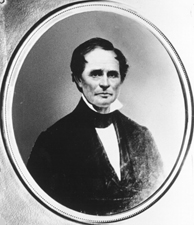
David Baker
Former U.S. Senator from Illinois · 1830–1831 · Jackson · Class 2
David Baker represented Illinois in the United States Senate (1830–1831) for the Jackson party. The page below collects sourced biographical facts, term history, committee roles, and provenance for Baker.
Bioguide ID: B000058
Key facts
- Full name
- David Baker
- State
- Illinois
- Party
- Jackson
- Senate class
- Class II
- Senate service
- 1830–1831
- First Senate term
- 1830
- Status
- Left office
- Current term ends
- —
- Born
- 1792
- Bioguide ID
- B000058
- Committee assignments
- —
- Dataset version
- 1.20260602
Biographical narrative
912 words · sourced from the Wikipedia REST extract
David Baker was an American politician who served as a U.S. Senator from Illinois for a brief period in the early 1830s. A member of the Jacksonian Democratic Party, Baker's political career was marked by his appointment to the Senate to fill a vacancy, following which he did not seek re-election. His legal career spanned several years, and he held various positions in the state of Illinois, including that of a probate judge and later as a United States Attorney. Baker's life and career reflect the political landscape of early 19th-century America, particularly in the context of Illinois' development as a state.
Early life and career
David Baker was born on September 7, 1792, in East Haddam, Connecticut. He was the son of Joanna Minor and Bayze Baker. His early life was shaped by a move to Ontario County, New York, where he relocated with his family during his childhood. This transition marked the beginning of his formative years in a different environment, which would later influence his career and political aspirations.
Baker received his education in the common schools of New York, which provided him with a foundational knowledge that would serve him well in his future endeavors. In 1816, he graduated from Hamilton College, located in Clinton, New York. This achievement was significant, as it represented the culmination of his early academic pursuits and set the stage for his professional development. Following his graduation, Baker turned his attention to the study of law, a field that would become central to his career.
In 1819, Baker was admitted to the bar in Illinois, marking the official start of his legal practice. He began his career in Kaskaskia, Illinois, a town that was one of the earliest settlements in the state. His legal work in Kaskaskia allowed him to establish a reputation in the community and gain valuable experience in the legal system. Over the years, Baker would become known for his legal acumen and commitment to his clients, which would later inform his political career.
Baker's early political involvement began with various local positions, reflecting his growing interest in public service. He served as the probate judge of Randolph County from August 1827 until December 6, 1830. This role allowed him to engage with the legal and administrative aspects of governance, further solidifying his standing in the community and enhancing his understanding of the law as it pertained to public policy.
Senate tenure
David Baker's tenure in the U.S. Senate was notably brief. He was appointed to the Senate on November 12, 1830, to fill the vacancy left by the death of Senator John McLean. His appointment came during a time of significant political change in the United States, as the Jacksonian Democratic Party was gaining prominence. Baker's affiliation with this party aligned him with the broader political movements of the era, which emphasized populism and the interests of the common man.
Baker served in the Senate until December 11, 1830, a period of less than a month. His short time in office is a rarity in congressional history, as he is one of the few individuals who have served in Congress for such a limited duration. During this time, he did not participate in any significant legislative actions or debates that would have defined his political legacy. Instead, his role was primarily to fulfill the responsibilities associated with the vacancy he was appointed to fill.
Following his brief Senate term, Baker did not seek election to continue serving in the Senate. Instead, he transitioned back to his legal career and public service in a different capacity. In 1833, he was appointed as the United States Attorney for the district of Illinois, a position he held until 1841. This role allowed him to further engage with the legal system on a federal level and to represent the interests of the United States in legal matters within his district.
Legislative focus and committees
During his short time in the Senate, David Baker did not have the opportunity to establish a clear legislative focus or to serve on any committees, given the brevity of his tenure. His appointment was primarily to fill a vacancy, and as such, he did not have the time to develop a legislative agenda or to engage deeply with the issues facing the nation at that time. The period in which he served was characterized by significant political and social changes, including debates over issues such as states' rights, economic policy, and the expansion of the United States.
After leaving the Senate, Baker's career continued in the legal field, where he resumed his practice of law. His experience as a United States Attorney would have provided him with insights into federal legal matters and the workings of the judicial system, which were critical during a time of growth and change in the United States. Baker's legal background and his brief experience in the Senate contributed to his understanding of the intersection between law and politics, a theme that was prevalent in the early 19th century.
David Baker passed away on August 6, 1869, in Alton, Illinois. His contributions to the state of Illinois and his brief service in the U.S. Senate are part of the historical narrative of the region's development during a formative period in American history. He was interred in City Cemetery, leaving behind a legacy that reflects the complexities of early American politics and the evolving role of legal professionals in public service.
Notable legislation
Sponsored and co-sponsored legislation for David Baker is pending operator curation. The biographical narrative above carries the same provenance trail until per-bill rows are written.
Sources
- [1]https://en.wikipedia.org/wiki/David_J._BakerWikipedia · retrieved 2026-06-02
Notable quotes
Sourced quotes for David Baker are pending operator curation. Narrative-scope provenance remains attached below.
Sources
- [1]https://en.wikipedia.org/wiki/David_J._BakerWikipedia · retrieved 2026-06-02
Key positions
Curated policy positions for David Baker are pending operator review. The biographical narrative above carries the same provenance trail until per-topic positions are written.
Sources
- [1]https://en.wikipedia.org/wiki/David_J._BakerWikipedia · retrieved 2026-06-02
Terms served
- 1830–1831U.S. Senate · Term 1 · Jackson · Class II
Sources & provenance
Every attributable claim above carries a per-section [N] marker that resolves to the corresponding URL below. Each entry records the upstream provider, the canonical URL, and the timestamp at which the source was retrieved by the ingest pipeline.
Key facts
- https://bioguide.congress.gov/search/bio/B000058bioguide · retrieved 2026-06-02
- https://www.govtrack.us/congress/members/401063govtrack · retrieved 2026-06-02
Biographical narrative
- https://en.wikipedia.org/wiki/David_J._Bakerwikipedia · retrieved 2026-06-02
Find your senator
Every U.S. state elects two senators. Browse Illinois’s delegation, the full former-senator roster, or explore the role and term length.
Related on The Candidate
- Preceded by Jesse ThomasEarlier holder of the Illinois Class II Senate seat · Adams.Open
- Succeeded by Samuel McRobertsLater holder of the Illinois Class II Senate seat · Democratic.Open
- Adlai Stevenson IIIFormer U.S. Senator from Illinois · DemocraticOpen
- Alan DixonFormer U.S. Senator from Illinois · DemocraticOpen
- Albert HopkinsFormer U.S. Senator from Illinois · RepublicanOpen
- Barack ObamaFormer U.S. Senator from Illinois · DemocraticOpen