
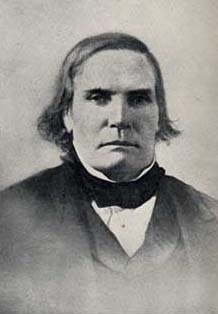
Historical · U.S. Senate · Illinois
Jesse Thomas
Former U.S. Senator from Illinois · 1818–1829 · Adams · Class 2
Jesse Thomas represented Illinois in the United States Senate (1818–1829) for the Adams party. The page below collects sourced biographical facts, term history, committee roles, and provenance for Thomas.
Bioguide ID: T000171
Key facts
- Full name
- Jesse Thomas
- State
- Illinois
- Party
- Adams
- Senate class
- Class II
- Senate service
- 1818–1829
- First Senate term
- 1818
- Status
- Left office
- Current term ends
- —
- Born
- —
- Bioguide ID
- T000171
- Committee assignments
- —
- Dataset version
- 1.20260602
Biographical narrative
865 words · sourced from the Wikipedia REST extract
Jesse Thomas was an American lawyer, judge, and politician who served as a U.S. Senator from Illinois. He played a significant role in the early political landscape of the United States, particularly in the context of the Missouri Compromise of 1820. His political career included notable contributions to the establishment of Illinois as a state and his service in the Senate, where he was known for his legislative efforts and leadership roles. After retiring from the Senate in 1829, he lived the remainder of his life in Ohio.
Early life and career
Jesse Thomas was likely born in Shepherdstown, Virginia, in 1777, although some sources suggest he may have been born in Hagerstown, Maryland. His family relocated to Kentucky during his infancy, where he spent his early years. He pursued legal studies under the guidance of his elder brother, Richard Symmes Thomas, in Bracken County, Kentucky. Following his education, he served as the county clerk in Mason County until 1803.
In 1805, Thomas moved to the Indiana Territory, settling in Lawrenceburg, where he continued his legal practice. His political career began to take shape when he was appointed as the territorial deputy attorney general. In the same year, he was elected as a delegate to the Territorial House of Representatives, where he served as speaker from 1805 to 1808. His political ascent continued when he filled a vacancy in the U.S. Congress as a territorial delegate from Indiana, serving from October 1808 until March 1809.
After his congressional service, Thomas moved to the Illinois Territory, where he settled in Kaskaskia, a town along the Mississippi River. He later lived in Cahokia and Edwardsville, Illinois. In 1809, he was appointed by President James Madison as a judge for the United States court for the northwestern judicial district, a position he held until 1818. His legal and political experience culminated in his election as a delegate to the Illinois State Constitutional Convention in 1818, where he was chosen to preside over the convention. This gathering was significant as it established the framework for Illinois's governance and notably chose to prohibit slavery in the new state.
Senate tenure
Following Illinois's admission to the Union, Jesse Thomas was elected as one of the state’s first two U.S. Senators, beginning his Senate term in 1818. He represented the Adams Party and served in the Senate until his retirement in 1829. During his time in office, Thomas was involved in various legislative matters, but he is particularly recognized for his authorship of the Missouri Compromise in 1820. This compromise was a pivotal piece of legislation that sought to balance the interests of slave and free states in the context of westward expansion.
Thomas's political alignment shifted in 1823 when he became a Crawford Republican, reflecting the evolving political landscape of the time. Throughout his Senate career, he held significant positions, including serving as chairman of the Committee on Public Lands during the 16th and 18th Congresses. His leadership in these roles contributed to discussions surrounding land policy and the management of public lands, which were critical issues as the nation expanded westward.
Despite his contributions, Thomas chose not to seek a third term in the Senate, opting instead to retire from public life in 1829. Following his departure from the Senate, he relocated to Mount Vernon, Ohio, where he spent the remainder of his life.
Legislative focus and committees
During his tenure in the U.S. Senate, Jesse Thomas focused on several key legislative issues, particularly those related to land policy and the contentious debates surrounding slavery. His most notable legislative achievement, the Missouri Compromise, aimed to address the growing tensions between pro-slavery and anti-slavery factions in the United States. The compromise allowed for the admission of Missouri as a slave state while establishing boundaries that would limit the expansion of slavery into other territories acquired through the Louisiana Purchase.
As chairman of the Committee on Public Lands, Thomas played a crucial role in shaping policies that governed the distribution and management of federal lands. This committee was instrumental in addressing the needs of a growing nation, particularly as settlers moved westward in search of new opportunities. His leadership in this area reflected the broader national interests in land use and settlement patterns during a period of significant expansion.
Thomas's legislative efforts were marked by a commitment to navigating the complexities of a rapidly changing political environment. His ability to engage with contentious issues, such as slavery and land management, positioned him as a significant figure in early American politics. His contributions to the Senate and the legislative process were part of a larger narrative of the United States grappling with its identity and values in the face of expansion and change.
After retiring from the Senate, Thomas's life continued in Ohio, where he lived until his death in 1853. His legacy includes not only his role in the establishment of Illinois as a state but also his contributions to the legislative framework that would shape the future of the United States. His nephew, Jesse B. Thomas, Jr., also made significant contributions to Illinois law and governance, serving as the state's Attorney General and on the Illinois Supreme Court.
Notable legislation
Sponsored and co-sponsored legislation for Jesse Thomas is pending operator curation. The biographical narrative above carries the same provenance trail until per-bill rows are written.
Sources
- [1]https://en.wikipedia.org/wiki/Jesse_B._ThomasWikipedia · retrieved 2026-06-02
Notable quotes
Sourced quotes for Jesse Thomas are pending operator curation. Narrative-scope provenance remains attached below.
Sources
- [1]https://en.wikipedia.org/wiki/Jesse_B._ThomasWikipedia · retrieved 2026-06-02
Key positions
Curated policy positions for Jesse Thomas are pending operator review. The biographical narrative above carries the same provenance trail until per-topic positions are written.
Sources
- [1]https://en.wikipedia.org/wiki/Jesse_B._ThomasWikipedia · retrieved 2026-06-02
Terms served
- 1807–1809U.S. House · District -1 · Term 1 · Democratic
- 1818–1823U.S. Senate · Term 2 · Republican · Class II
- 1823–1829U.S. Senate · Term 3 · Adams · Class II
Sources & provenance
Every attributable claim above carries a per-section [N] marker that resolves to the corresponding URL below. Each entry records the upstream provider, the canonical URL, and the timestamp at which the source was retrieved by the ingest pipeline.
Key facts
- https://bioguide.congress.gov/search/bio/T000171bioguide · retrieved 2026-06-02
- https://www.govtrack.us/congress/members/410752govtrack · retrieved 2026-06-02
Biographical narrative
- https://en.wikipedia.org/wiki/Jesse_B._Thomaswikipedia · retrieved 2026-06-02
Find your senator
Every U.S. state elects two senators. Browse Illinois’s delegation, the full former-senator roster, or explore the role and term length.
Related on The Candidate
- Succeeded by David BakerLater holder of the Illinois Class II Senate seat · Jackson.Open
- Adlai Stevenson IIIFormer U.S. Senator from Illinois · DemocraticOpen
- Alan DixonFormer U.S. Senator from Illinois · DemocraticOpen
- Albert HopkinsFormer U.S. Senator from Illinois · RepublicanOpen
- Barack ObamaFormer U.S. Senator from Illinois · DemocraticOpen
- Senators from IllinoisEvery former U.S. Senator who has represented Illinois.Open