
Historical · U.S. Senate · Illinois
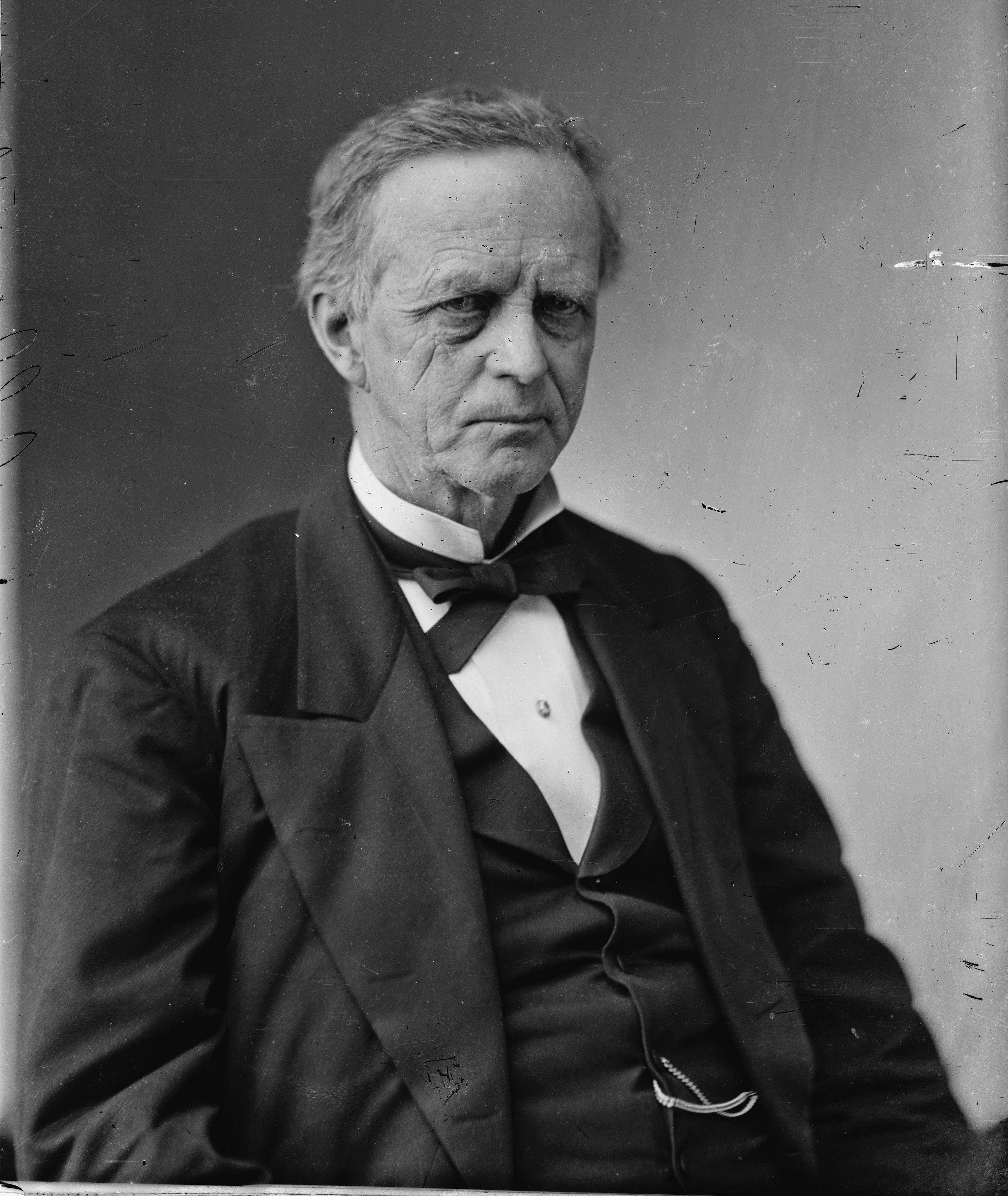
Lyman Trumbull
Former U.S. Senator from Illinois · 1855–1873 · Republican · Class 3
Lyman Trumbull represented Illinois in the United States Senate (1855–1873) for the Republican party. The page below collects sourced biographical facts, term history, committee roles, and provenance for Trumbull.
Bioguide ID: T000392
Key facts
- Full name
- Lyman Trumbull
- State
- Illinois
- Party
- Republican
- Senate class
- Class III
- Senate service
- 1855–1873
- First Senate term
- 1855
- Status
- Left office
- Current term ends
- —
- Born
- 1813
- Bioguide ID
- T000392
- Committee assignments
- —
- Dataset version
- 1.20260602
Biographical narrative
1,045 words · sourced from the Wikipedia REST extract
Lyman Trumbull was a prominent American lawyer, judge, and politician who served as a U.S. Senator from Illinois from 1855 until 1873. A member of the Republican Party, Trumbull was known for his strong abolitionist stance and played a significant role in shaping key legislation during the American Civil War and the Reconstruction era. His contributions included the authorship of several important legal reforms, including the Thirteenth Amendment, which abolished slavery, and the Civil Rights Act of 1866. Trumbull's political career was marked by his close association with President Abraham Lincoln and his evolving political affiliations, which ultimately led him to engage with multiple political parties throughout his life.
Early life and career
Lyman Trumbull was born on October 12, 1813, in Colchester, Connecticut, into a politically influential family. His lineage included several governors of Connecticut, and his father, Benjamin Trumbull Jr., was a well-respected attorney and farmer. His mother, Elizabeth Mather, was connected to the prominent Mather family, known for its influential clergymen. Lyman was the seventh of eleven children, with eight surviving into adulthood.
Trumbull received his early education at Bacon Academy in Colchester, where he studied subjects such as mathematics, Latin, and Greek. After completing his studies, he began teaching in various locations, including Portland, Connecticut, and New Jersey. In 1833, he moved to Pike County, Georgia, with the intention of becoming a schoolteacher. However, upon finding no available positions, he relocated to Greenville, Georgia, where he became the principal of the Greenville Academy. During his three years in Greenville, he also studied law under Hiram B. Warner.
In 1837, Trumbull moved to Belleville, Illinois, where he began his legal career in the office of John Reynolds, a former governor of Illinois. His legal practice was soon influenced by the abolitionist movement, particularly after the murder of Elijah P. Lovejoy, an abolitionist minister, in nearby Alton. This incident deeply affected Trumbull and solidified his opposition to slavery and mob violence.
Trumbull's political career began in 1840 when he was elected to the Illinois House of Representatives as a member of the Democratic Party. He served briefly in the House, where he worked alongside notable figures such as Abraham Lincoln. In 1841, he was appointed Secretary of State of Illinois, succeeding Stephen A. Douglas, who had resigned to join the Illinois Supreme Court. Trumbull held this position for two years, balancing his official duties with his legal practice. However, he resigned in 1843 after a public disagreement with Governor Thomas Ford regarding the management of the State Bank of Illinois.
Following his resignation, Trumbull returned to Belleville to continue his legal practice and married Julia Jayne, the daughter of a physician and a friend of Mary Todd Lincoln. His legal career included significant cases that advanced the abolitionist cause, notably the case of Jarrot v. Jarrot, where he successfully argued against the legality of slavery in Illinois.
Senate tenure
Lyman Trumbull's tenure in the U.S. Senate began in 1855 when he was elected as a representative of the anti-slavery faction of the Illinois legislature. His election was notable as he defeated Abraham Lincoln, who had also sought the Senate seat. Trumbull's alignment with the emerging Republican Party positioned him as a key figure in the political landscape of the time, especially during the tumultuous years leading up to and during the Civil War.
During his time in the Senate, Trumbull served on several important committees, including the Judiciary Committee, where he played a pivotal role in crafting legislation related to civil rights and the abolition of slavery. He was instrumental in the passage of the Confiscation Acts, which laid the groundwork for the Emancipation Proclamation, and he contributed to the drafting of the Thirteenth Amendment, which formally abolished slavery in the United States.
Trumbull's political stance evolved during his Senate career, particularly following the Civil War. He emerged as a moderate Republican, advocating for civil rights for freed slaves while also promoting reconciliation with the Southern states. His moderate views sometimes placed him at odds with more radical members of his party, particularly during the impeachment trial of President Andrew Johnson in 1868, where he voted to acquit Johnson despite significant pressure from fellow Republicans.
In 1870, Trumbull's political affiliations shifted when he broke from the Republican Party. He became a candidate for the presidency at the 1872 Liberal Republican convention, reflecting his growing discontent with the party's direction. After leaving the Senate in 1873, he returned to Chicago to practice law and continued to engage in political discourse.
Legislative focus and committees
Throughout his Senate career, Lyman Trumbull was known for his focus on civil rights and legal reforms. As chair of the Judiciary Committee, he was at the forefront of several landmark legislative efforts during a critical period in American history. His work included the introduction and support of the Civil Rights Act of 1866, which aimed to protect the rights of newly freed African Americans and laid the foundation for the Fourteenth Amendment.
Trumbull's commitment to civil rights was evident in his advocacy for legislation that sought to ensure equal protection under the law for all citizens, regardless of race. His efforts were part of a broader movement during the Reconstruction era aimed at addressing the injustices faced by African Americans in the aftermath of the Civil War.
In addition to his work on civil rights, Trumbull's legislative focus included issues related to the legal status of former slaves and the broader implications of emancipation. His role in drafting the Thirteenth Amendment was particularly significant, as it represented a fundamental shift in American law and society regarding the institution of slavery.
After leaving the Senate, Trumbull continued to engage in legal practice and remained active in political discussions. He eventually aligned himself with the Democratic Party and later became involved with the Populist Party. His legal career included representing notable figures, such as Eugene V. Debs, before the Supreme Court.
Lyman Trumbull's legacy is marked by his contributions to the abolitionist movement, his role in shaping civil rights legislation, and his evolving political affiliations that reflected the complexities of American politics during a transformative era. He passed away on June 25, 1896, leaving behind a significant impact on the legal and political landscape of the United States.
Notable legislation
Sponsored and co-sponsored legislation for Lyman Trumbull is pending operator curation. The biographical narrative above carries the same provenance trail until per-bill rows are written.
Sources
- [1]https://en.wikipedia.org/wiki/Lyman_TrumbullWikipedia · retrieved 2026-06-02
Notable quotes
Sourced quotes for Lyman Trumbull are pending operator curation. Narrative-scope provenance remains attached below.
Sources
- [1]https://en.wikipedia.org/wiki/Lyman_TrumbullWikipedia · retrieved 2026-06-02
Key positions
Curated policy positions for Lyman Trumbull are pending operator review. The biographical narrative above carries the same provenance trail until per-topic positions are written.
Sources
- [1]https://en.wikipedia.org/wiki/Lyman_TrumbullWikipedia · retrieved 2026-06-02
Terms served
- 1855–1861U.S. Senate · Term 1 · Republican · Class III
- 1861–1867U.S. Senate · Term 2 · Republican · Class III
- 1867–1873U.S. Senate · Term 3 · Republican · Class III
Sources & provenance
Every attributable claim above carries a per-section [N] marker that resolves to the corresponding URL below. Each entry records the upstream provider, the canonical URL, and the timestamp at which the source was retrieved by the ingest pipeline.
Key facts
- https://bioguide.congress.gov/search/bio/T000392bioguide · retrieved 2026-06-02
- https://www.govtrack.us/congress/members/410961govtrack · retrieved 2026-06-02
Biographical narrative
- https://en.wikipedia.org/wiki/Lyman_Trumbullwikipedia · retrieved 2026-06-02
Find your senator
Every U.S. state elects two senators. Browse Illinois’s delegation, the full former-senator roster, or explore the role and term length.
Related on The Candidate
- Preceded by Sidney BreeseEarlier holder of the Illinois Class III Senate seat · Democratic.Open
- Succeeded by Richard OglesbyLater holder of the Illinois Class III Senate seat · Republican.Open
- Adlai Stevenson IIIFormer U.S. Senator from Illinois · DemocraticOpen
- Alan DixonFormer U.S. Senator from Illinois · DemocraticOpen
- Albert HopkinsFormer U.S. Senator from Illinois · RepublicanOpen
- Barack ObamaFormer U.S. Senator from Illinois · DemocraticOpen