
Historical · U.S. Senate · Illinois
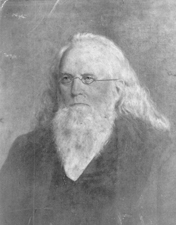
Sidney Breese
Former U.S. Senator from Illinois · 1843–1849 · Democratic · Class 3
Sidney Breese represented Illinois in the United States Senate (1843–1849) for the Democratic party. The page below collects sourced biographical facts, term history, committee roles, and provenance for Breese.
Bioguide ID: B000793
Key facts
- Full name
- Sidney Breese
- State
- Illinois
- Party
- Democratic
- Senate class
- Class III
- Senate service
- 1843–1849
- First Senate term
- 1843
- Status
- Left office
- Current term ends
- —
- Born
- 1800
- Bioguide ID
- B000793
- Committee assignments
- —
- Dataset version
- 1.20260602
Biographical narrative
913 words · sourced from the Wikipedia REST extract
Sidney Breese was a prominent figure in early Illinois history, serving as a U.S. Senator and holding various significant positions in the state’s legal and political landscape. Born on July 15, 1800, in Whitesboro, New York, Breese was a lawyer, soldier, author, and jurist who played a crucial role in the development of Illinois during its formative years. He represented Illinois in the United States Senate from 1843 until 1849 and was also known for his contributions as Chief Justice of the Illinois Supreme Court and as Speaker of the Illinois House of Representatives. Breese is often recognized for his involvement in the establishment of the Illinois Central Railroad, earning him the title of "father of the Illinois Central Railroad."
Early life and career
Sidney Breese was born into a family with a notable lineage; he was the second son of Arthur Breese and Catherine Livingston. His maternal grandfather, Henry Beekman Livingston, was a member of the distinguished Livingston family. Breese's early life was marked by personal loss, as his mother passed away when he was just eight years old. His father remarried, and Breese was raised with the help of Rev. Jesse Townsend, who played a significant role in his education and upbringing. During this time, he developed a close friendship with his cousin Elias Kent Kane, who would later influence Breese's decision to move to Illinois.
Breese's educational journey began at Hamilton College, where he enrolled at the young age of 14. He later transferred to Union College, graduating in 1818 with a commendable academic record, finishing third in his class. Following his graduation, Breese moved to Illinois, where he continued his legal studies under the guidance of Kane. He was admitted to the Illinois bar in 1821, marking the beginning of his legal career.
In 1823, Breese married Eliza Morrison, the daughter of a wealthy merchant. The couple had fourteen children, contributing to a large family that included notable figures such as Samuel Livingston Breese, who served in the U.S. Navy during the Civil War, and several others who pursued various careers. The Breese family owned slaves, reflecting the complex social and economic dynamics of the time.
Breese's early professional life included a series of public service roles. After Illinois achieved statehood in 1818, he was appointed as the assistant secretary of state by Kane, who had become the Illinois Secretary of State. In this capacity, Breese was responsible for moving the State Department's records when the capital was relocated from Kaskaskia to Vandalia. He later served as the Postmaster of Kaskaskia, where he gained experience in public administration.
Senate tenure
Sidney Breese's political career culminated in his election to the United States Senate, where he served from 1843 to 1849. His tenure in the Senate coincided with a period of significant growth and change in Illinois, as the state was becoming increasingly influential in national politics. Breese was a member of the Democratic Party, aligning himself with the political ideologies of his time, which included issues related to westward expansion and economic development.
During his time in the Senate, Breese was involved in various legislative discussions and decisions that shaped the future of Illinois and the nation. His role as a senator was marked by his commitment to the interests of his state, particularly in relation to infrastructure development, such as the Illinois Central Railroad, which was pivotal for transportation and economic growth in the region. Breese's contributions to the Senate were part of a broader effort to enhance the state's connectivity and promote its agricultural and industrial potential.
Breese's Senate term ended on March 3, 1849, after which he returned to private life. His time in the Senate, though relatively brief, was significant in establishing his legacy as a key figure in Illinois history. Following his departure from the Senate, Breese continued to be active in public life, engaging in various legal and civic endeavors.
Legislative focus and committees
Throughout his Senate career, Sidney Breese focused on several key areas of legislation that were vital to the development of Illinois and the broader national landscape. His advocacy for infrastructure improvements, particularly the Illinois Central Railroad, was a central theme of his legislative agenda. This railroad was crucial for facilitating trade and transportation, linking the agricultural heartland of Illinois with markets across the nation.
In addition to his work on infrastructure, Breese was involved in discussions surrounding land policies, particularly those related to the transfer of public lands to states. His legal background and experience in public service informed his approach to these issues, as he sought to balance the interests of settlers and the economic needs of the state.
Breese's involvement in various committees during his Senate tenure reflected his commitment to addressing the pressing issues of his time. Although specific committee assignments are not detailed in the available records, it can be inferred that his legal expertise and experience in state governance would have positioned him well to contribute meaningfully to discussions on law, commerce, and public policy.
In summary, Sidney Breese's career as a U.S. Senator was characterized by his dedication to the advancement of Illinois and its interests. His legislative focus on infrastructure and land policies, combined with his extensive background in law and public service, made him a significant figure in the early history of the state. After concluding his Senate term, Breese continued to influence Illinois through his legal work and civic engagement until his passing on June 27, 1878.
Notable legislation
Sponsored and co-sponsored legislation for Sidney Breese is pending operator curation. The biographical narrative above carries the same provenance trail until per-bill rows are written.
Sources
- [1]https://en.wikipedia.org/wiki/Sidney_BreeseWikipedia · retrieved 2026-06-02
Notable quotes
Sourced quotes for Sidney Breese are pending operator curation. Narrative-scope provenance remains attached below.
Sources
- [1]https://en.wikipedia.org/wiki/Sidney_BreeseWikipedia · retrieved 2026-06-02
Key positions
Curated policy positions for Sidney Breese are pending operator review. The biographical narrative above carries the same provenance trail until per-topic positions are written.
Sources
- [1]https://en.wikipedia.org/wiki/Sidney_BreeseWikipedia · retrieved 2026-06-02
Terms served
- 1843–1849U.S. Senate · Term 1 · Democratic · Class III
Sources & provenance
Every attributable claim above carries a per-section [N] marker that resolves to the corresponding URL below. Each entry records the upstream provider, the canonical URL, and the timestamp at which the source was retrieved by the ingest pipeline.
Key facts
- https://bioguide.congress.gov/search/bio/B000793bioguide · retrieved 2026-06-02
- https://www.govtrack.us/congress/members/401750govtrack · retrieved 2026-06-02
Biographical narrative
- https://en.wikipedia.org/wiki/Sidney_Breesewikipedia · retrieved 2026-06-02
Find your senator
Every U.S. state elects two senators. Browse Illinois’s delegation, the full former-senator roster, or explore the role and term length.
Related on The Candidate
- Preceded by Richard YoungEarlier holder of the Illinois Class III Senate seat · Democratic.Open
- Succeeded by Lyman TrumbullLater holder of the Illinois Class III Senate seat · Republican.Open
- Adlai Stevenson IIIFormer U.S. Senator from Illinois · DemocraticOpen
- Alan DixonFormer U.S. Senator from Illinois · DemocraticOpen
- Albert HopkinsFormer U.S. Senator from Illinois · RepublicanOpen
- Barack ObamaFormer U.S. Senator from Illinois · DemocraticOpen