
Historical · U.S. Senate · Indiana
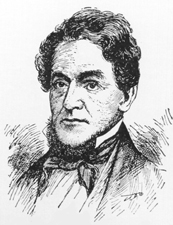
Charles Cathcart
Former U.S. Senator from Indiana · 1852–1853 · Democratic · Class 3
Charles Cathcart represented Indiana in the United States Senate (1852–1853) for the Democratic party. The page below collects sourced biographical facts, term history, committee roles, and provenance for Cathcart.
Bioguide ID: C000250
Key facts
- Full name
- Charles Cathcart
- State
- Indiana
- Party
- Democratic
- Senate class
- Class III
- Senate service
- 1852–1853
- First Senate term
- 1852
- Status
- Left office
- Current term ends
- —
- Born
- 1809
- Bioguide ID
- C000250
- Committee assignments
- —
- Dataset version
- 1.20260602
Biographical narrative
878 words · sourced from the Wikipedia REST extract
Charles Cathcart was a 19th-century American politician who served as a United States Senator from Indiana. A member of the Democratic Party, he held office during a period marked by significant political and social changes in the United States. His political career included serving in both the House of Representatives and the Senate, reflecting a commitment to public service that spanned several years. Cathcart's life and career were shaped by his early experiences and the evolving landscape of American politics in the mid-1800s.
Early life and career
Charles Cathcart was born on July 24, 1809, in Funchal, Madeira Island, Portugal. His father, James Leander Cathcart, served as the United States Consul, which influenced the family's mobility and exposure to various cultures and political environments. In his early years, Cathcart traveled with his parents to Spain, where he received his education at private schools. The family returned to the United States in 1819, and Cathcart's early experiences included a brief period at sea, which likely contributed to his understanding of maritime and trade issues.
In 1830, Cathcart relocated to Washington, D.C., where he began his professional career as a clerk in the United States General Land Office. This position provided him with insights into the workings of the federal government and land management, which would later inform his political decisions. By 1833, he had moved to Indiana, where he took on the role of justice of the peace in New Durham Township. His involvement in local governance marked the beginning of his political aspirations.
In 1837, Cathcart engaged in agricultural pursuits near La Porte, Indiana, which would become a significant aspect of his life and career. He also worked as a United States land surveyor, a role that further connected him to the land and development issues of the time. His political career in Indiana began to take shape when he was elected to the Indiana Senate, serving from 1837 to 1840. This experience in state politics laid the groundwork for his future endeavors at the national level.
Senate tenure
Cathcart's congressional career began when he was elected as a Democrat to the Twenty-ninth and Thirtieth Congresses, serving from March 4, 1845, to March 3, 1849. During this time, he participated in legislative discussions and decisions that were pivotal to the nation’s development. His tenure in the House of Representatives allowed him to build a network of political relationships and gain experience in federal governance.
Following his time in the House, Cathcart was appointed to the United States Senate to fill the vacancy left by the death of Senator James Whitcomb. He served in the Senate from December 6, 1852, until January 18, 1853. Although his time in the Senate was relatively brief, it was part of a significant period in American history, characterized by debates over issues such as slavery, states' rights, and westward expansion. Cathcart's appointment to the Senate reflected the Democratic Party's influence in Indiana during this era.
After his Senate tenure, Cathcart sought election to the Thirty-seventh Congress in 1860 but was unsuccessful. Following this defeat, he returned to his agricultural pursuits, indicating a shift away from active political life. His experiences in both the House and Senate, along with his earlier roles in state politics, contributed to his understanding of the complexities of governance and public service.
Legislative focus and committees
While specific details regarding Cathcart's legislative focus and committee assignments during his congressional service are not extensively documented, his background in land surveying and agriculture likely influenced his interests in policies related to land use, development, and agricultural practices. His experiences as a land surveyor and farmer would have provided him with a unique perspective on the importance of land management and agricultural issues, which were critical to the economy and society of the time.
Cathcart's political career unfolded during a period of significant change in the United States, where issues such as territorial expansion and the debates surrounding slavery were at the forefront of national discourse. As a member of the Democratic Party, he would have been involved in discussions that shaped the party's platform and response to these pressing issues. His brief time in the Senate coincided with a tumultuous period leading up to the Civil War, and while specific legislative actions are not detailed, it is reasonable to assume that he engaged in the political debates of the day.
After leaving the Senate, Cathcart returned to his agricultural roots, suggesting a continued commitment to the land and community that had defined much of his life. His later years were spent on his farm near La Porte, Indiana, where he continued to engage with the agricultural community until his death on August 22, 1888. He was interred in Pine Lake Cemetery, marking the end of a life dedicated to public service and the agricultural pursuits that had sustained him throughout his career.
In summary, Charles Cathcart's life and career reflect the complexities of 19th-century American politics and society. His journey from a consul's son in Portugal to a U.S. Senator from Indiana illustrates the diverse experiences that shaped his political perspective. His contributions to both state and federal governance, along with his commitment to agriculture, underscore the interconnectedness of these aspects in the development of his public service.
Notable legislation
Sponsored and co-sponsored legislation for Charles Cathcart is pending operator curation. The biographical narrative above carries the same provenance trail until per-bill rows are written.
Sources
- [1]https://en.wikipedia.org/wiki/Charles_W._CathcartWikipedia · retrieved 2026-06-02
Notable quotes
Sourced quotes for Charles Cathcart are pending operator curation. Narrative-scope provenance remains attached below.
Sources
- [1]https://en.wikipedia.org/wiki/Charles_W._CathcartWikipedia · retrieved 2026-06-02
Key positions
Curated policy positions for Charles Cathcart are pending operator review. The biographical narrative above carries the same provenance trail until per-topic positions are written.
Sources
- [1]https://en.wikipedia.org/wiki/Charles_W._CathcartWikipedia · retrieved 2026-06-02
Terms served
- 1845–1847U.S. House · District 9 · Term 1 · Democratic
- 1847–1849U.S. House · District 9 · Term 2 · Democratic
- 1852–1853U.S. Senate · Term 3 · Democratic · Class III
Sources & provenance
Every attributable claim above carries a per-section [N] marker that resolves to the corresponding URL below. Each entry records the upstream provider, the canonical URL, and the timestamp at which the source was retrieved by the ingest pipeline.
Key facts
- https://bioguide.congress.gov/search/bio/C000250bioguide · retrieved 2026-06-02
- https://www.govtrack.us/congress/members/402394govtrack · retrieved 2026-06-02
Biographical narrative
- https://en.wikipedia.org/wiki/Charles_W._Cathcartwikipedia · retrieved 2026-06-02
Find your senator
Every U.S. state elects two senators. Browse Indiana’s delegation, the full former-senator roster, or explore the role and term length.
Related on The Candidate
- Preceded by Edward HanneganEarlier holder of the Indiana Class III Senate seat · Democratic.Open
- Succeeded by John PettitLater holder of the Indiana Class III Senate seat · Democratic.Open
- Albert BeveridgeFormer U.S. Senator from Indiana · RepublicanOpen
- Albert WhiteFormer U.S. Senator from Indiana · WhigOpen
- Arthur RobinsonFormer U.S. Senator from Indiana · RepublicanOpen
- Benjamin HarrisonFormer U.S. Senator from Indiana · RepublicanOpen