
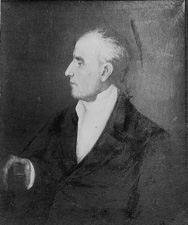
Historical · U.S. Senate · Kentucky
Buckner Thruston
Former U.S. Senator from Kentucky · 1805–1809 · Republican · Class 2
Buckner Thruston represented Kentucky in the United States Senate (1805–1809) for the Republican party. The page below collects sourced biographical facts, term history, committee roles, and provenance for Thruston.
Bioguide ID: T000249
Key facts
- Full name
- Buckner Thruston
- State
- Kentucky
- Party
- Republican
- Senate class
- Class II
- Senate service
- 1805–1809
- First Senate term
- 1805
- Status
- Left office
- Current term ends
- —
- Born
- 1763
- Bioguide ID
- T000249
- Committee assignments
- —
- Dataset version
- 1.20260602
Biographical narrative
929 words · sourced from the Wikipedia REST extract
Buckner Thruston was a prominent American lawyer and politician who served as a United States Senator from Kentucky. He was a member of the Republican Party and held office from 1805 until 1809, after which he transitioned to a judicial role as a United States circuit judge. Thruston's career spanned various facets of public service, including legislative and judicial responsibilities, and he played a significant role in the early governance of Kentucky and the District of Columbia.
Early life and career
Buckner Thruston was born on February 9, 1763, in Petsworth Parish, located in Gloucester County, Virginia, during the colonial period. He was born into a family with a history of military and civic involvement; his grandfather served as a colonel in the local militia and was engaged in farming operations that utilized enslaved labor. His father, Charles Mynn Thruston, was educated and ordained as a minister, and he continued the family tradition of farming while also serving as a military officer. Notably, he became known as a "fighting parson," having recruited a military company during the American Revolutionary War and achieving the rank of colonel, although he suffered a severe injury that resulted in the loss of the use of one arm.
Buckner Thruston received an education befitting his social status, despite the early death of his mother when he was an infant. Following her passing, his father remarried, and Buckner grew up in a household with several siblings. He pursued higher education at the College of William & Mary, where he earned a degree in Artium Baccalaureus in 1783.
After completing his education, Thruston was admitted to the Virginia bar and relocated to what was then known as Kentucky County, which later became part of the Commonwealth of Kentucky. This area attracted many Revolutionary War veterans who were granted land. Thruston established a private legal practice in Lexington, Kentucky, where he began his career in law and politics.
In 1789, Thruston was elected to the Virginia House of Delegates alongside Abner Field, but the two were replaced the following year. This meant that he did not serve concurrently with his father, who represented Frederick County in the same legislative body during that period. In 1791, Thruston was appointed as a commissioner to resolve a boundary dispute between Kentucky and Virginia. He also served as a Judge of the Kentucky District Court in 1791 and later as the clerk of the Kentucky Senate from 1792 to 1794. His judicial career continued when he was appointed as a Judge of the Kentucky Circuit Court, a position he held from 1802 to 1803.
In 1804, after his father relocated to Louisiana following the Louisiana Purchase, Thruston was offered a federal judicial appointment as United States District Judge for the District of Orleans, which he ultimately declined.
Senate tenure
Buckner Thruston was elected as a Democratic-Republican to the United States Senate, where he served from March 4, 1805, until December 18, 1809. His election to the Senate marked a significant step in his political career, allowing him to contribute to national legislation during a formative period in American history. Throughout his time in the Senate, Thruston participated in various discussions and decisions that shaped the early governance of the United States.
During his tenure, Thruston was involved in the legislative processes that addressed the challenges facing the young nation, including issues related to governance, territorial expansion, and the integration of new states into the Union. His service in the Senate was characterized by the political dynamics of the time, which included the influence of the Democratic-Republican Party and the evolving landscape of American politics.
Thruston resigned from the Senate on December 18, 1809, to accept a judicial appointment, marking the end of his brief but impactful legislative career. His transition from the Senate to the judiciary reflected a common pathway for politicians of his era, who often moved between legislative and judicial roles.
Legislative focus and committees
While specific details regarding Thruston's legislative focus and committee assignments during his Senate tenure are not extensively documented, it can be inferred that his background in law and governance influenced his contributions to legislative discussions. As a senator, he would have engaged with various issues pertinent to the interests of Kentucky and the broader national context.
After resigning from the Senate, Thruston was nominated by President James Madison to serve on the United States Circuit Court of the District of Columbia. He was confirmed by the Senate and received his commission in December 1809. Thruston served in this judicial capacity until his death on August 30, 1845. His long tenure as a federal judge underscored his commitment to public service and the legal system.
Throughout his life, Thruston was also known for his personal life, which included marriage and the raising of several children. His family was involved in the institution of slavery, as evidenced by the records indicating that his household included enslaved individuals during the early 19th century. His son, Charles Mynn Thruston, pursued a military career and became a general in the Union Army during the American Civil War, furthering the family's legacy of public service.
Buckner Thruston's life and career reflect the complexities of early American politics and law, as well as the social dynamics of his time. His contributions to both the legislative and judicial branches of government illustrate the interconnected nature of these roles in shaping the United States during its formative years. Thruston was interred in Congressional Cemetery in Washington, D.C., marking the end of a significant chapter in the history of American governance.
Notable legislation
Sponsored and co-sponsored legislation for Buckner Thruston is pending operator curation. The biographical narrative above carries the same provenance trail until per-bill rows are written.
Sources
- [1]https://en.wikipedia.org/wiki/Buckner_ThrustonWikipedia · retrieved 2026-06-02
Notable quotes
Sourced quotes for Buckner Thruston are pending operator curation. Narrative-scope provenance remains attached below.
Sources
- [1]https://en.wikipedia.org/wiki/Buckner_ThrustonWikipedia · retrieved 2026-06-02
Key positions
Curated policy positions for Buckner Thruston are pending operator review. The biographical narrative above carries the same provenance trail until per-topic positions are written.
Sources
- [1]https://en.wikipedia.org/wiki/Buckner_ThrustonWikipedia · retrieved 2026-06-02
Terms served
- 1805–1809U.S. Senate · Term 1 · Republican · Class II
Sources & provenance
Every attributable claim above carries a per-section [N] marker that resolves to the corresponding URL below. Each entry records the upstream provider, the canonical URL, and the timestamp at which the source was retrieved by the ingest pipeline.
Key facts
- https://bioguide.congress.gov/search/bio/T000249bioguide · retrieved 2026-06-02
- https://www.govtrack.us/congress/members/410827govtrack · retrieved 2026-06-02
Biographical narrative
- https://en.wikipedia.org/wiki/Buckner_Thrustonwikipedia · retrieved 2026-06-02
Find your senator
Every U.S. state elects two senators. Browse Kentucky’s delegation, the full former-senator roster, or explore the role and term length.
Related on The Candidate
- Preceded by John BrownEarlier holder of the Kentucky Class II Senate seat · Republican.Open
- Succeeded by George BibbLater holder of the Kentucky Class II Senate seat · Jackson.Open
- Alben BarkleyFormer U.S. Senator from Kentucky · DemocraticOpen
- Archibald DixonFormer U.S. Senator from Kentucky · WhigOpen
- Augustus StanleyFormer U.S. Senator from Kentucky · DemocraticOpen
- Ben WilliamsonFormer U.S. Senator from Kentucky · DemocraticOpen