
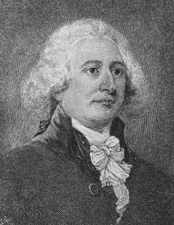
Historical · U.S. Senate · Kentucky
John Brown
Former U.S. Senator from Kentucky · 1792–1805 · Republican · Class 2
John Brown represented Kentucky in the United States Senate (1792–1805) for the Republican party. The page below collects sourced biographical facts, term history, committee roles, and provenance for Brown.
Bioguide ID: B000929
Key facts
- Full name
- John Brown
- State
- Kentucky
- Party
- Republican
- Senate class
- Class II
- Senate service
- 1792–1805
- First Senate term
- 1792
- Status
- Left office
- Current term ends
- —
- Born
- 1757
- Bioguide ID
- B000929
- Committee assignments
- —
- Dataset version
- 1.20260602
Biographical narrative
856 words · sourced from the Wikipedia REST extract
John Brown was an American lawyer and politician who served as a U.S. Senator from Kentucky. A member of the Republican Party, he played a significant role in the early political landscape of the United States, particularly in the establishment of Kentucky as a state. His political career included multiple terms in Congress, where he was instrumental in advocating for Kentucky's statehood. Brown's tenure in the Senate was marked by his involvement in various legislative matters and his service as President pro tempore of the Senate.
Early life and career
John Brown was born on September 12, 1757, in Augusta County, Virginia, which was then part of the Colony of Virginia. He was the son of Reverend John Brown and Margaret Preston Brown, both of whom were immigrants from northern Ireland. Growing up in a family with strong educational values, Brown received a solid education. He initially attended Liberty Hall Academy, which is now known as Washington and Lee University, before moving on to the College of New Jersey, now Princeton University. His studies at Princeton were interrupted by the onset of the American Revolutionary War, which led to a temporary halt in his academic pursuits.
The specifics of Brown's military service during the Revolutionary War are not well-documented, although family tradition suggests that he served under prominent figures such as General George Washington and the Marquis de Lafayette. After leaving Princeton in 1778, Brown enrolled at The College of William & Mary to study law. However, his legal education was again disrupted by the war and the arrival of British forces in the area. Despite these interruptions, he continued to pursue his legal studies informally while working in the office of Thomas Jefferson in Charlottesville, Virginia.
In the realm of politics, Brown became active after being admitted to the bar. He was elected to the Virginia state Senate, where he served from 1783 to 1788. His political career expanded when he was selected as a delegate to the Continental Congress in 1787 and 1788. Following the ratification of the U.S. Constitution, he was elected to the U.S. House of Representatives, serving from 1789 to 1792. During this time, he introduced the petition for Kentucky's statehood, which would later define his political legacy.
Senate tenure
John Brown's political career took a significant turn when Kentucky achieved statehood in 1792. After resigning from the House of Representatives, he was elected by the Kentucky legislature to the United States Senate, marking the beginning of his first Senate term. His initial term began in 1792 and continued until 1793, after which he was re-elected twice, serving a total of three terms in the Senate until his departure in 1805.
During his time in the Senate, Brown moved to Frankfort, Kentucky, which was the state capital. His service included a notable role as President pro tempore of the Senate during the Eighth Congress, a position that placed him in a leadership role within the legislative body. Throughout his tenure, Brown was involved in various legislative discussions and decisions, including a notable stance against authorizing military force during the Quasi-War, where he was one of only four senators to oppose such measures.
Brown's Senate career concluded in 1805 when he was defeated in his bid for re-election. Following his departure from the Senate, he returned to his estate, Liberty Hall, where he remained engaged in public life and various community initiatives for the next three decades.
Legislative focus and committees
Throughout his Senate tenure, John Brown's legislative focus was shaped by the evolving political landscape of the early United States. His advocacy for Kentucky's statehood was a significant aspect of his career, reflecting his commitment to the interests of his home state. As a senator, he participated in discussions and decisions that would impact the development of Kentucky and its governance.
In addition to his legislative responsibilities, Brown was involved in various public works and initiatives after leaving the Senate. He managed significant land holdings in Kentucky and Ohio, including a substantial property near Chillicothe, Ohio. His contributions extended to the founding of the Frankfort Water Company and serving as a director of the first Bank of Kentucky. In 1812, he was appointed by the Kentucky legislature to oversee the construction of a public house of worship in Frankfort, showcasing his dedication to community service.
Brown's involvement in local governance continued as he was elected Sheriff of Franklin County in 1829. He also played a role in overseeing the construction of the brick Capitol building in Frankfort, contributing to the architectural legacy of the state. In 1836, he presided over the organizational meeting of the Kentucky Historical Society, further emphasizing his commitment to preserving the history and culture of Kentucky.
John Brown passed away on August 29, 1837, in Lexington, Kentucky, at the age of 79. He was buried in Frankfort, where he had spent much of his life. His legacy is preserved at Liberty Hall, his historic home, which is now a designated historic site. Brown's contributions to Kentucky and the early United States remain significant, reflecting his role in shaping the political landscape of his time.
Notable legislation
Sponsored and co-sponsored legislation for John Brown is pending operator curation. The biographical narrative above carries the same provenance trail until per-bill rows are written.
Sources
- [1]https://en.wikipedia.org/wiki/John_Brown_(Kentucky_politician%2C_born_1757)Wikipedia · retrieved 2026-06-02
Notable quotes
Sourced quotes for John Brown are pending operator curation. Narrative-scope provenance remains attached below.
Sources
- [1]https://en.wikipedia.org/wiki/John_Brown_(Kentucky_politician%2C_born_1757)Wikipedia · retrieved 2026-06-02
Key positions
Curated policy positions for John Brown are pending operator review. The biographical narrative above carries the same provenance trail until per-topic positions are written.
Sources
- [1]https://en.wikipedia.org/wiki/John_Brown_(Kentucky_politician%2C_born_1757)Wikipedia · retrieved 2026-06-02
Terms served
- 1789–1791U.S. House · District -1 · Term 1
- 1791–1792U.S. House · District -1 · Term 2
- 1792–1793U.S. Senate · Term 3 · Republican · Class II
- 1793–1799U.S. Senate · Term 4 · Republican · Class II
- 1799–1805U.S. Senate · Term 5 · Republican · Class II
Sources & provenance
Every attributable claim above carries a per-section [N] marker that resolves to the corresponding URL below. Each entry records the upstream provider, the canonical URL, and the timestamp at which the source was retrieved by the ingest pipeline.
Key facts
- https://bioguide.congress.gov/search/bio/B000929bioguide · retrieved 2026-06-02
- https://www.govtrack.us/congress/members/401881govtrack · retrieved 2026-06-02
Biographical narrative
- https://en.wikipedia.org/wiki/John_Brown_(Kentucky_politician%2C_born_1757)wikipedia · retrieved 2026-06-02
Find your senator
Every U.S. state elects two senators. Browse Kentucky’s delegation, the full former-senator roster, or explore the role and term length.
Related on The Candidate
- Succeeded by Buckner ThrustonLater holder of the Kentucky Class II Senate seat · Republican.Open
- Alben BarkleyFormer U.S. Senator from Kentucky · DemocraticOpen
- Archibald DixonFormer U.S. Senator from Kentucky · WhigOpen
- Augustus StanleyFormer U.S. Senator from Kentucky · DemocraticOpen
- Ben WilliamsonFormer U.S. Senator from Kentucky · DemocraticOpen
- Republican PartyFederal candidates and office holders on the Republican line.Open