
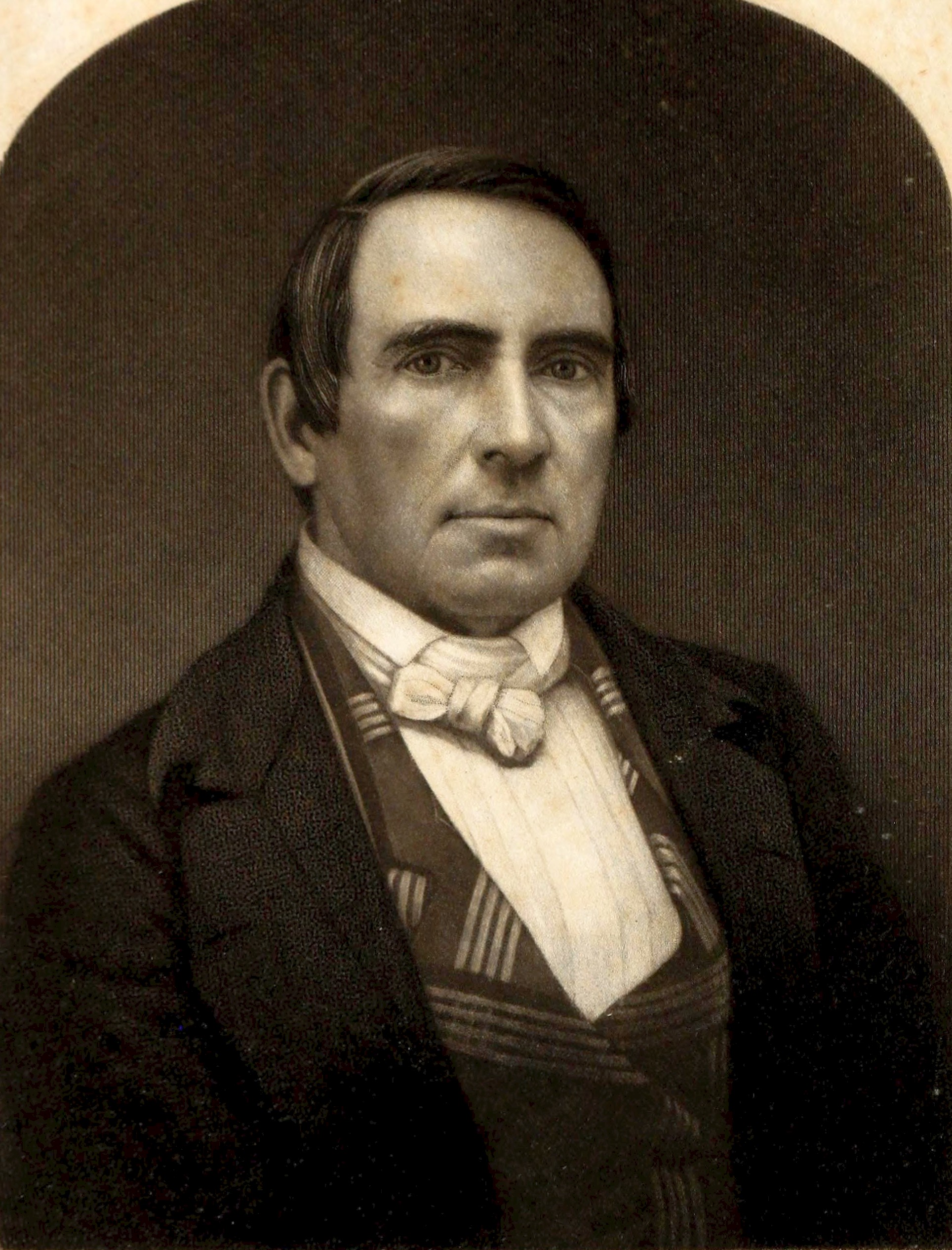
Historical · U.S. Senate · Kentucky
Joseph Underwood
Former U.S. Senator from Kentucky · 1847–1853 · Whig · Class 2
Joseph Underwood represented Kentucky in the United States Senate (1847–1853) for the Whig party. The page below collects sourced biographical facts, term history, committee roles, and provenance for Underwood.
Bioguide ID: U000011
Key facts
- Full name
- Joseph Underwood
- State
- Kentucky
- Party
- Whig
- Senate class
- Class II
- Senate service
- 1847–1853
- First Senate term
- 1847
- Status
- Left office
- Current term ends
- —
- Born
- 1791
- Bioguide ID
- U000011
- Committee assignments
- —
- Dataset version
- 1.20260602
Biographical narrative
918 words · sourced from the Wikipedia REST extract
Joseph Underwood was a prominent American politician, lawyer, and judge who served as a U.S. Senator from Kentucky during the mid-19th century. A member of the Whig Party, Underwood's political career spanned several decades, during which he held various positions, including a term in the U.S. House of Representatives. He was known for his opposition to slavery and his advocacy for gradual emancipation, as well as his strong support for the Union during the Civil War. Underwood's legacy includes his contributions to Kentucky's political landscape and his family's continued involvement in public service.
Early life and career
Joseph Underwood was born on October 24, 1791, in Goochland County, Virginia. He was the son of John Underwood, a veteran of the American Revolutionary War, and Frances Rogers. Underwood's early life was marked by a move to Barren County, Kentucky, in 1803, where he lived with his uncle, Edmund Rogers. His education took place in private schools, and he graduated from Transylvania College in Lexington, Kentucky, in 1811. Following his graduation, Underwood began studying law in Lexington under the guidance of Robert Wickliffe. However, his legal studies were interrupted when he served as a lieutenant in the Thirteenth Regiment of the Kentucky Infantry during the War of 1812.
In 1817, Underwood married Eliza McCowes Trotter, with whom he had several children. After her death in 1835, he remarried Elizabeth Threlkeld Cox, the sister of his first wife's brother. Underwood's family included notable descendants, such as his son John Cox Underwood, who became a Confederate engineer and later served as Kentucky's 21st Lieutenant Governor.
Underwood was admitted to the bar in 1813 and began practicing law in Glasgow, Kentucky. His early political career included serving as a town trustee and county auditor until 1823. He was also a member of the Kentucky House of Representatives from 1816 to 1819. After relocating to Bowling Green, Kentucky, he was elected to the State House of Representatives again, serving from 1825 to 1826. In 1828, he ran unsuccessfully for the position of lieutenant governor of Kentucky. Following this, he served as a judge of the Court of Appeals from 1828 until 1835, a period marked by the Old Court-New Court controversy.
Underwood's political alignment shifted towards the Whig Party, and he was elected to the United States House of Representatives, representing Kentucky's District 3 from March 4, 1835, until March 3, 1843. During his tenure in the House, he chaired the U.S. House Committee on the District of Columbia. After choosing not to seek renomination in 1843, he returned to practicing law. In 1844, he served as a presidential elector on the Whig ticket and was subsequently elected to the State House in 1846, where he held the position of speaker.
Senate tenure
Joseph Underwood was elected to the United States Senate as a member of the Whig Party, serving from March 4, 1847, until March 3, 1853. His tenure in the Senate occurred during a tumultuous period in American history, characterized by growing sectional tensions over issues such as slavery and states' rights. Underwood's political stance was shaped by his opposition to slavery, advocating for gradual emancipation rather than immediate abolition. He believed that the federal government did not possess the constitutional authority to impose slavery-related laws on individual states, yet he was firmly against secession.
During his time in the Senate, Underwood was involved in various legislative discussions and debates, reflecting the contentious political climate of the era. He chose not to seek reelection in 1853, concluding his Senate career after one term. Following his departure from the Senate, Underwood continued to engage in public service, returning to the Kentucky House of Representatives for two additional terms from 1861 to 1863. His later political activities included campaigning for the Constitutional Union Party and attending the Democratic National Convention in 1864, where he played a role in rebuilding the party in Kentucky.
Legislative focus and committees
Throughout his political career, Joseph Underwood demonstrated a commitment to various issues, particularly those related to civil rights and governance. As a member of the Whig Party, he was known for his opposition to Andrew Jackson and his advocacy for emancipation. Underwood's legislative focus included discussions on the status of slavery in the United States, where he promoted the idea of gradual emancipation while also expressing concerns about the federal government's role in state matters.
In the Senate, Underwood's contributions were reflective of the Whig Party's platform, which often emphasized economic development, infrastructure improvements, and a cautious approach to social issues. His involvement in the Senate occurred during a time when debates over the Compromise of 1850 and other significant legislative measures were critical to the nation's future. Underwood's position on these matters was shaped by his belief in a gradual approach to social change, particularly concerning slavery.
Underwood's legacy extends beyond his legislative actions; he was also known for his strong Union sympathies during the Civil War. His advocacy for the Union and his opposition to secessionist sentiments in Kentucky positioned him as a notable figure during a period of national crisis. His family continued to be involved in public service, with his descendants maintaining a presence in Kentucky's political landscape.
Joseph Underwood passed away on August 23, 1876, near Bowling Green, Kentucky. His papers are preserved at Western Kentucky University, providing insight into his life and contributions. His legacy is marked by his commitment to public service, his advocacy for gradual emancipation, and his role in the political developments of 19th-century Kentucky.
Notable legislation
Sponsored and co-sponsored legislation for Joseph Underwood is pending operator curation. The biographical narrative above carries the same provenance trail until per-bill rows are written.
Sources
- [1]https://en.wikipedia.org/wiki/Joseph_R._UnderwoodWikipedia · retrieved 2026-06-02
Notable quotes
Sourced quotes for Joseph Underwood are pending operator curation. Narrative-scope provenance remains attached below.
Sources
- [1]https://en.wikipedia.org/wiki/Joseph_R._UnderwoodWikipedia · retrieved 2026-06-02
Key positions
Curated policy positions for Joseph Underwood are pending operator review. The biographical narrative above carries the same provenance trail until per-topic positions are written.
Sources
- [1]https://en.wikipedia.org/wiki/Joseph_R._UnderwoodWikipedia · retrieved 2026-06-02
Terms served
- 1835–1837U.S. House · District 3 · Term 1 · Whig
- 1837–1839U.S. House · District 3 · Term 2 · Whig
- 1839–1841U.S. House · District 3 · Term 3 · Whig
- 1841–1843U.S. House · District 3 · Term 4 · Whig
- 1847–1853U.S. Senate · Term 5 · Whig · Class II
Sources & provenance
Every attributable claim above carries a per-section [N] marker that resolves to the corresponding URL below. Each entry records the upstream provider, the canonical URL, and the timestamp at which the source was retrieved by the ingest pipeline.
Key facts
- https://bioguide.congress.gov/search/bio/U000011bioguide · retrieved 2026-06-02
- https://www.govtrack.us/congress/members/411035govtrack · retrieved 2026-06-02
Biographical narrative
- https://en.wikipedia.org/wiki/Joseph_R._Underwoodwikipedia · retrieved 2026-06-02
Find your senator
Every U.S. state elects two senators. Browse Kentucky’s delegation, the full former-senator roster, or explore the role and term length.
Related on The Candidate
- Preceded by James MoreheadEarlier holder of the Kentucky Class II Senate seat · Whig.Open
- Succeeded by John ThompsonLater holder of the Kentucky Class II Senate seat · American.Open
- Alben BarkleyFormer U.S. Senator from Kentucky · DemocraticOpen
- Archibald DixonFormer U.S. Senator from Kentucky · WhigOpen
- Augustus StanleyFormer U.S. Senator from Kentucky · DemocraticOpen
- Ben WilliamsonFormer U.S. Senator from Kentucky · DemocraticOpen