
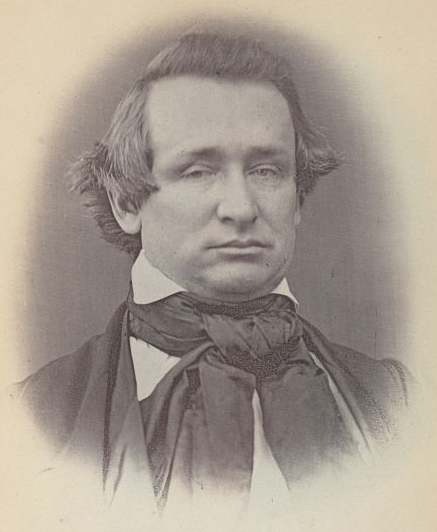
Historical · U.S. Senate · Kentucky
John Thompson
Former U.S. Senator from Kentucky · 1853–1859 · American · Class 2
John Thompson represented Kentucky in the United States Senate (1853–1859) for the American party. The page below collects sourced biographical facts, term history, committee roles, and provenance for Thompson.
Bioguide ID: T000208
Key facts
- Full name
- John Thompson
- State
- Kentucky
- Party
- American
- Senate class
- Class II
- Senate service
- 1853–1859
- First Senate term
- 1853
- Status
- Left office
- Current term ends
- —
- Born
- 1810
- Bioguide ID
- T000208
- Committee assignments
- —
- Dataset version
- 1.20260602
Biographical narrative
826 words · sourced from the Wikipedia REST extract
John Thompson was an American politician who served as a U.S. Senator from Kentucky and held various political positions throughout his career, including being a U.S. Representative and the 14th Lieutenant Governor of Kentucky. His political journey spanned several decades, during which he was affiliated with multiple political parties, reflecting the shifting political landscape of the time. Thompson's tenure in the Senate was marked by the complexities of pre-Civil War America, and his legacy is intertwined with the contentious issues of his era, particularly regarding slavery.
Early life and career
John Thompson was born on December 14, 1810, near Harrodsburg, Kentucky. He was raised in a household that supported slavery, as his parents owned six enslaved individuals. Following the death of his father in 1833, his mother took over the family's slaveholding practices. This background influenced Thompson's views and actions throughout his life, as he continued the legacy of slave ownership during his political career.
Thompson pursued an education that led him to the study of law. He completed his preparatory studies and was admitted to the bar in 1831. Following his admission, he began practicing law in Harrodsburg, where he gained recognition and eventually became the Commonwealth's Attorney. His legal career laid the groundwork for his entry into politics, as he developed a reputation within the community.
His political career began in the Kentucky Legislature, where he was elected to the Kentucky Senate in 1829. He served in this capacity until 1833, after which he transitioned to the Kentucky House of Representatives in 1835. Thompson served two consecutive two-year terms in the House, further establishing his political presence in the state.
Senate tenure
Thompson's national political career commenced when he was elected as a Whig to the United States House of Representatives in 1840. He filled a vacancy in Kentucky's 5th District caused by the death of the incumbent, Simeon H. Anderson. Thompson was subsequently reelected in 1842 and served until March 3, 1843. After a brief hiatus from Congress, he returned to the House, representing the same district from March 4, 1847, to March 3, 1851. During this second term, he held the position of chairman of the U.S. House Committee on the Militia, which allowed him to influence military-related legislation.
In 1852, Thompson was elected as the 14th Lieutenant Governor of Kentucky, a position that further solidified his political standing within the state. Later that year, he transitioned to the U.S. Senate, where he was elected as a member of the Know-Nothing party. His Senate term began on March 4, 1853, and concluded on March 3, 1859. During his time in the Senate, Thompson navigated the complex political environment leading up to the Civil War, a period marked by significant national tension over issues such as slavery and states' rights.
Thompson's political affiliations evolved over time. Initially a Clay Whig, he shifted his allegiance to the Constitutional Unionist faction as the political landscape changed in the years leading up to the Civil War. His political journey reflects the broader transformations occurring within American politics during this tumultuous period.
Legislative focus and committees
Throughout his political career, Thompson was involved in various legislative matters, particularly during his time in the U.S. House of Representatives. As chairman of the House Committee on the Militia, he played a role in shaping military policy and addressing issues related to national defense. His legislative focus during this period was likely influenced by the growing tensions surrounding the impending Civil War.
In the Senate, Thompson's contributions were shaped by the political climate of the time, which was increasingly dominated by debates over slavery and its implications for the Union. His affiliation with the Know-Nothing party, which was characterized by its nativist sentiments and opposition to immigration, reflected the concerns of many Americans during the mid-19th century. However, specific details regarding his legislative initiatives or committee assignments in the Senate are not extensively documented.
Thompson's political career also intersected with his personal life, particularly regarding his ownership of enslaved individuals. Reports from the time indicate that he was an enslaver, owning multiple enslaved people throughout his life. This aspect of his personal history is significant in understanding the context of his political actions and the societal norms of his era.
After his Senate term concluded in 1859, Thompson's political career continued to evolve. He accepted a nomination as President of the "Radical Congressional Convention" in 1870, indicating his ongoing engagement in political matters even after leaving office. His later years were marked by a marriage to Mary Hardin (Chinn) Bowman in 1868, although the couple did not have children.
Thompson passed away on January 7, 1874, in Harrodsburg, Kentucky. He was interred in Spring Hill Cemetery, leaving behind a legacy intertwined with the political developments of his time. His life and career reflect the complexities of American politics in the 19th century, particularly in relation to issues of slavery, governance, and the evolving nature of political parties.
Notable legislation
Sponsored and co-sponsored legislation for John Thompson is pending operator curation. The biographical narrative above carries the same provenance trail until per-bill rows are written.
Sources
- [1]https://en.wikipedia.org/wiki/John_Burton_ThompsonWikipedia · retrieved 2026-06-02
Notable quotes
Sourced quotes for John Thompson are pending operator curation. Narrative-scope provenance remains attached below.
Sources
- [1]https://en.wikipedia.org/wiki/John_Burton_ThompsonWikipedia · retrieved 2026-06-02
Key positions
Curated policy positions for John Thompson are pending operator review. The biographical narrative above carries the same provenance trail until per-topic positions are written.
Sources
- [1]https://en.wikipedia.org/wiki/John_Burton_ThompsonWikipedia · retrieved 2026-06-02
Terms served
- 1839–1841U.S. House · District 5 · Term 1 · Whig
- 1841–1843U.S. House · District 5 · Term 2 · Whig
- 1847–1849U.S. House · District 5 · Term 3 · Whig
- 1849–1851U.S. House · District 5 · Term 4 · Whig
- 1853–1859U.S. Senate · Term 5 · American · Class II
Sources & provenance
Every attributable claim above carries a per-section [N] marker that resolves to the corresponding URL below. Each entry records the upstream provider, the canonical URL, and the timestamp at which the source was retrieved by the ingest pipeline.
Key facts
- https://bioguide.congress.gov/search/bio/T000208bioguide · retrieved 2026-06-02
- https://www.govtrack.us/congress/members/410787govtrack · retrieved 2026-06-02
Biographical narrative
- https://en.wikipedia.org/wiki/John_Burton_Thompsonwikipedia · retrieved 2026-06-02
Find your senator
Every U.S. state elects two senators. Browse Kentucky’s delegation, the full former-senator roster, or explore the role and term length.
Related on The Candidate
- Preceded by Joseph UnderwoodEarlier holder of the Kentucky Class II Senate seat · Whig.Open
- Succeeded by Lazarus PowellLater holder of the Kentucky Class II Senate seat · Democratic.Open
- Alben BarkleyFormer U.S. Senator from Kentucky · DemocraticOpen
- Archibald DixonFormer U.S. Senator from Kentucky · WhigOpen
- Augustus StanleyFormer U.S. Senator from Kentucky · DemocraticOpen
- Ben WilliamsonFormer U.S. Senator from Kentucky · DemocraticOpen