
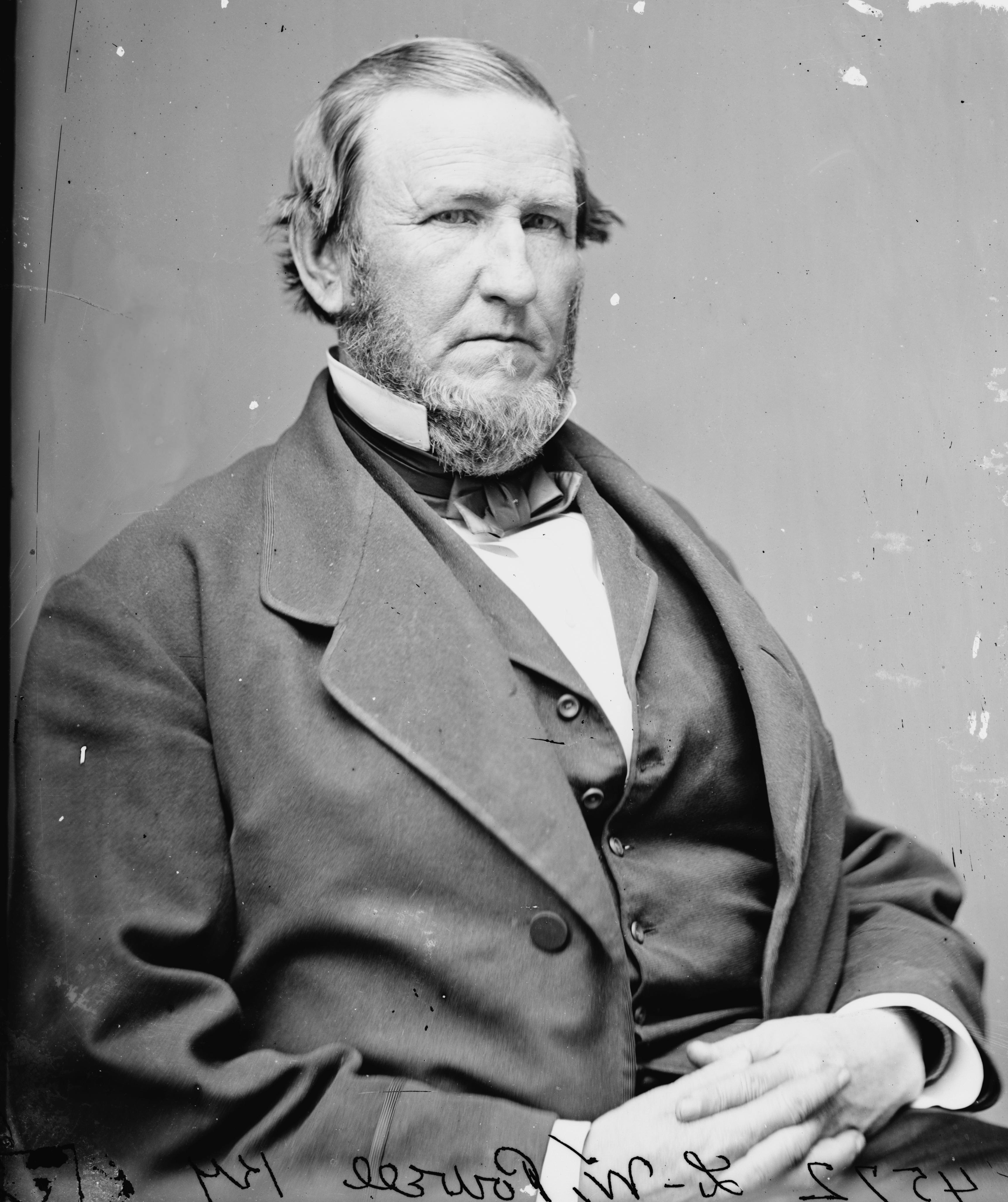
Historical · U.S. Senate · Kentucky
Lazarus Powell
Former U.S. Senator from Kentucky · 1859–1865 · Democratic · Class 2
Lazarus Powell represented Kentucky in the United States Senate (1859–1865) for the Democratic party. The page below collects sourced biographical facts, term history, committee roles, and provenance for Powell.
Bioguide ID: P000481
Key facts
- Full name
- Lazarus Powell
- State
- Kentucky
- Party
- Democratic
- Senate class
- Class II
- Senate service
- 1859–1865
- First Senate term
- 1859
- Status
- Left office
- Current term ends
- —
- Born
- 1812
- Bioguide ID
- P000481
- Committee assignments
- —
- Dataset version
- 1.20260602
Biographical narrative
939 words · sourced from the Wikipedia REST extract
Lazarus Powell was an American politician who served as a U.S. Senator from Kentucky and was the 19th governor of the state. His political career spanned significant periods in the mid-19th century, during which he was known for his involvement in educational reforms, transportation improvements, and his contentious relationship with the administration of President Abraham Lincoln. Powell's tenure in the Senate lasted from 1859 until 1865, and he was a member of the Democratic Party.
Early life and career
Lazarus Powell was born on October 6, 1812, near Henderson, Kentucky. He was the third son of Lazarus and Ann McMahon Powell, whose family had roots tracing back to Banbridge, Ulster, where his paternal grandparents had migrated in 1771. Powell's early education took place in the common schools of Henderson, and he received private tutoring from George Gayle. He pursued higher education at Saint Joseph College in Bardstown, Kentucky, where he earned a Bachelor of Arts degree in 1833. Following his graduation, he began studying law under the guidance of John Rowan and later enrolled in the Transylvania University School of Law, where he studied under prominent legal figures such as Justice George Robertson and Judge Daniel Mayes. Powell was admitted to the bar in 1835 and subsequently partnered with Archibald Dixon to establish a law practice in Henderson, maintaining this partnership until 1839.
In his personal life, Powell married Harriet Ann Jennings on November 8, 1837. The couple had three sons together, but Jennings passed away on July 30, 1846. Powell's political career began in 1836 when he ran for a seat in the Kentucky House of Representatives. Despite being a Democrat in a predominantly Whig district, Powell campaigned vigorously and secured a surprising victory over his opponent, John G. Holloway. However, Holloway defeated Powell in their subsequent contest in 1838. In 1844, Powell was selected as a presidential elector on the Democratic ticket, supporting James K. Polk.
Senate tenure
Powell's political ascent continued when he was nominated by the Democratic Party for governor of Kentucky in 1848. Initially, he was not the first choice for the nomination, as the party's original nominee, Linn Boyd, declined the offer. Powell was chosen largely due to the influence of James Guthrie. The election was competitive, with the Whig party nominating Senator John J. Crittenden and former Vice President Richard Mentor Johnson entering the race as an independent Democratic candidate. Recognizing the potential division among Democrats, Powell successfully negotiated with Johnson, who withdrew his candidacy and endorsed Powell. Despite these efforts, Crittenden won the election.
In the gubernatorial election of 1851, Powell was again the Democratic nominee. This time, he faced his former law partner, Archibald Dixon, who was the Whig candidate. The two candidates campaigned together across the state, presenting a rare display of camaraderie in a politically charged environment. Powell won the election by a narrow margin of just 850 votes, marking a significant moment as he became the first Democrat elected to the governorship in nearly two decades.
During his governorship, Powell faced a legislature controlled by the Whig party, which occasionally led to conflicts. He vetoed a redistricting plan that he believed was gerrymandered to favor the Whigs, although the legislature ultimately overrode his veto. However, he successfully vetoed legislation that he felt would lead to an excessive number of banks in the state. Powell also championed educational reforms, utilizing the state's sinking fund to pay interest on school bonds, a measure that had previously been vetoed by his predecessor. Under his leadership, Kentucky's educational system became one of the strongest in the antebellum South, culminating in a significant increase in school tax rates that was widely supported.
In 1855, Powell's administration successfully lobbied for a geological survey of the state and encouraged private investment in transportation infrastructure. During his term, the state saw a substantial increase in railroad mileage, expanding from 78 miles to 242 miles of operational track.
Following his governorship, Powell was elected to the United States Senate in January 1858. Before he could take his seat, he was dispatched by President James Buchanan to Utah along with Major Benjamin McCulloch to help ease tensions with Brigham Young and the Mormon community. Upon his return, Powell assumed his Senate seat just before the election of Abraham Lincoln.
Powell's time in the Senate was marked by his vocal criticism of Lincoln's administration. His opposition to the president's policies led to significant political strife, including calls from the Kentucky General Assembly for his resignation and attempts by some of his fellow senators to expel him from the Senate. However, both the assembly and his colleagues later retracted their actions.
Legislative focus and committees
During his Senate tenure, Powell was involved in various legislative matters, although specific details regarding his committee assignments and the exact nature of his legislative initiatives are not extensively documented. His opposition to the Lincoln administration characterized much of his political activity during this period, reflecting the contentious political climate of the time. Powell's criticism of the administration was significant enough to provoke a backlash from both the state legislature and some of his peers in the Senate.
Powell's political career came to an end when his Senate term concluded on March 3, 1865. He remained active in politics and made a bid to return to the Senate in 1867, but this effort was unsuccessful. Lazarus Powell passed away on July 3, 1867, at his home near Henderson, Kentucky. His legacy includes his contributions to education and infrastructure in Kentucky, as well as his complex role in the political landscape of the United States during a tumultuous period in its history.
Notable legislation
Sponsored and co-sponsored legislation for Lazarus Powell is pending operator curation. The biographical narrative above carries the same provenance trail until per-bill rows are written.
Sources
- [1]https://en.wikipedia.org/wiki/Lazarus_PowellWikipedia · retrieved 2026-06-02
Notable quotes
Sourced quotes for Lazarus Powell are pending operator curation. Narrative-scope provenance remains attached below.
Sources
- [1]https://en.wikipedia.org/wiki/Lazarus_PowellWikipedia · retrieved 2026-06-02
Key positions
Curated policy positions for Lazarus Powell are pending operator review. The biographical narrative above carries the same provenance trail until per-topic positions are written.
Sources
- [1]https://en.wikipedia.org/wiki/Lazarus_PowellWikipedia · retrieved 2026-06-02
Terms served
- 1859–1865U.S. Senate · Term 1 · Democratic · Class II
Sources & provenance
Every attributable claim above carries a per-section [N] marker that resolves to the corresponding URL below. Each entry records the upstream provider, the canonical URL, and the timestamp at which the source was retrieved by the ingest pipeline.
Key facts
- https://bioguide.congress.gov/search/bio/P000481bioguide · retrieved 2026-06-02
- https://www.govtrack.us/congress/members/408866govtrack · retrieved 2026-06-02
Biographical narrative
- https://en.wikipedia.org/wiki/Lazarus_Powellwikipedia · retrieved 2026-06-02
Find your senator
Every U.S. state elects two senators. Browse Kentucky’s delegation, the full former-senator roster, or explore the role and term length.
Related on The Candidate
- Preceded by John ThompsonEarlier holder of the Kentucky Class II Senate seat · American.Open
- Succeeded by James GuthrieLater holder of the Kentucky Class II Senate seat · Democratic.Open
- Alben BarkleyFormer U.S. Senator from Kentucky · DemocraticOpen
- Archibald DixonFormer U.S. Senator from Kentucky · WhigOpen
- Augustus StanleyFormer U.S. Senator from Kentucky · DemocraticOpen
- Ben WilliamsonFormer U.S. Senator from Kentucky · DemocraticOpen