
Historical · U.S. Senate · Louisiana
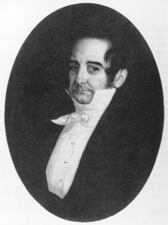
Charles Bouligny
Former U.S. Senator from Louisiana · 1824–1829 · Adams · Class 2
Charles Bouligny represented Louisiana in the United States Senate (1824–1829) for the Adams party. The page below collects sourced biographical facts, term history, committee roles, and provenance for Bouligny.
Bioguide ID: B000664
Key facts
- Full name
- Charles Bouligny
- State
- Louisiana
- Party
- Adams
- Senate class
- Class II
- Senate service
- 1824–1829
- First Senate term
- 1824
- Status
- Left office
- Current term ends
- —
- Born
- 1773
- Bioguide ID
- B000664
- Committee assignments
- —
- Dataset version
- 1.20260602
Biographical narrative
1,011 words · sourced from the Wikipedia REST extract
Charles Bouligny was a prominent lawyer and politician who served as a U.S. Senator from Louisiana from 1824 to 1829. Born in New Orleans in 1773, he was of mixed French and Spanish descent and had a significant impact on the political landscape of early Louisiana. His career spanned various roles, including military service, local governance, and legislative responsibilities at the national level. Bouligny’s tenure in the Senate was marked by his alignment with the National Republican Party and his advocacy for legislation that supported Louisiana's agricultural interests.
Early life and career
Charles Dominique Joseph Bouligny was born on August 22, 1773, in New Orleans, which was then part of New Spain. His father, Francisco Bouligny, was a military official who played a significant role in the administration of Spanish Louisiana, while his mother, Marie-Louise Le Sénéchal d'Auberville, hailed from a prominent Creole family in the region. As the second child and eldest son in the family, Bouligny was exposed to a blend of cultural influences from both French and Spanish heritage.
At the age of 12, Bouligny began his military career by joining Spain's Louisiana Regiment as a cadet. His dedication and skill led to a promotion to sublieutenant two years later. During the War of the First Coalition, he served in the artillery corps and was later appointed to command a squadron of gunboats on the Mississippi River. He was involved in the early construction of Fort San Fernando De Las Barrancas and received a promotion to lieutenant in December 1795. However, he resigned from the regiment in 1803 when the territory transitioned back to French control.
In 1800, Bouligny acquired a regidor perpétuo position in the cabildo, the municipal council of New Orleans, purchasing the seat for 800 silver pesos. The following year, he was elected as one of two annual commissioners, representing the Cabildo to the governor and overseeing the city treasurer's audits. After the Louisiana Purchase in 1803, he became a U.S. citizen and shifted his focus to managing a large sugarcane plantation located upriver from New Orleans, where he also produced tafia, a type of rum. Bouligny was a slaveholder, which was common among plantation owners of that era.
Bouligny’s political career began in earnest in 1805 when he was elected to the House of Representatives for the Territory of Orleans, representing Orleans County. He was reelected in 1807 and played a significant role during his second term by serving on the committee responsible for drafting the civil code of 1808. Additionally, he was appointed as a major in the Fourth Regiment of the territorial militia. Following Louisiana's admission to the Union as a state in 1813, Bouligny became a member of the Orleans Parish police jury, which managed local governance.
During the War of 1812, he was appointed to the Committee for the Defense of New Orleans, where he successfully organized volunteers to protect the city from British forces during the invasion of 1814–1815. This experience further solidified his reputation as a dedicated public servant.
Senate tenure
In 1824, Bouligny was elected to the U.S. Senate by the Louisiana state legislature to complete the term of Henry Johnson, who had been elected governor. His Senate service began on November 19, 1824, and continued until March 4, 1829. During his time in the Senate, Bouligny aligned himself with the National Republican Party, which was led by Henry Clay. His political stance was characterized by a focus on issues that were important to his constituents, particularly those related to agriculture.
Bouligny served as chair of the Senate Agriculture Committee during the second session of the 20th Congress. In this capacity, he supported several tariff bills, including the Tariff of Abominations, which he believed would benefit Louisiana's sugarcane industry. His advocacy for agricultural interests reflected the economic priorities of his home state, which relied heavily on agriculture as a cornerstone of its economy.
Despite his efforts and alignment with the National Republicans, Bouligny faced challenges during his Senate tenure. The rise of Jacksonian sentiment in the late 1820s shifted the political landscape, ultimately affecting his chances for reelection. In 1829, after a series of ballots, the Louisiana legislature elected Edward Livingston to the Senate, marking the end of Bouligny's term. Following his departure from the Senate, he returned to Louisiana, where he considered running for mayor of New Orleans against the incumbent Denis Prieur. However, he chose to divest from his plantation and focus on property within the city.
Legislative focus and committees
During his time in the Senate, Charles Bouligny was primarily focused on issues related to agriculture, reflecting the economic landscape of Louisiana. As chair of the Senate Agriculture Committee, he played a significant role in discussions and legislation that aimed to support the agricultural sector, particularly the sugarcane industry, which was vital to Louisiana's economy. His support for tariff legislation, including the controversial Tariff of Abominations, demonstrated his commitment to protecting the interests of his constituents and the agricultural economy.
Bouligny’s alignment with the National Republican Party also influenced his legislative priorities. The party, which emerged in opposition to the policies of President Andrew Jackson, sought to promote economic development through protective tariffs and internal improvements. Bouligny’s advocacy for agricultural tariffs was consistent with the party's broader goals of fostering economic growth and supporting American industries.
Despite his efforts, Bouligny’s tenure was marked by the shifting political dynamics of the time. The growing popularity of Jacksonian democracy, which emphasized populism and a more egalitarian approach to governance, posed challenges for Bouligny and his party. Ultimately, this shift contributed to his defeat in the 1829 election for reelection to the Senate.
In summary, Charles Bouligny’s career as a U.S. Senator was characterized by his commitment to agricultural interests and his alignment with the National Republican Party. His legislative focus on tariffs and support for the sugarcane industry reflected the economic priorities of Louisiana during a transformative period in American politics. After leaving the Senate, Bouligny continued to engage in local politics and property development in New Orleans until his passing in 1833.
Notable legislation
Sponsored and co-sponsored legislation for Charles Bouligny is pending operator curation. The biographical narrative above carries the same provenance trail until per-bill rows are written.
Sources
- [1]https://en.wikipedia.org/wiki/Dominique_BoulignyWikipedia · retrieved 2026-06-02
Notable quotes
Sourced quotes for Charles Bouligny are pending operator curation. Narrative-scope provenance remains attached below.
Sources
- [1]https://en.wikipedia.org/wiki/Dominique_BoulignyWikipedia · retrieved 2026-06-02
Key positions
Curated policy positions for Charles Bouligny are pending operator review. The biographical narrative above carries the same provenance trail until per-topic positions are written.
Sources
- [1]https://en.wikipedia.org/wiki/Dominique_BoulignyWikipedia · retrieved 2026-06-02
Terms served
- 1824–1829U.S. Senate · Term 1 · Adams · Class II
Sources & provenance
Every attributable claim above carries a per-section [N] marker that resolves to the corresponding URL below. Each entry records the upstream provider, the canonical URL, and the timestamp at which the source was retrieved by the ingest pipeline.
Key facts
- https://bioguide.congress.gov/search/bio/B000664bioguide · retrieved 2026-06-02
- https://www.govtrack.us/congress/members/401626govtrack · retrieved 2026-06-02
Biographical narrative
- https://en.wikipedia.org/wiki/Dominique_Boulignywikipedia · retrieved 2026-06-02
Find your senator
Every U.S. state elects two senators. Browse Louisiana’s delegation, the full former-senator roster, or explore the role and term length.
Related on The Candidate
- Preceded by William ClaiborneEarlier holder of the Louisiana Class II Senate seat · Democratic.Open
- Succeeded by Edward LivingstonLater holder of the Louisiana Class II Senate seat · Jackson.Open
- Alexander BarrowFormer U.S. Senator from Louisiana · WhigOpen
- Alexander MoutonFormer U.S. Senator from Louisiana · DemocraticOpen
- Alexander PorterFormer U.S. Senator from Louisiana · Anti-JacksonianOpen
- Allan MagruderFormer U.S. Senator from Louisiana · RepublicanOpen