
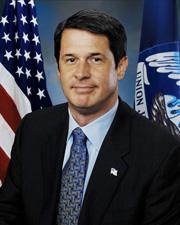
Historical · U.S. Senate · Louisiana
David Vitter
Former U.S. Senator from Louisiana · 2005–2017 · Republican · Class 3
David Vitter represented Louisiana in the United States Senate (2005–2017) for the Republican party. The page below collects sourced biographical facts, term history, committee roles, and provenance for Vitter.
Bioguide ID: V000127
Key facts
- Full name
- David Vitter
- State
- Louisiana
- Party
- Republican
- Senate class
- Class III
- Senate service
- 2005–2017
- First Senate term
- 2005
- Status
- Left office
- Current term ends
- —
- Born
- 1961
- Bioguide ID
- V000127
- Committee assignments
- —
- Dataset version
- 1.20260601-3
Biographical narrative
904 words · sourced from the Wikipedia REST extract
David Vitter is a former American politician who served as a United States Senator from Louisiana from 2005 until 2017. A member of the Republican Party, Vitter's political career spans multiple decades, beginning with his tenure in the Louisiana House of Representatives and continuing through his time in the U.S. House of Representatives. He is notable for being the first Republican to be popularly elected to the U.S. Senate from Louisiana since the Reconstruction Era. Throughout his political career, Vitter was involved in various legislative initiatives and faced significant personal controversies that impacted his political trajectory.
Early life and career
David Bruce Vitter was born on May 3, 1961, in New Orleans, Louisiana. He is the son of Audrey Malvina and Albert Leopold Vitter. Vitter completed his secondary education at De La Salle High School in New Orleans, graduating in 1979. During his time at De La Salle, he participated in the Close Up Washington civic education program, which likely influenced his future political aspirations.
Vitter pursued higher education at Harvard College, where he earned a Bachelor of Arts degree in 1983. He continued his studies as a Rhodes Scholar at Magdalen College, Oxford, obtaining a second Bachelor of Arts in 1985. He later earned a Juris Doctor degree from Tulane University Law School in 1988. Following his education, Vitter practiced law and served as an adjunct law professor at both Tulane and Loyola University New Orleans.
In his personal life, Vitter is married to Wendy, a former prosecutor, and they have four children together. His brother, Jeffrey Vitter, is a computer scientist who held the position of chancellor at the University of Mississippi from January 2016 to January 2019.
Vitter's political career began in the Louisiana House of Representatives, where he served from 1992 to 1999. During his time in the state legislature, he advocated for ethics reform and term limits, successfully pushing through a term limits amendment to the state constitution aimed at reshaping the predominantly Democratic legislature. Although the amendment led to some Republican gains in subsequent elections, the Democrats retained control of the legislature. Vitter also took a stance against gambling during his tenure in the Louisiana House.
In 1999, Vitter transitioned to national politics by winning a special election for Louisiana's 1st congressional district. He succeeded Republican Bob Livingston, who resigned amid a scandal. Vitter's initial election was competitive, as he finished second in the first round of voting but won the runoff election against David C. Treen. He was subsequently re-elected in 2000 and 2002, consistently receiving over 80 percent of the vote in what had become a solidly Republican district. During his time in the U.S. House of Representatives, Vitter co-authored legislation aimed at restricting the prescription of RU-486, a drug used in medical abortions, although this bill did not advance beyond committee. He also proposed a constitutional amendment to ban same-sex marriage, reflecting his alignment with conservative social values.
Senate tenure
Vitter's Senate career began when he was elected in 2004 to succeed Democrat John Breaux. His campaign was marked by controversy, as he faced allegations of infidelity and involvement with a prostitute. Despite these accusations, Vitter won the election, becoming the first Republican to be popularly elected to the U.S. Senate from Louisiana. His victory was significant in the context of Louisiana's political history, as the last Republican senator had been appointed by the state legislature in 1876 before the Seventeenth Amendment allowed for direct election.
During his time in the Senate, Vitter was involved in various legislative efforts and served on multiple committees. He was re-elected in 2010, despite the earlier controversies surrounding his personal life. However, these issues were believed to have impacted his political standing, particularly during his bid for governor in 2015, when he lost to Democrat John Bel Edwards. Following this defeat, Vitter announced that he would not seek re-election to the Senate in 2016 and would retire from public office at the end of his term in January 2017.
Legislative focus and committees
Throughout his Senate tenure, Vitter focused on a range of issues that aligned with his Republican values. He was known for advocating for conservative fiscal policies, including tax cuts and reducing government spending. Vitter also prioritized issues related to energy, particularly the oil and gas industry, which is a significant sector in Louisiana's economy. His efforts included supporting legislation aimed at promoting energy independence and enhancing domestic energy production.
In addition to his work on energy policy, Vitter was involved in various social issues, including those related to family values and public health. He consistently opposed same-sex marriage and sought to promote legislation that aligned with traditional family structures. Vitter's legislative agenda often reflected the priorities of his constituents in Louisiana, emphasizing a conservative approach to governance.
Vitter served on several Senate committees during his time in office, which allowed him to influence a variety of legislative areas. His committee assignments provided him with a platform to advocate for Louisiana's interests, particularly in areas such as commerce, transportation, and environmental policy. Vitter's experience in both state and federal legislatures contributed to his understanding of the complexities of governance and the importance of representing the needs of his constituents.
After concluding his Senate career, Vitter transitioned into the private sector, becoming a lobbyist. His political career, marked by both achievements and controversies, reflects the complexities of navigating public service in the contemporary political landscape.
Notable legislation
Sponsored and co-sponsored legislation for David Vitter is pending operator curation. The biographical narrative above carries the same provenance trail until per-bill rows are written.
Sources
- [1]https://en.wikipedia.org/wiki/David_VitterWikipedia · retrieved 2026-06-01
Notable quotes
Sourced quotes for David Vitter are pending operator curation. Narrative-scope provenance remains attached below.
Sources
- [1]https://en.wikipedia.org/wiki/David_VitterWikipedia · retrieved 2026-06-01
Key positions
Curated policy positions for David Vitter are pending operator review. The biographical narrative above carries the same provenance trail until per-topic positions are written.
Sources
- [1]https://en.wikipedia.org/wiki/David_VitterWikipedia · retrieved 2026-06-01
Terms served
- 1999–2001U.S. House · District 1 · Term 1 · Republican
- 2001–2003U.S. House · District 1 · Term 2 · Republican
- 2003–2005U.S. House · District 1 · Term 3 · Republican
- 2005–2011U.S. Senate · Term 4 · Republican · Class III
- 2011–2017U.S. Senate · Term 5 · Republican · Class III
Sources & provenance
Every attributable claim above carries a per-section [N] marker that resolves to the corresponding URL below. Each entry records the upstream provider, the canonical URL, and the timestamp at which the source was retrieved by the ingest pipeline.
Key facts
- https://bioguide.congress.gov/search/bio/V000127bioguide · retrieved 2026-06-01
- https://www.vitter.senate.govsenate.gov · retrieved 2026-06-01
Biographical narrative
- https://en.wikipedia.org/wiki/David_Vitterwikipedia · retrieved 2026-06-01
Find your senator
Every U.S. state elects two senators. Browse Louisiana’s delegation, the full former-senator roster, or explore the role and term length.
Related on The Candidate
- Preceded by John BreauxEarlier holder of the Louisiana Class III Senate seat · Democratic.Open
- Alexander BarrowFormer U.S. Senator from Louisiana · WhigOpen
- Alexander MoutonFormer U.S. Senator from Louisiana · DemocraticOpen
- Alexander PorterFormer U.S. Senator from Louisiana · Anti-JacksonianOpen
- Allan MagruderFormer U.S. Senator from Louisiana · RepublicanOpen
- Republican PartyFederal candidates and office holders on the Republican line.Open