
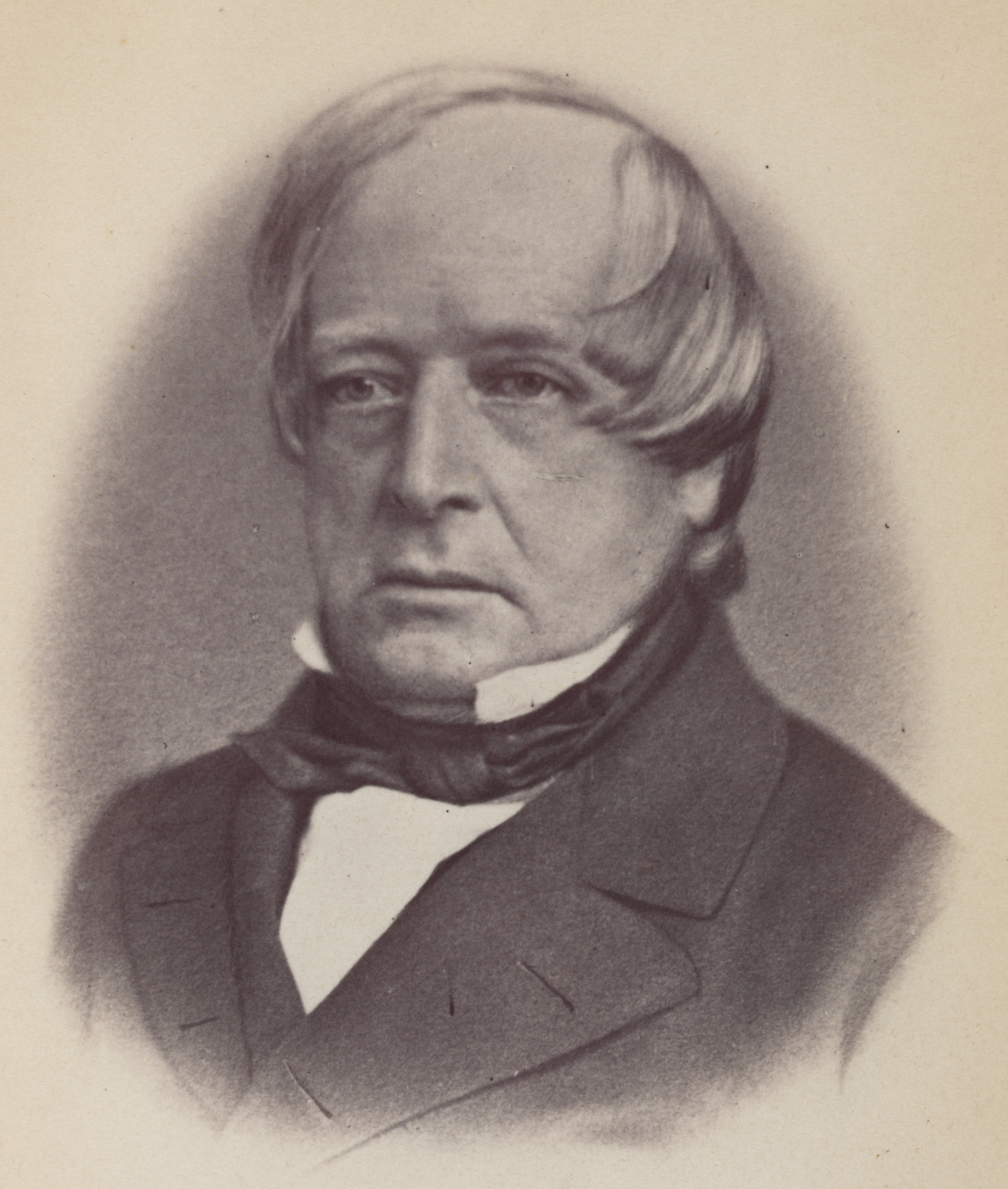
Historical · U.S. Senate · Louisiana
John Slidell
Former U.S. Senator from Louisiana · 1853–1861 · Democratic · Class 3
John Slidell represented Louisiana in the United States Senate (1853–1861) for the Democratic party. The page below collects sourced biographical facts, term history, committee roles, and provenance for Slidell.
Bioguide ID: S000487
Key facts
- Full name
- John Slidell
- State
- Louisiana
- Party
- Democratic
- Senate class
- Class III
- Senate service
- 1853–1861
- First Senate term
- 1853
- Status
- Left office
- Current term ends
- —
- Born
- —
- Bioguide ID
- S000487
- Committee assignments
- —
- Dataset version
- 1.20260602
Biographical narrative
933 words · sourced from the Wikipedia REST extract
John Slidell was a prominent American politician and lawyer who served as a U.S. Senator from Louisiana. A member of the Democratic Party, Slidell's political career spanned several decades, during which he held various significant positions, including serving in the U.S. House of Representatives and the Louisiana House of Representatives. His tenure as a senator began in 1853 and concluded in 1861, coinciding with a tumultuous period in American history that included the lead-up to the Civil War. Slidell is also known for his involvement in the Trent Affair, where he was captured as a Confederate diplomat, an event that had significant diplomatic implications for the United States and Britain.
Early life and career
John Slidell was born in 1793 to a merchant father, John Slidell, and his mother, Margery Mackenzie, who was of Scottish descent. He completed his education at Columbia University, graduating in 1810. Following his education, Slidell moved to Louisiana, where he began his career in law and politics. He served as the United States Attorney for the Eastern District of Louisiana from 1829 to 1833. His early political career included a term in the Louisiana House of Representatives, where he began to establish himself as a significant figure in state politics.
In the years leading up to the Mexican-American War, Slidell was appointed by President James K. Polk to negotiate with the Mexican government. His mission was to secure an agreement that would establish the Rio Grande as the southern border of Texas and to offer a substantial sum for the acquisition of California. However, the Mexican government, embroiled in internal chaos, rejected Slidell's proposals, which ultimately contributed to the outbreak of the war in 1846.
Slidell's political connections deepened during this period, particularly through his friendship with James Buchanan, who was then serving as Secretary of State. This relationship would later influence Slidell's political strategies and alignments.
In 1853, Slidell was elected to the U.S. Senate, where he aligned himself with pro-Southern congressmen. His legislative efforts included attempts to repeal the Missouri Compromise, advocate for the acquisition of Cuba, and support the admission of Kansas as a slave state. Throughout his political career, Slidell maintained a complex position regarding the Union and the Confederacy, initially supporting the Democratic presidential candidate John C. Breckinridge in 1860 while remaining a pro-Union moderate until the election of Abraham Lincoln prompted Southern states to secede.
Senate tenure
John Slidell's Senate career began in 1853, representing Louisiana as a member of the Democratic Party. During his time in the Senate, he was involved in significant legislative debates and decisions that reflected the growing tensions between Northern and Southern states. Slidell was a vocal advocate for Southern interests, particularly in the context of slavery and territorial expansion. His support for repealing the Missouri Compromise was indicative of his commitment to the pro-slavery agenda, which sought to expand the institution of slavery into new territories.
Slidell's political maneuvering during the 1860 Democratic National Convention in Charleston, South Carolina, showcased his strategic thinking. He worked with other Southern leaders to block the nomination of Stephen A. Douglas, a popular Northern Democrat, demonstrating his alignment with the more radical elements of the party known as the Fire-Eaters. This faction sought to protect and expand slavery, reflecting the deepening divide within the Democratic Party and the nation as a whole.
As the Civil War approached, Slidell's political stance evolved. While he initially remained a pro-Union moderate, the election of Lincoln and the subsequent secession of Southern states led him to embrace the Confederate cause. His shift in allegiance was emblematic of the broader political realignment occurring in the South during this period.
Legislative focus and committees
During his Senate tenure, John Slidell focused on issues that were central to the interests of the Southern states. His legislative agenda included efforts to promote the expansion of slavery into new territories and to secure Southern economic interests. Slidell's advocacy for the repeal of the Missouri Compromise was a significant aspect of his legislative work, as it aimed to eliminate restrictions on the expansion of slavery into the western territories.
In addition to his domestic legislative efforts, Slidell was also involved in foreign policy discussions, particularly regarding the potential acquisition of Cuba. His support for this initiative was rooted in the belief that Cuba could serve as a valuable extension of Southern territory and influence. Slidell's diplomatic experience, gained during his earlier negotiations with Mexico, informed his approach to these international matters.
As the Civil War unfolded, Slidell's focus shifted toward diplomatic efforts on behalf of the Confederacy. After his Senate term ended in 1861, he accepted a diplomatic appointment to represent the Confederacy in France. His involvement in the Trent Affair, where he was captured by the U.S. Navy while attempting to secure recognition for the Confederacy, highlighted the complex interplay of diplomacy and military action during the war. Although his mission in France ultimately failed to secure formal recognition for the Confederate States, Slidell did manage to negotiate a loan for the Confederate government and secure a warship.
In summary, John Slidell's legislative focus and committee work during his Senate tenure reflected the contentious political landscape of the time. His commitment to Southern interests and his involvement in key diplomatic efforts underscored his role as a significant figure in the political history of the United States during the lead-up to and during the Civil War. After the war, Slidell relocated to Paris, where he lived until his death in 1871, leaving behind a complex legacy intertwined with the history of the Confederacy and its diplomatic endeavors.
Notable legislation
Sponsored and co-sponsored legislation for John Slidell is pending operator curation. The biographical narrative above carries the same provenance trail until per-bill rows are written.
Sources
- [1]https://en.wikipedia.org/wiki/John_SlidellWikipedia · retrieved 2026-06-02
Notable quotes
Sourced quotes for John Slidell are pending operator curation. Narrative-scope provenance remains attached below.
Sources
- [1]https://en.wikipedia.org/wiki/John_SlidellWikipedia · retrieved 2026-06-02
Key positions
Curated policy positions for John Slidell are pending operator review. The biographical narrative above carries the same provenance trail until per-topic positions are written.
Sources
- [1]https://en.wikipedia.org/wiki/John_SlidellWikipedia · retrieved 2026-06-02
Terms served
- 1843–1845U.S. House · District 1 · Term 1 · Democratic
- 1845–1847U.S. House · District 1 · Term 2 · Democratic
- 1853–1855U.S. Senate · Term 3 · Democratic · Class III
- 1855–1861U.S. Senate · Term 4 · Democratic · Class III
Sources & provenance
Every attributable claim above carries a per-section [N] marker that resolves to the corresponding URL below. Each entry records the upstream provider, the canonical URL, and the timestamp at which the source was retrieved by the ingest pipeline.
Key facts
- https://bioguide.congress.gov/search/bio/S000487bioguide · retrieved 2026-06-02
- https://www.govtrack.us/congress/members/409975govtrack · retrieved 2026-06-02
Biographical narrative
- https://en.wikipedia.org/wiki/John_Slidellwikipedia · retrieved 2026-06-02
Find your senator
Every U.S. state elects two senators. Browse Louisiana’s delegation, the full former-senator roster, or explore the role and term length.
Related on The Candidate
- Preceded by Pierre SouléEarlier holder of the Louisiana Class III Senate seat · Democratic.Open
- Succeeded by James EustisLater holder of the Louisiana Class III Senate seat · Democratic.Open
- Alexander BarrowFormer U.S. Senator from Louisiana · WhigOpen
- Alexander MoutonFormer U.S. Senator from Louisiana · DemocraticOpen
- Alexander PorterFormer U.S. Senator from Louisiana · Anti-JacksonianOpen
- Allan MagruderFormer U.S. Senator from Louisiana · RepublicanOpen