
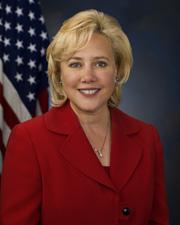
Historical · U.S. Senate · Louisiana
Mary Landrieu
Former U.S. Senator from Louisiana · 1997–2015 · Democratic · Class 2
Mary Landrieu represented Louisiana in the United States Senate (1997–2015) for the Democratic party. The page below collects sourced biographical facts, term history, committee roles, and provenance for Landrieu.
Bioguide ID: L000550
Key facts
- Full name
- Mary Landrieu
- State
- Louisiana
- Party
- Democratic
- Senate class
- Class II
- Senate service
- 1997–2015
- First Senate term
- 1997
- Status
- Left office
- Current term ends
- —
- Born
- 1955
- Bioguide ID
- L000550
- Committee assignments
- —
- Dataset version
- 1.20260601-3
Biographical narrative
986 words · sourced from the Wikipedia REST extract
Mary L. Landrieu is a former United States senator from Louisiana, serving in the Senate from 1997 until 2015. A member of the Democratic Party, she is notable for being the most recent Democrat to hold a Senate seat from Louisiana as of 2026. Throughout her political career, Landrieu was recognized for her advocacy on various issues, particularly in the wake of significant events such as Hurricane Katrina. Her tenure in the Senate included leadership roles on several committees and a focus on issues affecting her home state.
Early life and career
Mary Loretta Landrieu was born on November 23, 1955, in Arlington County, Virginia. She was raised in New Orleans, Louisiana, in a politically engaged family. Her father, Moon Landrieu, served as the mayor of New Orleans and later as the U.S. Secretary of the Department of Housing and Urban Development. Her brother, Mitch Landrieu, also pursued a political career, serving as the mayor of New Orleans and as the Lieutenant Governor of Louisiana. This familial background in politics likely influenced her own aspirations and career choices. Raised in the Catholic faith, Landrieu's upbringing was marked by a strong sense of community involvement and public service.
Landrieu attended Ursuline Academy in New Orleans, where she participated in the Close Up Washington civic education program, which aims to educate students about the workings of government. She later pursued higher education at Louisiana State University (LSU) in Baton Rouge, graduating in 1977 with a Bachelor of Arts degree in sociology. During her time at LSU, she was an active member of the Delta Gamma sorority, which furthered her engagement in campus life and leadership activities.
Following her graduation, Landrieu began her professional career as a real estate agent. This experience in the private sector provided her with insights into economic and housing issues, which would later inform her legislative priorities. Her early career laid the groundwork for her entry into public service, as she transitioned into politics shortly thereafter.
Senate tenure
Landrieu's political career began in earnest when she was elected to the Louisiana House of Representatives in 1979, representing a district in New Orleans. She served in the state legislature from 1980 to 1988, gaining valuable experience in governance and policy-making. After her tenure in the House, she was elected as the Louisiana State Treasurer, a position she held from 1988 until 1996. During her time as treasurer, she was recognized for her fiscal management and oversight of state funds.
In 1996, Landrieu successfully ran for the U.S. Senate, winning a contentious runoff election to succeed John Bennett Johnston, Jr. Her election marked a significant milestone, as she became one of the few women to hold a Senate seat from Louisiana. Landrieu's initial term began in 1997, and she was re-elected multiple times throughout her career. Her re-election campaigns were often closely contested, reflecting the competitive political landscape of Louisiana.
In 2002, Landrieu narrowly won re-election against state Election Commissioner Suzanne Haik Terrell. By 2004, she became Louisiana's senior senator following the retirement of John Breaux. Her prominence in the Senate grew, and she was considered a potential running mate for presidential candidate John Kerry in the 2004 election, although Kerry ultimately selected another candidate.
Landrieu's third term began in 2008, when she won a comfortable re-election against John Neely Kennedy, a former Democrat who had switched to the Republican Party. Her tenure in the Senate was marked by her active participation in various legislative initiatives and her response to national crises, particularly Hurricane Katrina, which struck Louisiana in 2005. Following the disaster, Landrieu became a vocal critic of the federal government's response, advocating for improvements in disaster preparedness and recovery efforts.
In her final re-election campaign in 2014, Landrieu faced significant challenges. Despite support from prominent figures, including former President Bill Clinton, she was unable to secure the necessary votes to avoid a runoff election. Ultimately, she was defeated by Republican Congressman Bill Cassidy in December 2014, marking the end of her Senate career.
Legislative focus and committees
Throughout her Senate tenure, Landrieu was involved in a wide range of legislative issues, with a particular focus on areas critical to her constituents in Louisiana. One of her notable contributions was her role in shaping the Affordable Care Act in 2010. Landrieu's opposition to the public option was significant, as she sought additional concessions to ensure that Louisiana's Medicaid system received necessary support. This negotiation highlighted her commitment to balancing healthcare reform with the specific needs of her state.
In addition to her work on healthcare, Landrieu held several key leadership positions within the Senate. She served as the chair of the Senate Committee on Small Business and Entrepreneurship from 2009 to 2014, where she worked to promote policies that supported small businesses and entrepreneurship in Louisiana and across the nation. Her leadership in this committee was instrumental in advocating for resources and opportunities for small business owners.
In 2011, Landrieu became the chair of the Senate's Homeland Security Appropriations Subcommittee, further emphasizing her commitment to national security and disaster response. In this role, she focused on ensuring that adequate funding and resources were allocated for disaster preparedness and recovery, particularly in light of the challenges faced by Louisiana after Hurricane Katrina.
In her final year in the Senate, Landrieu chaired the Senate Committee on Energy and Natural Resources from 2014 to 2015. This position allowed her to influence energy policy and advocate for Louisiana's interests in energy production and environmental protection.
Mary L. Landrieu's career in the U.S. Senate was characterized by her dedication to her constituents and her efforts to address the unique challenges faced by Louisiana. Her legislative focus, leadership roles, and response to national crises reflect her commitment to public service and the well-being of her state. As a former senator, she left a lasting impact on Louisiana's political landscape and remains a significant figure in the state's history.
Notable legislation
Sponsored and co-sponsored legislation for Mary Landrieu is pending operator curation. The biographical narrative above carries the same provenance trail until per-bill rows are written.
Sources
- [1]https://en.wikipedia.org/wiki/Mary_LandrieuWikipedia · retrieved 2026-06-01
Notable quotes
Sourced quotes for Mary Landrieu are pending operator curation. Narrative-scope provenance remains attached below.
Sources
- [1]https://en.wikipedia.org/wiki/Mary_LandrieuWikipedia · retrieved 2026-06-01
Key positions
Curated policy positions for Mary Landrieu are pending operator review. The biographical narrative above carries the same provenance trail until per-topic positions are written.
Sources
- [1]https://en.wikipedia.org/wiki/Mary_LandrieuWikipedia · retrieved 2026-06-01
Terms served
- 1997–2003U.S. Senate · Term 1 · Democratic · Class II
- 2003–2009U.S. Senate · Term 2 · Democratic · Class II
- 2009–2015U.S. Senate · Term 3 · Democratic · Class II
Sources & provenance
Every attributable claim above carries a per-section [N] marker that resolves to the corresponding URL below. Each entry records the upstream provider, the canonical URL, and the timestamp at which the source was retrieved by the ingest pipeline.
Key facts
- https://bioguide.congress.gov/search/bio/L000550bioguide · retrieved 2026-06-01
- http://www.landrieu.senate.govsenate.gov · retrieved 2026-06-01
Biographical narrative
- https://en.wikipedia.org/wiki/Mary_Landrieuwikipedia · retrieved 2026-06-01
Find your senator
Every U.S. state elects two senators. Browse Louisiana’s delegation, the full former-senator roster, or explore the role and term length.
Related on The Candidate
- Preceded by John Johnston Jr.Earlier holder of the Louisiana Class II Senate seat · Democratic.Open
- Alexander BarrowFormer U.S. Senator from Louisiana · WhigOpen
- Alexander MoutonFormer U.S. Senator from Louisiana · DemocraticOpen
- Alexander PorterFormer U.S. Senator from Louisiana · Anti-JacksonianOpen
- Allan MagruderFormer U.S. Senator from Louisiana · RepublicanOpen
- Democratic PartyFederal candidates and office holders on the Democratic line.Open