
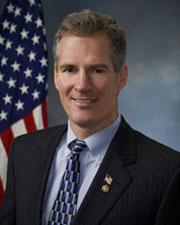
Historical · U.S. Senate · Massachusetts
Scott Brown
Former U.S. Senator from Massachusetts · 2010–2013 · Republican · Class 1
Scott Brown represented Massachusetts in the United States Senate (2010–2013) for the Republican party. The page below collects sourced biographical facts, term history, committee roles, and provenance for Brown.
Bioguide ID: B001268
Key facts
- Full name
- Scott Brown
- State
- Massachusetts
- Party
- Republican
- Senate class
- Class I
- Senate service
- 2010–2013
- First Senate term
- 2010
- Status
- Left office
- Current term ends
- —
- Born
- 1959
- Bioguide ID
- B001268
- Committee assignments
- —
- Dataset version
- 1.20260601-3
Biographical narrative
899 words · sourced from the Wikipedia REST extract
Scott P. Brown is a former U.S. Senator from Massachusetts, representing the Republican Party. He served in the Senate from 2010 until 2013, having been elected in a special election to fill the vacancy left by the passing of Senator Ted Kennedy. Brown's political career also includes service in the Massachusetts General Court, where he was a member of both the State House of Representatives and the State Senate. In addition to his political endeavors, Brown has had a notable military career, serving in the Army National Guard for 35 years, retiring with the rank of colonel. Following his Senate tenure, he was appointed as the U.S. ambassador to New Zealand and Samoa under President Donald Trump.
Early life and career
Scott Philip Brown was born on September 12, 1959, at the Portsmouth Naval Shipyard in Kittery, Maine. He hails from a family with deep roots in New Hampshire, tracing his ancestry back to the 17th century. His father, Claude Bruce Brown, and mother, Judith Ann "Judi" Brown, divorced when he was very young, leading his mother to raise him in Wakefield, Massachusetts. During his childhood, Brown spent summers in Newburyport, Massachusetts, where his father served as a city councilor, and in Portsmouth, New Hampshire. His family's political background, with both his father and grandfather being Republicans, influenced his early interest in politics.
Brown's upbringing was marked by challenges, including his mother's reliance on welfare after the divorce and his experiences with abuse. He faced significant difficulties during his youth, including sexual abuse from a camp counselor and physical abuse from stepfathers. These experiences shaped his perspective on various issues, including those related to veterans and personal resilience. He also encountered legal troubles as a teenager, resulting in a court-ordered essay as punishment for shoplifting, which he later cited as a turning point in his life.
He graduated from Wakefield High School in 1977 and went on to attend Tufts University, where he earned a Bachelor of Arts degree in history in 1981. Following his undergraduate studies, he obtained a Juris Doctor from Boston College Law School in 1985. During his time at Tufts, Brown was involved in campus life as a member of the Kappa chapter of the Zeta Psi International Fraternity.
Senate tenure
Scott Brown's political career at the federal level began with his election to the U.S. Senate in a special election held in January 2010. This election was necessitated by the death of long-serving Senator Ted Kennedy. Brown's victory was notable as he defeated the Democratic nominee, Martha Coakley, in what was considered a significant upset. His campaign focused on issues such as healthcare reform and fiscal responsibility, resonating with voters in a state that had been a stronghold for Democrats.
During his time in the Senate, Brown served on various committees and was involved in numerous legislative initiatives. His tenure was characterized by a focus on bipartisan cooperation, and he often positioned himself as a moderate Republican. In 2012, Brown sought a full term in the Senate but was defeated by Democratic candidate Elizabeth Warren. Despite this loss, he garnered a substantial number of votes, outperforming Republican presidential candidate Mitt Romney in the same election cycle.
Following his departure from the Senate in January 2013, Brown transitioned to the private sector, where he engaged in various business ventures. He relocated to New Hampshire and entered the political arena again by running for the U.S. Senate in 2014. In this election, he faced incumbent Democrat Jeanne Shaheen and ultimately lost in a closely contested race. Brown's political aspirations did not end there, as he announced his candidacy for the same Senate seat again in 2026, indicating his continued involvement in public service and politics.
Legislative focus and committees
Throughout his Senate career, Scott Brown was known for his focus on a range of issues, particularly those affecting veterans and military personnel. His extensive service in the Army National Guard, where he rose to the rank of colonel, informed his legislative priorities. Brown served on the Senate Committee on Veterans' Affairs, where he advocated for policies that supported veterans and their families. His military background also led him to participate in initiatives addressing issues of war and peace, as well as the challenges faced by returning veterans.
In addition to his work on veterans' issues, Brown was involved in various other legislative matters, including fiscal policy and healthcare reform. His moderate stance often positioned him as a bridge between the two major political parties, and he sought to foster bipartisan dialogue on critical issues. Brown's approach to governance was influenced by his belief in the importance of collaboration and compromise in achieving effective policy outcomes.
Brown's military service was recognized through several awards, including the Legion of Merit and the Maryland Distinguished Service Cross, underscoring his commitment to both his country and his constituents. His experiences in the National Guard not only shaped his legislative focus but also provided him with a unique perspective on the needs of service members and their families.
In summary, Scott P. Brown's career spans significant roles in both military and political spheres. His journey from a challenging childhood to serving as a U.S. Senator and ambassador reflects a commitment to public service and advocacy for veterans. As he continues to engage in political life, his past experiences and legislative priorities remain influential in shaping his future endeavors.
Notable legislation
Sponsored and co-sponsored legislation for Scott Brown is pending operator curation. The biographical narrative above carries the same provenance trail until per-bill rows are written.
Sources
- [1]https://en.wikipedia.org/wiki/Scott_Brown_(politician)Wikipedia · retrieved 2026-06-01
Notable quotes
Sourced quotes for Scott Brown are pending operator curation. Narrative-scope provenance remains attached below.
Sources
- [1]https://en.wikipedia.org/wiki/Scott_Brown_(politician)Wikipedia · retrieved 2026-06-01
Key positions
Curated policy positions for Scott Brown are pending operator review. The biographical narrative above carries the same provenance trail until per-topic positions are written.
Sources
- [1]https://en.wikipedia.org/wiki/Scott_Brown_(politician)Wikipedia · retrieved 2026-06-01
Terms served
- 2010–2013U.S. Senate · Term 1 · Republican · Class I
Sources & provenance
Every attributable claim above carries a per-section [N] marker that resolves to the corresponding URL below. Each entry records the upstream provider, the canonical URL, and the timestamp at which the source was retrieved by the ingest pipeline.
Key facts
- https://bioguide.congress.gov/search/bio/B001268bioguide · retrieved 2026-06-01
- http://scottbrown.senate.govsenate.gov · retrieved 2026-06-01
Biographical narrative
- https://en.wikipedia.org/wiki/Scott_Brown_(politician)wikipedia · retrieved 2026-06-01
Find your senator
Every U.S. state elects two senators. Browse Massachusetts’s delegation, the full former-senator roster, or explore the role and term length.
Related on The Candidate
- Preceded by Paul Kirk Jr.Earlier holder of the Massachusetts Class I Senate seat · Democratic.Open
- Benjamin GoodhueFormer U.S. Senator from Massachusetts · FederalistOpen
- Benjamin Smith IIFormer U.S. Senator from Massachusetts · DemocraticOpen
- Caleb StrongFormer U.S. Senator from Massachusetts · FederalistOpen
- Charles SumnerFormer U.S. Senator from Massachusetts · Liberal RepublicanOpen
- Republican PartyFederal candidates and office holders on the Republican line.Open