
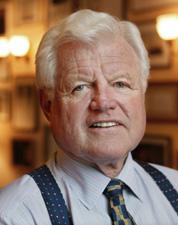
Historical · U.S. Senate · Massachusetts
Ted Kennedy
Former U.S. Senator from Massachusetts · 1962–2009 · Democratic · Class 1
Ted Kennedy represented Massachusetts in the United States Senate (1962–2009) for the Democratic party. The page below collects sourced biographical facts, term history, committee roles, and provenance for Kennedy.
Bioguide ID: K000105
Key facts
- Full name
- Ted Kennedy
- State
- Massachusetts
- Party
- Democratic
- Senate class
- Class I
- Senate service
- 1962–2009
- First Senate term
- 1962
- Status
- Left office
- Current term ends
- —
- Born
- 1932
- Bioguide ID
- K000105
- Committee assignments
- —
- Dataset version
- 1.20260602
Biographical narrative
960 words · sourced from the Wikipedia REST extract
Edward M. Kennedy was a prominent American politician who served as a United States Senator from Massachusetts for nearly five decades. A member of the Democratic Party, he was known for his extensive legislative work and influence in American politics. His tenure in the Senate began in 1962 and continued until his passing in 2009, marking him as one of the longest-serving senators in U.S. history. Throughout his career, Kennedy was recognized for his commitment to various social issues, including healthcare, education, and civil rights.
Early life and career
Edward M. Kennedy was born on February 22, 1932, into a prominent political family in Massachusetts. He was the youngest son of Joseph P. Kennedy Sr. and Rose Fitzgerald Kennedy, who were influential figures in American politics and society. Growing up in a family that valued public service, Edward was exposed to the world of politics from an early age. He attended Harvard University, where he earned a Bachelor of Arts degree in government in 1956. Following his graduation, he served in the United States Army, which provided him with a unique perspective on national service and civic duty.
After his military service, Kennedy pursued a law degree at the University of Virginia, graduating in 1959. He began his political career by working as an assistant district attorney in Suffolk County, Massachusetts. His legal background and familial connections positioned him well for a future in politics. In 1962, he successfully ran for the United States Senate, filling the seat previously held by his brother, John F. Kennedy, who had been elected President of the United States. Edward's election marked the beginning of a long and influential career in the Senate.
Senate tenure
Edward M. Kennedy's Senate career spanned nearly five decades, during which he was elected to nine consecutive terms. He took office in 1962 and quickly established himself as a key figure in the Senate. His tenure was characterized by a commitment to progressive policies and a focus on social justice. Throughout his time in office, Kennedy was involved in numerous significant legislative initiatives that shaped American society.
Kennedy's influence extended beyond his home state of Massachusetts; he became a national leader on various issues, including healthcare reform, education, and civil rights. He was known for his ability to work across party lines, often collaborating with Republican colleagues to advance bipartisan legislation. His dedication to public service and his legislative accomplishments earned him respect from both supporters and opponents.
Kennedy's long tenure in the Senate included participation in several key moments in American history. He was present during the civil rights movement, advocating for legislation that aimed to eliminate racial discrimination and promote equality. He also played a significant role in the development of the Americans with Disabilities Act and the Children's Health Insurance Program, which expanded healthcare access for vulnerable populations.
In addition to his legislative work, Kennedy was known for his resilience in the face of personal and political challenges. He navigated various controversies and setbacks throughout his career, yet he remained a steadfast advocate for his constituents and the causes he championed. His ability to endure and adapt contributed to his longevity in the Senate.
Kennedy's final term ended on August 25, 2009, when he passed away after a battle with brain cancer. His death marked the end of an era in American politics, as he left behind a legacy of public service and advocacy for social justice.
Legislative focus and committees
Throughout his Senate career, Edward M. Kennedy was deeply involved in a wide range of legislative issues, reflecting his commitment to improving the lives of Americans. His work focused on several key areas, including healthcare, education, labor rights, and civil rights. Kennedy's legislative priorities often aligned with the broader goals of the Democratic Party, emphasizing social equity and access to essential services.
One of Kennedy's most notable contributions was in the realm of healthcare. He was a strong advocate for expanding access to healthcare services and worked tirelessly to promote initiatives aimed at improving the nation's healthcare system. His efforts included support for the establishment of the Children's Health Insurance Program, which provided health coverage to millions of children in families with incomes too high to qualify for Medicaid but too low to afford private coverage. Kennedy's commitment to healthcare reform was a defining aspect of his legislative legacy.
In addition to healthcare, Kennedy was a champion of education reform. He believed in the importance of access to quality education for all Americans and worked on legislation that aimed to improve educational opportunities, particularly for disadvantaged students. His advocacy extended to issues related to higher education, where he supported initiatives to make college more accessible and affordable.
Kennedy was also a strong proponent of civil rights and social justice. He played a significant role in advancing legislation aimed at eliminating discrimination based on race, gender, and disability. His work on the Americans with Disabilities Act was particularly impactful, as it aimed to ensure equal opportunities and accessibility for individuals with disabilities.
Throughout his Senate career, Kennedy served on several key committees, including the Senate Health, Education, Labor, and Pensions Committee. His leadership on this committee allowed him to influence a wide range of policies related to health care, education, and labor issues. He also served on the Senate Judiciary Committee, where he contributed to discussions on civil rights and justice reform.
Kennedy's legislative focus and committee work reflected his deep commitment to public service and his desire to create a more equitable society. His ability to navigate complex political landscapes and build coalitions across party lines was instrumental in advancing many of the initiatives he championed. His legacy continues to influence discussions on healthcare, education, and civil rights in the United States.
Notable legislation
Sponsored and co-sponsored legislation for Ted Kennedy is pending operator curation. The biographical narrative above carries the same provenance trail until per-bill rows are written.
Sources
- [1]https://en.wikipedia.org/wiki/Ted_KennedyWikipedia · retrieved 2026-06-02
Notable quotes
Sourced quotes for Ted Kennedy are pending operator curation. Narrative-scope provenance remains attached below.
Sources
- [1]https://en.wikipedia.org/wiki/Ted_KennedyWikipedia · retrieved 2026-06-02
Key positions
Curated policy positions for Ted Kennedy are pending operator review. The biographical narrative above carries the same provenance trail until per-topic positions are written.
Sources
- [1]https://en.wikipedia.org/wiki/Ted_KennedyWikipedia · retrieved 2026-06-02
Terms served
- 1962–1965U.S. Senate · Term 1 · Democratic · Class I
- 1965–1971U.S. Senate · Term 2 · Democratic · Class I
- 1971–1977U.S. Senate · Term 3 · Democratic · Class I
- 1977–1983U.S. Senate · Term 4 · Democratic · Class I
- 1983–1989U.S. Senate · Term 5 · Democratic · Class I
- 1989–1995U.S. Senate · Term 6 · Democratic · Class I
- 1995–2001U.S. Senate · Term 7 · Democratic · Class I
- 2001–2007U.S. Senate · Term 8 · Democratic · Class I
- 2007–2009U.S. Senate · Term 9 · Democratic · Class I
Sources & provenance
Every attributable claim above carries a per-section [N] marker that resolves to the corresponding URL below. Each entry records the upstream provider, the canonical URL, and the timestamp at which the source was retrieved by the ingest pipeline.
Key facts
- https://bioguide.congress.gov/search/bio/K000105bioguide · retrieved 2026-06-02
- http://kennedy.senate.gov/senate.gov · retrieved 2026-06-02
Biographical narrative
- https://en.wikipedia.org/wiki/Ted_Kennedywikipedia · retrieved 2026-06-02
Find your senator
Every U.S. state elects two senators. Browse Massachusetts’s delegation, the full former-senator roster, or explore the role and term length.
Related on The Candidate
- Preceded by John KennedyEarlier holder of the Massachusetts Class I Senate seat · Democratic.Open
- Succeeded by Paul Kirk Jr.Later holder of the Massachusetts Class I Senate seat · Democratic.Open
- Benjamin GoodhueFormer U.S. Senator from Massachusetts · FederalistOpen
- Benjamin Smith IIFormer U.S. Senator from Massachusetts · DemocraticOpen
- Caleb StrongFormer U.S. Senator from Massachusetts · FederalistOpen
- Charles SumnerFormer U.S. Senator from Massachusetts · Liberal RepublicanOpen