
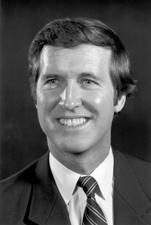
Historical · U.S. Senate · Maine
William Cohen
Former U.S. Senator from Maine · 1979–1997 · Republican · Class 2
William Cohen represented Maine in the United States Senate (1979–1997) for the Republican party. The page below collects sourced biographical facts, term history, committee roles, and provenance for Cohen.
Bioguide ID: C000598
Key facts
- Full name
- William Cohen
- State
- Maine
- Party
- Republican
- Senate class
- Class II
- Senate service
- 1979–1997
- First Senate term
- 1979
- Status
- Left office
- Current term ends
- —
- Born
- 1940
- Bioguide ID
- C000598
- Committee assignments
- —
- Dataset version
- 1.20260602
Biographical narrative
858 words · sourced from the Wikipedia REST extract
William S. Cohen is a former United States Senator who represented the state of Maine as a member of the Republican Party. His tenure in the Senate spanned from 1979 until 1997, during which he served three terms. Cohen's political career is marked by his involvement in various legislative initiatives and his role in shaping policy during a period of significant change in American politics.
Early life and career
William S. Cohen was born on August 28, 1940. He grew up in a family that valued education and public service, which influenced his future career in politics. Cohen pursued higher education at Bowdoin College, where he earned a Bachelor of Arts degree. Following his undergraduate studies, he attended the University of Maine School of Law, where he obtained his law degree. This legal background provided him with a strong foundation for his subsequent political career.
Before entering the Senate, Cohen served in various capacities within the political landscape of Maine. He began his public service as a member of the Maine House of Representatives, where he gained valuable experience in state governance. His early political career was characterized by a commitment to public service and a desire to effect change within his community. Cohen's work at the state level laid the groundwork for his later ascension to the national stage.
In 1972, Cohen was elected to the U.S. House of Representatives, where he served for several terms. His time in the House allowed him to build a reputation as a pragmatic legislator who was willing to work across party lines. This bipartisanship would become a hallmark of his political style. Cohen's experience in the House provided him with insights into the legislative process and the intricacies of federal governance, preparing him for his future role in the Senate.
Senate tenure
Cohen's election to the U.S. Senate in 1979 marked a significant milestone in his political career. He was elected to represent Maine in a Senate Class 2 seat, and he quickly established himself as a prominent figure within the chamber. Throughout his three terms in the Senate, Cohen was known for his thoughtful approach to legislation and his willingness to engage in dialogue with colleagues from both parties.
During his tenure, Cohen participated in various legislative initiatives that addressed a wide range of issues. His work in the Senate was characterized by a focus on both domestic and foreign policy matters. Cohen's ability to navigate complex political landscapes allowed him to contribute meaningfully to discussions on key issues affecting the nation.
Cohen's Senate career concluded on January 3, 1997, after he chose not to seek re-election. By the end of his time in office, he had built a legacy as a moderate Republican who prioritized cooperation and compromise in a time of increasing partisanship. His decision to leave the Senate was influenced by a desire to pursue other opportunities and to engage in public service in different capacities.
Legislative focus and committees
Throughout his Senate career, Cohen was involved in various committees that shaped his legislative focus. His committee assignments allowed him to delve into critical areas such as national security, foreign relations, and economic policy. Cohen's expertise in these areas enabled him to contribute to significant legislative efforts during his time in office.
Cohen served on the Senate Armed Services Committee, where he played a role in shaping defense policy and addressing issues related to military readiness. His work on this committee was particularly relevant during a period marked by significant changes in global security dynamics. Cohen's insights into defense matters were informed by his legal background and his commitment to ensuring the safety and security of the nation.
In addition to his work on the Armed Services Committee, Cohen was also a member of the Senate Committee on Governmental Affairs. This committee focused on issues related to government operations, oversight, and reform. Cohen's involvement in this committee reflected his interest in promoting efficiency and accountability within the federal government.
Cohen's legislative focus extended to economic issues as well. He was involved in discussions surrounding fiscal policy, trade, and economic development, particularly as they pertained to Maine and its unique economic landscape. His work in these areas demonstrated his commitment to addressing the needs of his constituents while also considering the broader implications of economic policy on national and global scales.
Throughout his Senate tenure, Cohen maintained a reputation for bipartisanship and collaboration. His ability to work with colleagues across the aisle allowed him to build coalitions and advance legislation that addressed pressing issues facing the nation. This collaborative approach was particularly important during a time when political polarization was beginning to take root in American politics.
In summary, William S. Cohen's career as a U.S. Senator from Maine was marked by his commitment to public service, bipartisanship, and a focus on key legislative issues. His experience in both state and federal government equipped him with the skills necessary to navigate the complexities of the legislative process. Cohen's contributions to the Senate and his involvement in various committees reflect his dedication to addressing the needs of his constituents and the nation as a whole.
Notable legislation
Sponsored and co-sponsored legislation for William Cohen is pending operator curation. The biographical narrative above carries the same provenance trail until per-bill rows are written.
Sources
- [1]https://en.wikipedia.org/wiki/William_CohenWikipedia · retrieved 2026-06-02
Notable quotes
Sourced quotes for William Cohen are pending operator curation. Narrative-scope provenance remains attached below.
Sources
- [1]https://en.wikipedia.org/wiki/William_CohenWikipedia · retrieved 2026-06-02
Key positions
Curated policy positions for William Cohen are pending operator review. The biographical narrative above carries the same provenance trail until per-topic positions are written.
Sources
- [1]https://en.wikipedia.org/wiki/William_CohenWikipedia · retrieved 2026-06-02
Terms served
- 1973–1975U.S. House · District 2 · Term 1 · Republican
- 1975–1977U.S. House · District 2 · Term 2 · Republican
- 1977–1979U.S. House · District 2 · Term 3 · Republican
- 1979–1985U.S. Senate · Term 4 · Republican · Class II
- 1985–1991U.S. Senate · Term 5 · Republican · Class II
- 1991–1997U.S. Senate · Term 6 · Republican · Class II
Sources & provenance
Every attributable claim above carries a per-section [N] marker that resolves to the corresponding URL below. Each entry records the upstream provider, the canonical URL, and the timestamp at which the source was retrieved by the ingest pipeline.
Key facts
- https://bioguide.congress.gov/search/bio/C000598bioguide · retrieved 2026-06-02
- https://www.govtrack.us/congress/members/402727govtrack · retrieved 2026-06-02
Biographical narrative
- https://en.wikipedia.org/wiki/William_Cohenwikipedia · retrieved 2026-06-02
Find your senator
Every U.S. state elects two senators. Browse Maine’s delegation, the full former-senator roster, or explore the role and term length.
Related on The Candidate
- Preceded by William HathawayEarlier holder of the Maine Class II Senate seat · Democratic.Open
- Albion ParrisFormer U.S. Senator from Maine · JacksonOpen
- Amos NourseFormer U.S. Senator from Maine · RepublicanOpen
- Arthur GouldFormer U.S. Senator from Maine · RepublicanOpen
- Bert FernaldFormer U.S. Senator from Maine · RepublicanOpen
- Republican PartyFederal candidates and office holders on the Republican line.Open