
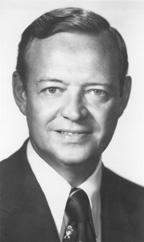
Historical · U.S. Senate · North Carolina
James Broyhill
Former U.S. Senator from North Carolina · 1986–1986 · Republican · Class 3
James Broyhill represented North Carolina in the United States Senate (1986–1986) for the Republican party. The page below collects sourced biographical facts, term history, committee roles, and provenance for Broyhill.
Bioguide ID: B000966
Key facts
- Full name
- James Broyhill
- State
- North Carolina
- Party
- Republican
- Senate class
- Class III
- Senate service
- 1986–1986
- First Senate term
- 1986
- Status
- Left office
- Current term ends
- —
- Born
- 1927
- Bioguide ID
- B000966
- Committee assignments
- —
- Dataset version
- 1.20260602
Biographical narrative
918 words · sourced from the Wikipedia REST extract
James T. Broyhill is a former U.S. Senator from North Carolina, representing the Republican Party. He served in the Senate for a brief period, having assumed office in 1986 and concluding his term in November 1986. Broyhill's political career is marked by his involvement in various legislative matters during his time in the Senate, as well as his previous experience in public service, which laid the foundation for his role in national politics.
Early life and career
James T. Broyhill was born on August 19, 1927. His early life and formative years played a significant role in shaping his future career in politics. While specific details about his upbringing and education are not provided, it is common for individuals in political positions to have backgrounds that involve engagement with their communities and an understanding of public service.
Before entering the Senate, Broyhill had a lengthy career in public service, which included a total of 13 congressional terms. This extensive experience likely contributed to his understanding of legislative processes and the needs of his constituents. His political career began in the House of Representatives, where he served prior to his election to the Senate. This background in the House would have provided him with insights into the workings of Congress, the importance of bipartisan cooperation, and the challenges of representing a diverse electorate.
Broyhill's transition from the House to the Senate in 1986 marked a significant step in his political journey. The Senate, often viewed as a more prestigious chamber of Congress, offered him a platform to influence national legislation on a broader scale. His election to the Senate was a culmination of years of public service and political engagement, reflecting a commitment to the constituents of North Carolina.
Senate tenure
James T. Broyhill's tenure in the U.S. Senate was relatively short, lasting only from 1986 until November 4 of the same year. This brief period in office was characterized by a focus on various legislative issues pertinent to his state and the nation. Although specific details regarding the legislation he supported or opposed during his time in the Senate are not provided, it is common for senators to engage in discussions and debates on a wide range of topics, including economic policy, healthcare, education, and national security.
As a member of the Republican Party, Broyhill would have aligned with the party's platform and priorities during his time in office. The mid-1980s were a period of significant political and social change in the United States, with various pressing issues dominating the national conversation. Senators often play a crucial role in shaping policy responses to these challenges, and Broyhill's contributions, while not extensively documented, would have been part of this broader legislative landscape.
Broyhill's Senate Class 3 designation indicates that he was part of a specific group of senators elected during a particular cycle, which often influences the dynamics of the Senate, including leadership roles and committee assignments. The nature of Senate elections and the political climate at the time would have impacted his ability to navigate the legislative process and advocate for his constituents effectively.
Despite the brevity of his Senate career, Broyhill's service was a continuation of his long-standing commitment to public service. The transition from the House of Representatives to the Senate is often a significant step for politicians, providing them with increased visibility and influence. Broyhill's experience in the House likely informed his approach to Senate responsibilities, allowing him to leverage his knowledge of legislative procedures and constituent concerns.
Legislative focus and committees
During his time in the Senate, James T. Broyhill's legislative focus would have been shaped by the needs of North Carolina and the broader national context. While specific legislative initiatives or committee assignments are not detailed, senators typically engage in a variety of issues that resonate with their constituents. This can include matters related to economic development, healthcare, education, infrastructure, and social services.
Senators often serve on committees that align with their interests and expertise, allowing them to influence legislation in specific areas. Committees are essential for reviewing proposed legislation, conducting hearings, and making recommendations to the full Senate. Broyhill's participation in committees would have provided him with opportunities to advocate for policies that benefited North Carolina and to collaborate with colleagues on bipartisan initiatives.
The political landscape of the 1980s was marked by significant challenges, including economic concerns and debates over social policies. Senators like Broyhill were tasked with addressing these issues through legislative action and public discourse. His role in the Senate would have involved not only voting on legislation but also engaging in discussions with fellow senators, constituents, and interest groups to understand the implications of proposed laws.
As a Republican senator, Broyhill would have aligned with the party's priorities, which during this period included a focus on reducing government spending, promoting free-market policies, and addressing national security concerns. His legislative efforts would have reflected these broader party goals while also considering the specific needs of North Carolina residents.
In summary, James T. Broyhill's time in the U.S. Senate, though brief, was a continuation of a long career in public service. His experiences in the House of Representatives and his subsequent role in the Senate contributed to his understanding of the legislative process and the importance of representing the interests of his constituents. While specific details of his legislative achievements are not available, his tenure occurred during a dynamic period in American politics, and he played a role in shaping discussions on key issues facing the nation.
Notable legislation
Sponsored and co-sponsored legislation for James Broyhill is pending operator curation. The biographical narrative above carries the same provenance trail until per-bill rows are written.
Sources
- [1]https://en.wikipedia.org/wiki/Jim_BroyhillWikipedia · retrieved 2026-06-02
Notable quotes
Sourced quotes for James Broyhill are pending operator curation. Narrative-scope provenance remains attached below.
Sources
- [1]https://en.wikipedia.org/wiki/Jim_BroyhillWikipedia · retrieved 2026-06-02
Key positions
Curated policy positions for James Broyhill are pending operator review. The biographical narrative above carries the same provenance trail until per-topic positions are written.
Sources
- [1]https://en.wikipedia.org/wiki/Jim_BroyhillWikipedia · retrieved 2026-06-02
Terms served
- 1963–1965U.S. House · District 9 · Term 1 · Republican
- 1965–1967U.S. House · District 9 · Term 2 · Republican
- 1967–1969U.S. House · District 9 · Term 3 · Republican
- 1969–1971U.S. House · District 10 · Term 4 · Republican
- 1971–1973U.S. House · District 10 · Term 5 · Republican
- 1973–1975U.S. House · District 10 · Term 6 · Republican
- 1975–1977U.S. House · District 10 · Term 7 · Republican
- 1977–1979U.S. House · District 10 · Term 8 · Republican
- 1979–1981U.S. House · District 10 · Term 9 · Republican
- 1981–1983U.S. House · District 10 · Term 10 · Republican
- 1983–1985U.S. House · District 10 · Term 11 · Republican
- 1985–1986U.S. House · District 10 · Term 12 · Republican
- 1986–1986U.S. Senate · Term 13 · Republican · Class III
Sources & provenance
Every attributable claim above carries a per-section [N] marker that resolves to the corresponding URL below. Each entry records the upstream provider, the canonical URL, and the timestamp at which the source was retrieved by the ingest pipeline.
Key facts
- https://bioguide.congress.gov/search/bio/B000966bioguide · retrieved 2026-06-02
- https://www.govtrack.us/congress/members/401918govtrack · retrieved 2026-06-02
Biographical narrative
- https://en.wikipedia.org/wiki/Jim_Broyhillwikipedia · retrieved 2026-06-02
Find your senator
Every U.S. state elects two senators. Browse North Carolina’s delegation, the full former-senator roster, or explore the role and term length.
Related on The Candidate
- Preceded by John EastEarlier holder of the North Carolina Class III Senate seat · Republican.Open
- Succeeded by James SanfordLater holder of the North Carolina Class III Senate seat · Democratic.Open
- Alexander MartinFormer U.S. Senator from North Carolina · RepublicanOpen
- Alton LennonFormer U.S. Senator from North Carolina · DemocraticOpen
- Asa BiggsFormer U.S. Senator from North Carolina · DemocraticOpen
- Augustus MerrimonFormer U.S. Senator from North Carolina · DemocraticOpen