
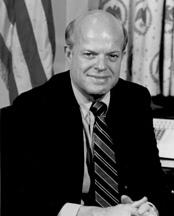
Historical · U.S. Senate · North Carolina
John East
Former U.S. Senator from North Carolina · 1981–1986 · Republican · Class 3
John East represented North Carolina in the United States Senate (1981–1986) for the Republican party. The page below collects sourced biographical facts, term history, committee roles, and provenance for East.
Bioguide ID: E000017
Key facts
- Full name
- John East
- State
- North Carolina
- Party
- Republican
- Senate class
- Class III
- Senate service
- 1981–1986
- First Senate term
- 1981
- Status
- Left office
- Current term ends
- —
- Born
- 1931
- Bioguide ID
- E000017
- Committee assignments
- —
- Dataset version
- 1.20260602
Biographical narrative
987 words · sourced from the Wikipedia REST extract
John P. East was a prominent American politician who served as a United States Senator from North Carolina. A member of the Republican Party, East's political career in the Senate spanned from 1981 until 1986. His tenure in the Senate was marked by his involvement in various legislative initiatives and his alignment with the conservative principles of his party. East's political legacy is characterized by his commitment to Republican values during a transformative period in American politics.
Early life and career
John P. East was born on May 5, 1931. His early life and formative years laid the groundwork for his future political career. Although specific details about his upbringing and education are not provided, it is common for individuals who enter politics to have a background that includes higher education and community involvement. Such experiences often shape their perspectives and inform their political ideologies.
Before entering the Senate, East had a career that included significant involvement in academia and public service. His professional background likely contributed to his understanding of the political landscape and the needs of his constituents. The transition from a career in education or public service to a political office is a common pathway for many politicians, as it allows them to gain insights into the workings of government and the concerns of the public.
East's political career began to take shape as he became more involved in the Republican Party, which was gaining momentum in North Carolina during the late 20th century. His alignment with the party's values and his ability to connect with voters positioned him as a viable candidate for public office. This culminated in his election to the United States Senate, where he would serve as a representative for North Carolina.
Senate tenure
John P. East's Senate career began in 1981 when he was elected to represent North Carolina in the United States Senate. His election came during a period when the Republican Party was experiencing a resurgence in the South, and East was part of this broader political shift. His tenure in the Senate lasted until June 29, 1986, marking a significant chapter in his political life.
During his time in the Senate, East was involved in various legislative activities and discussions that reflected the priorities of his party and constituents. As a member of the Senate, he participated in debates and votes on a range of issues that were pertinent to the nation and his home state. The early 1980s were characterized by significant political and economic changes in the United States, including discussions around tax reform, national defense, and social policies. East's contributions to these discussions were influenced by the prevailing Republican ideology, which emphasized limited government, individual liberties, and a strong national defense.
East's Senate career, while relatively brief, was marked by his commitment to the principles of the Republican Party. He aligned himself with the party's leadership and worked to advance its legislative agenda. The political climate during his tenure was dynamic, with shifting alliances and emerging issues that required careful navigation. East's ability to engage with his colleagues and constituents was crucial as he sought to represent the interests of North Carolina effectively.
As a member of the Senate, East also faced challenges that came with the responsibilities of public office. The role of a senator requires balancing the needs of the state with national interests, and East's tenure was no exception. He had to navigate complex political landscapes, including working with both Republican and Democratic colleagues to achieve legislative goals. This experience likely provided him with valuable insights into the workings of Congress and the importance of bipartisanship, even within a predominantly partisan environment.
Legislative focus and committees
Throughout his Senate tenure, John P. East focused on various legislative issues that were significant to his constituents and aligned with his party's platform. While specific details about the bills he sponsored or supported are not provided, it is common for senators to engage in legislation related to economic policy, education, healthcare, and national security. East's legislative focus would have reflected the priorities of North Carolina residents, as well as the broader goals of the Republican Party during the 1980s.
In addition to his legislative initiatives, East's committee assignments would have played a crucial role in shaping his contributions to the Senate. Senators typically serve on multiple committees, which oversee specific areas of policy and legislation. These committees are essential for reviewing proposed laws, conducting hearings, and providing oversight of government agencies. East's participation in these committees would have allowed him to influence key issues and advocate for the interests of his state.
The committees on which East served would have provided him with opportunities to collaborate with other senators and experts in various fields. This collaboration is vital for developing informed legislation and addressing complex issues facing the nation. East's ability to work within these committees would have been instrumental in advancing his legislative agenda and ensuring that the voices of his constituents were heard in the Senate.
As a senator, East also had the responsibility of representing North Carolina's interests on a national stage. This role involved not only advocating for state-specific issues but also engaging in broader discussions about national policy. The interplay between state and federal interests is a fundamental aspect of a senator's duties, and East's approach to this balance would have been shaped by his understanding of the unique needs of North Carolina.
In summary, John P. East's career as a U.S. Senator from North Carolina was characterized by his alignment with Republican values, his involvement in legislative initiatives, and his participation in committee work. His tenure, while relatively short, was marked by significant political developments and a commitment to representing the interests of his constituents. East's legacy reflects the complexities of serving in the Senate during a transformative period in American politics, where the interplay of local and national interests shaped the legislative landscape.
Notable legislation
Sponsored and co-sponsored legislation for John East is pending operator curation. The biographical narrative above carries the same provenance trail until per-bill rows are written.
Sources
- [1]https://en.wikipedia.org/wiki/John_P._EastWikipedia · retrieved 2026-06-02
Notable quotes
Sourced quotes for John East are pending operator curation. Narrative-scope provenance remains attached below.
Sources
- [1]https://en.wikipedia.org/wiki/John_P._EastWikipedia · retrieved 2026-06-02
Key positions
Curated policy positions for John East are pending operator review. The biographical narrative above carries the same provenance trail until per-topic positions are written.
Sources
- [1]https://en.wikipedia.org/wiki/John_P._EastWikipedia · retrieved 2026-06-02
Terms served
- 1981–1986U.S. Senate · Term 1 · Republican · Class III
Sources & provenance
Every attributable claim above carries a per-section [N] marker that resolves to the corresponding URL below. Each entry records the upstream provider, the canonical URL, and the timestamp at which the source was retrieved by the ingest pipeline.
Key facts
- https://bioguide.congress.gov/search/bio/E000017bioguide · retrieved 2026-06-02
- https://www.govtrack.us/congress/members/403713govtrack · retrieved 2026-06-02
Biographical narrative
- https://en.wikipedia.org/wiki/John_P._Eastwikipedia · retrieved 2026-06-02
Find your senator
Every U.S. state elects two senators. Browse North Carolina’s delegation, the full former-senator roster, or explore the role and term length.
Related on The Candidate
- Preceded by Robert MorganEarlier holder of the North Carolina Class III Senate seat · Democratic.Open
- Succeeded by James BroyhillLater holder of the North Carolina Class III Senate seat · Republican.Open
- Alexander MartinFormer U.S. Senator from North Carolina · RepublicanOpen
- Alton LennonFormer U.S. Senator from North Carolina · DemocraticOpen
- Asa BiggsFormer U.S. Senator from North Carolina · DemocraticOpen
- Augustus MerrimonFormer U.S. Senator from North Carolina · DemocraticOpen