
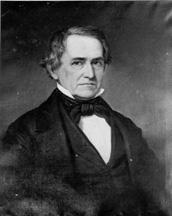
Historical · U.S. Senate · North Carolina
Robert Strange
Former U.S. Senator from North Carolina · 1836–1840 · Democratic · Class 3
Robert Strange represented North Carolina in the United States Senate (1836–1840) for the Democratic party. The page below collects sourced biographical facts, term history, committee roles, and provenance for Strange.
Bioguide ID: S000992
Key facts
- Full name
- Robert Strange
- State
- North Carolina
- Party
- Democratic
- Senate class
- Class III
- Senate service
- 1836–1840
- First Senate term
- 1836
- Status
- Left office
- Current term ends
- —
- Born
- 1796
- Bioguide ID
- S000992
- Committee assignments
- —
- Dataset version
- 1.20260602
Biographical narrative
1,020 words · sourced from the Wikipedia REST extract
Robert Strange was an American politician who served as a Democratic U.S. Senator from North Carolina from 1836 until 1840. His political career was marked by his alignment with the Jacksonian movement, which later evolved into the Democratic Party. Strange's tenure in the Senate was characterized by his commitment to the political and social issues of his time, as well as his involvement in local governance prior to his election to the national legislature. Following his resignation from the Senate, he returned to his legal practice until his death in 1854.
Early life and career
Robert Strange was born on September 20, 1796, in Manchester, Virginia. He pursued his education at several institutions, including New Oxford Academy and Washington College, which is now known as Washington and Lee University, located in Lexington, Virginia. He graduated from Hampden–Sydney College in 1815, where he likely developed the foundational skills that would serve him in his future legal and political endeavors.
After completing his education, Strange moved to Fayetteville, North Carolina, where he began practicing law. His legal career coincided with his growing interest in public service. He was elected to the North Carolina House of Commons, where he served non-consecutive terms from 1821 to 1823 and again in 1826. This experience in local governance provided him with insights into the legislative process and the needs of his constituents.
In addition to his legislative work, Strange held a significant judicial position as a judge of the superior court of North Carolina from 1827 until 1836. This role not only solidified his reputation as a legal authority but also enhanced his visibility and influence within the state. His judicial tenure was marked by his commitment to the rule of law and the administration of justice.
Strange was also involved in various civic and fraternal organizations. He was an active Freemason, serving as the Grand Master of the Grand Lodge of North Carolina from 1812 to 1814. His involvement in Freemasonry extended to local lodges, where he served as Master of Phoenix Lodge No. 8 in Fayetteville in 1826. This engagement reflected his dedication to community service and leadership.
In addition to his legal and political pursuits, Strange commanded the Fayetteville Independent Light Infantry, a local militia company. His leadership in this capacity was notable, particularly when he served as an escort for the Marquis de Lafayette during Lafayette's visit to Fayetteville on March 5, 1825. This event underscored Strange's prominent role in the community and his connections to significant historical figures.
Strange's personal life included the practice of law with several apprentices, including his nephew, James Strange French. He was also a writer, known for authoring "Eoneguski, or the Cherokee Chief," which has been recognized as one of the first novels produced in North Carolina. This literary contribution indicates his engagement with cultural and historical narratives of the region.
Senate tenure
Robert Strange's entry into the U.S. Senate was marked by his election as a Jacksonian, a precursor to the modern Democratic Party. He was elected to fill the vacancy left by the resignation of Willie Person Mangum. Strange officially took office on December 5, 1836, and served until his resignation on November 16, 1840. During his time in the Senate, he was involved in various legislative discussions and decisions that reflected the political climate of the era.
Strange's Senate career occurred during a period of significant political change in the United States, characterized by the rise of the Democratic Party and the influence of President Andrew Jackson. As a member of the Senate, Strange was part of a broader movement that sought to address issues such as states' rights, economic policy, and the expansion of democracy. His alignment with Jacksonian principles likely influenced his legislative priorities and interactions with colleagues.
While specific details regarding the legislation he supported or opposed during his Senate tenure are not provided, it can be inferred that his background as a lawyer and judge would have informed his perspectives on legal and constitutional matters. His experience in the North Carolina House of Commons and as a superior court judge would have also contributed to his understanding of the complexities of governance at both state and federal levels.
Strange's decision to resign from the Senate in 1840 marked the end of his formal political career at the national level. Following his resignation, he returned to Fayetteville, where he resumed his legal practice. This transition back to law suggests a continued commitment to his profession and the community he served.
Legislative focus and committees
During his time in the Senate, Robert Strange was involved in a range of legislative issues, although specific details about his committee assignments or particular legislative initiatives are not documented. His background in law and his experience in the North Carolina House of Commons likely shaped his legislative focus, which may have included topics relevant to his constituents and the broader national context.
As a member of the Democratic Party, Strange would have been aligned with the party's priorities during the late 1830s, which included advocating for the rights of states, promoting agrarian interests, and supporting the expansion of democracy. His role in the Senate would have required him to navigate the complexities of party politics and collaborate with other senators to advance legislative goals.
Strange's commitment to public service extended beyond his Senate career. His involvement in local governance, judiciary, and civic organizations demonstrated a dedication to the welfare of his community. This multifaceted engagement likely influenced his perspectives on legislation and governance during his time in the Senate.
After leaving the Senate, Strange continued to practice law until his death on February 19, 1854. He was buried in the family burial ground at Myrtle Hill, near Fayetteville. His legacy includes not only his contributions to the political landscape of North Carolina but also his involvement in the cultural and civic life of the region. The Robert Strange Country House, which was listed on the National Register of Historic Places in 1983, serves as a testament to his historical significance and the enduring impact of his life and work in North Carolina.
Notable legislation
Sponsored and co-sponsored legislation for Robert Strange is pending operator curation. The biographical narrative above carries the same provenance trail until per-bill rows are written.
Sources
- [1]https://en.wikipedia.org/wiki/Robert_Strange_(American_politician)Wikipedia · retrieved 2026-06-02
Notable quotes
Sourced quotes for Robert Strange are pending operator curation. Narrative-scope provenance remains attached below.
Sources
- [1]https://en.wikipedia.org/wiki/Robert_Strange_(American_politician)Wikipedia · retrieved 2026-06-02
Key positions
Curated policy positions for Robert Strange are pending operator review. The biographical narrative above carries the same provenance trail until per-topic positions are written.
Sources
- [1]https://en.wikipedia.org/wiki/Robert_Strange_(American_politician)Wikipedia · retrieved 2026-06-02
Terms served
- 1836–1837U.S. Senate · Term 1 · Democratic · Class III
- 1837–1840U.S. Senate · Term 2 · Democratic · Class III
Sources & provenance
Every attributable claim above carries a per-section [N] marker that resolves to the corresponding URL below. Each entry records the upstream provider, the canonical URL, and the timestamp at which the source was retrieved by the ingest pipeline.
Key facts
- https://bioguide.congress.gov/search/bio/S000992bioguide · retrieved 2026-06-02
- https://www.govtrack.us/congress/members/410450govtrack · retrieved 2026-06-02
Biographical narrative
- https://en.wikipedia.org/wiki/Robert_Strange_(American_politician)wikipedia · retrieved 2026-06-02
Find your senator
Every U.S. state elects two senators. Browse North Carolina’s delegation, the full former-senator roster, or explore the role and term length.
Related on The Candidate
- Preceded by James IredellEarlier holder of the North Carolina Class III Senate seat · Jackson.Open
- Succeeded by William GrahamLater holder of the North Carolina Class III Senate seat · Whig.Open
- Alexander MartinFormer U.S. Senator from North Carolina · RepublicanOpen
- Alton LennonFormer U.S. Senator from North Carolina · DemocraticOpen
- Asa BiggsFormer U.S. Senator from North Carolina · DemocraticOpen
- Augustus MerrimonFormer U.S. Senator from North Carolina · DemocraticOpen