
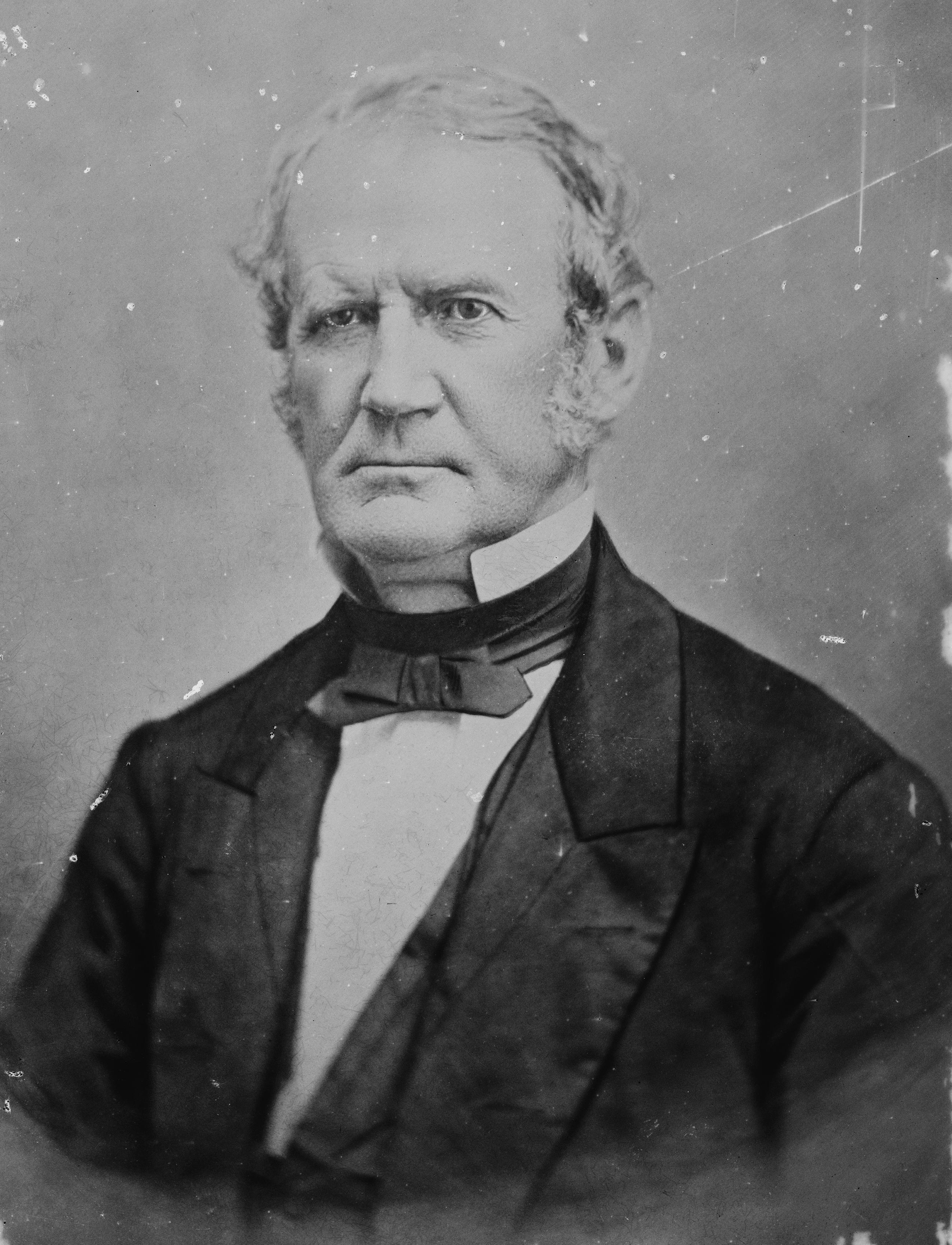
Historical · U.S. Senate · North Carolina
William Graham
Former U.S. Senator from North Carolina · 1840–1843 · Whig · Class 3
William Graham represented North Carolina in the United States Senate (1840–1843) for the Whig party. The page below collects sourced biographical facts, term history, committee roles, and provenance for Graham.
Bioguide ID: G000362
Key facts
- Full name
- William Graham
- State
- North Carolina
- Party
- Whig
- Senate class
- Class III
- Senate service
- 1840–1843
- First Senate term
- 1840
- Status
- Left office
- Current term ends
- —
- Born
- 1804
- Bioguide ID
- G000362
- Committee assignments
- —
- Dataset version
- 1.20260602
Biographical narrative
869 words · sourced from the Wikipedia REST extract
William Graham was a prominent political figure in the 19th century, serving as a United States Senator from North Carolina from 1840 to 1843. A member of the Whig Party, he held various significant positions throughout his career, including Governor of North Carolina and Secretary of the Navy under President Millard Fillmore. Graham's political journey was marked by his involvement in both state and national politics, as well as his complex stance during the Civil War era.
Early life and career
William Graham was born on September 5, 1804, at Vesuvius Furnace, located near Lincolnton, North Carolina. He was the son of Joseph and Isabella Davidson Graham. His family lineage included Scots-Irish roots, with his grandfather, James Graham, having emigrated from Northern Ireland to Pennsylvania in the 18th century. This background influenced Graham's upbringing and education.
Graham pursued higher education at the University of North Carolina at Chapel Hill, where he studied law. During his time at the university, he became an active member of the Dialectic Society, which fostered debate and discussion among students. He graduated in 1824 and was admitted to the bar in 1825, subsequently beginning his legal practice in Hillsborough, North Carolina. In 1836, he married Susannah Sarah Washington, who was a descendant of Lawrence Washington, the half-brother of George Washington.
Before entering the U.S. Senate, Graham had a notable political career at the state level. From 1833 to 1840, he served as a member of the North Carolina House of Commons, representing Orange County. His leadership abilities were recognized during this period, as he was elected twice to serve as the speaker of the House. This experience laid the groundwork for his subsequent election to the U.S. Senate.
Senate tenure
William Graham's tenure in the United States Senate began in 1840 when he was elected as a Whig to fill a vacancy created by the resignation of Robert Strange. He served from November 25, 1840, until March 3, 1843. During the Twenty-seventh Congress, he held the position of chairman of the Senate Committee on Claims, where he played a role in addressing issues related to financial claims against the government.
Graham's time in the Senate was characterized by his alignment with the Whig Party, which was known for its opposition to the policies of President Andrew Jackson and its advocacy for economic modernization. His brother, James Graham, was also involved in politics, having represented North Carolina in the House of Representatives since 1833. This familial connection likely influenced William Graham's political aspirations and strategies.
After his Senate term, Graham continued to be active in North Carolina politics. He served as the state's governor from 1845 to 1849, where he focused on various issues pertinent to the state. Following his governorship, he was appointed Secretary of the Navy in 1850, a position he held until 1852 under President Millard Fillmore. His political ambitions continued as he was the Whig nominee for vice president in the 1852 election, running alongside General Winfield Scott. However, the ticket did not achieve significant electoral success.
Legislative focus and committees
Throughout his political career, William Graham was involved in various legislative matters that reflected the priorities of his party and the interests of his constituents. As a senator, he focused on issues related to claims against the government, demonstrating an interest in financial accountability and the welfare of those seeking redress. His role as chairman of the Senate Committee on Claims allowed him to influence discussions and decisions regarding compensation for individuals and entities with legitimate claims.
Graham's political career was further complicated by the national tensions surrounding the Civil War. Initially a Unionist, he opposed early calls for secession but eventually voted for it after the conflict escalated following the attack on Fort Sumter. This shift in stance highlighted the complexities of his political beliefs during a tumultuous period in American history. He later served in the Confederate Senate from 1864 to 1865, reflecting the divided loyalties that characterized many politicians of the era.
In addition to his legislative duties, Graham was involved in various state-level initiatives and organizations. After the Civil War, he became a member of the board of trustees of the Peabody Fund, which aimed to provide educational assistance to the Southern states in the aftermath of the war. His involvement in this initiative indicated a recognition of the need for educational reform and support in the region.
Despite his political achievements, Graham's legacy is also marked by his opposition to Black suffrage. He expressed strong views against granting voting rights to freed slaves, arguing that it would reverse societal progress. This perspective was reflective of the broader societal attitudes of the time and has been a point of contention in evaluating his contributions to American politics.
William Graham's life came to an end on August 11, 1875, in Saratoga Springs, New York. He is buried in the Old Town Cemetery in Hillsborough, North Carolina. His legacy continues to be recognized in various forms, including the naming of the USS Graham and the city of Graham, North Carolina, in his honor. His contributions to North Carolina and the nation during a critical period in American history remain a significant part of his biography.
Notable legislation
Sponsored and co-sponsored legislation for William Graham is pending operator curation. The biographical narrative above carries the same provenance trail until per-bill rows are written.
Sources
- [1]https://en.wikipedia.org/wiki/William_Alexander_GrahamWikipedia · retrieved 2026-06-02
Notable quotes
Sourced quotes for William Graham are pending operator curation. Narrative-scope provenance remains attached below.
Sources
- [1]https://en.wikipedia.org/wiki/William_Alexander_GrahamWikipedia · retrieved 2026-06-02
Key positions
Curated policy positions for William Graham are pending operator review. The biographical narrative above carries the same provenance trail until per-topic positions are written.
Sources
- [1]https://en.wikipedia.org/wiki/William_Alexander_GrahamWikipedia · retrieved 2026-06-02
Terms served
- 1840–1843U.S. Senate · Term 1 · Whig · Class III
Sources & provenance
Every attributable claim above carries a per-section [N] marker that resolves to the corresponding URL below. Each entry records the upstream provider, the canonical URL, and the timestamp at which the source was retrieved by the ingest pipeline.
Key facts
- https://bioguide.congress.gov/search/bio/G000362bioguide · retrieved 2026-06-02
- https://www.govtrack.us/congress/members/404716govtrack · retrieved 2026-06-02
Biographical narrative
- https://en.wikipedia.org/wiki/William_Alexander_Grahamwikipedia · retrieved 2026-06-02
Find your senator
Every U.S. state elects two senators. Browse North Carolina’s delegation, the full former-senator roster, or explore the role and term length.
Related on The Candidate
- Preceded by Robert StrangeEarlier holder of the North Carolina Class III Senate seat · Democratic.Open
- Succeeded by William Haywood Jr.Later holder of the North Carolina Class III Senate seat · Democratic.Open
- Alexander MartinFormer U.S. Senator from North Carolina · RepublicanOpen
- Alton LennonFormer U.S. Senator from North Carolina · DemocraticOpen
- Asa BiggsFormer U.S. Senator from North Carolina · DemocraticOpen
- Augustus MerrimonFormer U.S. Senator from North Carolina · DemocraticOpen