
Historical · U.S. Senate · North Dakota
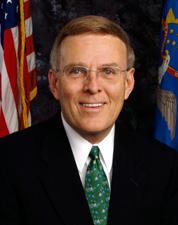
Byron Dorgan
Former U.S. Senator from North Dakota · 1992–2011 · Democratic · Class 3
Byron Dorgan represented North Dakota in the United States Senate (1992–2011) for the Democratic party. The page below collects sourced biographical facts, term history, committee roles, and provenance for Dorgan.
Bioguide ID: D000432
Key facts
- Full name
- Byron Dorgan
- State
- North Dakota
- Party
- Democratic
- Senate class
- Class III
- Senate service
- 1992–2011
- First Senate term
- 1992
- Status
- Left office
- Current term ends
- —
- Born
- 1942
- Bioguide ID
- D000432
- Committee assignments
- —
- Dataset version
- 1.20260601-4
Biographical narrative
908 words · sourced from the Wikipedia REST extract
Byron L. Dorgan is a former United States Senator from North Dakota, who served in the Senate from 1992 until 2011. A member of the Democratic Party, Dorgan previously held a position in the U.S. House of Representatives from 1981 to 1992. Throughout his political career, he was recognized for his leadership roles within the Senate, particularly in areas related to energy policy and aviation. After leaving the Senate, he transitioned to roles in policy advising, academia, and authorship.
Early life and career
Byron Leslie Dorgan was born on May 14, 1942, in Dickinson, North Dakota. He was raised in the small town of Regent, North Dakota. Dorgan's family background reflects a mix of ethnic heritages; his father, Emmett Patrick Dorgan, was of Irish and Swedish descent, while his mother, Dorothy, had German and Norwegian ancestry. Dorgan completed his secondary education at Regent High School before pursuing higher education. He earned a Bachelor of Science degree from the University of North Dakota and later obtained a Master of Business Administration from the University of Denver.
Before entering politics, Dorgan worked in the aerospace industry, gaining experience with Boeing and the Martin-Marietta Corporation. His public service career began at the age of 26 when he was appointed North Dakota State Tax Commissioner, filling a vacancy left by the death of the incumbent. This appointment made him the youngest constitutional officer in North Dakota's history. Dorgan was re-elected to this position in 1972 and again in 1976, earning recognition as one of the "Ten Outstanding State Officials" in the United States by Washington Monthly magazine.
In 1974, Dorgan made an unsuccessful bid for a seat in Congress. However, he was elected to the United States House of Representatives in 1980 and served from 1981 until 1992, being re-elected five times during his tenure.
Senate tenure
Dorgan's Senate career began in 1992 when he won the election for a seat previously held by Democratic incumbent Kent Conrad, who chose not to run for re-election due to a campaign promise. Dorgan's initial term in the Senate was marked by a significant event in September of that year when Quentin Burdick, the state's other senator, passed away. Following Burdick's death, Conrad ran for the special election to fill that seat, while Dorgan assumed Conrad's former seat a few weeks earlier than expected.
Throughout his time in the Senate, Dorgan was re-elected in 1998 and 2004, serving a total of four terms. His leadership roles included serving as the chairman of the Democratic Policy Committee and as a senior member of the Senate Energy Committee. Dorgan's influence was notable during his tenure, particularly as he was recognized as a powerful figure within the Senate Democratic leadership for 16 years.
In January 2010, Dorgan announced that he would not seek re-election in 2010, concluding his Senate career on January 3, 2011. His decision not to run again marked the end of a significant chapter in his political life.
Legislative focus and committees
During his time in the Senate, Dorgan focused on several key legislative areas, particularly energy policy and trade. He was a vocal opponent of the U.S. embargo against Cuba and worked on legislation aimed at easing restrictions on the sale of food and medicine to the country. Dorgan introduced various amendments to end the prohibition on travel to Cuba and sought to terminate funding for anti-Castro broadcasting.
Dorgan's stance on trade was characterized by skepticism towards agreements that he believed would lead to increased trade deficits and the outsourcing of American jobs. He had a mixed record on tort reform, opposing certain measures while supporting others that aligned with his views on legal reform.
As chairman of the Senate Energy and Water Appropriations Subcommittee, Dorgan was an early advocate for renewable energy initiatives. He sponsored measures to promote wind energy and was instrumental in establishing a Renewable Fuels Standard (RFS) to support the development of a renewable fuels industry. His efforts also included persuading the U.S. Geological Survey to conduct an assessment of the Bakken Formation, which estimated significant recoverable oil reserves in North Dakota.
In addition to his work on energy, Dorgan served as the chairman of the Aviation Subcommittee of the Senate Commerce Committee. He was involved in efforts to improve aviation infrastructure and worked on initiatives to modernize the air traffic control system, advocating for the use of GPS technology to enhance efficiency.
Dorgan's commitment to economic development in North Dakota was evident through his role on the Senate Appropriations Committee, where he earmarked funds to establish the Red River Valley Research Corridor. This initiative aimed to foster high-tech job creation in the region, with North Dakota State University and the University of North Dakota serving as central institutions in this effort.
After leaving the Senate, Dorgan continued to engage in public policy as a senior policy advisor for a law firm in Washington, D.C., and as a senior fellow at the Bipartisan Policy Center, focusing on energy issues. He has also taken on roles in academia, serving as an adjunct professor at Georgetown University, and has contributed to various boards and organizations related to energy and arms control.
In addition to his political and advisory work, Dorgan is a New York Times best-selling author, having written five books that explore economic and political themes, as well as fiction that addresses environmental issues. His diverse career reflects a commitment to public service, policy advocacy, and intellectual engagement.
Notable legislation
Sponsored and co-sponsored legislation for Byron Dorgan is pending operator curation. The biographical narrative above carries the same provenance trail until per-bill rows are written.
Sources
- [1]https://en.wikipedia.org/wiki/Byron_DorganWikipedia · retrieved 2026-06-01
Notable quotes
Sourced quotes for Byron Dorgan are pending operator curation. Narrative-scope provenance remains attached below.
Sources
- [1]https://en.wikipedia.org/wiki/Byron_DorganWikipedia · retrieved 2026-06-01
Key positions
Curated policy positions for Byron Dorgan are pending operator review. The biographical narrative above carries the same provenance trail until per-topic positions are written.
Sources
- [1]https://en.wikipedia.org/wiki/Byron_DorganWikipedia · retrieved 2026-06-01
Terms served
- 1981–1983U.S. House · District 0 · Term 1 · Democratic
- 1983–1985U.S. House · District 0 · Term 2 · Democratic
- 1985–1987U.S. House · District 0 · Term 3 · Democratic
- 1987–1989U.S. House · District 0 · Term 4 · Democratic
- 1989–1991U.S. House · District 0 · Term 5 · Democratic
- 1991–1992U.S. House · District 0 · Term 6 · Democratic
- 1992–1993U.S. Senate · Term 7 · Democratic · Class III
- 1993–1999U.S. Senate · Term 8 · Democratic · Class III
- 1999–2005U.S. Senate · Term 9 · Democratic · Class III
- 2005–2011U.S. Senate · Term 10 · Democratic · Class III
Sources & provenance
Every attributable claim above carries a per-section [N] marker that resolves to the corresponding URL below. Each entry records the upstream provider, the canonical URL, and the timestamp at which the source was retrieved by the ingest pipeline.
Key facts
- https://bioguide.congress.gov/search/bio/D000432bioguide · retrieved 2026-06-01
- http://dorgan.senate.govsenate.gov · retrieved 2026-06-01
Biographical narrative
- https://en.wikipedia.org/wiki/Byron_Dorganwikipedia · retrieved 2026-06-01
Find your senator
Every U.S. state elects two senators. Browse North Dakota’s delegation, the full former-senator roster, or explore the role and term length.
Related on The Candidate
- Preceded by Mark AndrewsEarlier holder of the North Dakota Class III Senate seat · Republican.Open
- Asle GronnaFormer U.S. Senator from North Dakota · RepublicanOpen
- Clarence BrunsdaleFormer U.S. Senator from North Dakota · RepublicanOpen
- Edwin LaddFormer U.S. Senator from North Dakota · RepublicanOpen
- Fountain ThompsonFormer U.S. Senator from North Dakota · DemocraticOpen
- Democratic PartyFederal candidates and office holders on the Democratic line.Open