
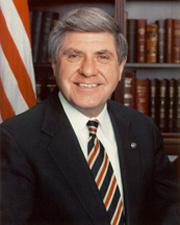
Historical · U.S. Senate · Nebraska
Ben Nelson
Former U.S. Senator from Nebraska · 2001–2013 · Democratic · Class 1
Ben Nelson represented Nebraska in the United States Senate (2001–2013) for the Democratic party. The page below collects sourced biographical facts, term history, committee roles, and provenance for Nelson.
Bioguide ID: N000180
Key facts
- Full name
- Ben Nelson
- State
- Nebraska
- Party
- Democratic
- Senate class
- Class I
- Senate service
- 2001–2013
- First Senate term
- 2001
- Status
- Left office
- Current term ends
- —
- Born
- 1941
- Bioguide ID
- N000180
- Committee assignments
- —
- Dataset version
- 1.20260601-3
Biographical narrative
979 words · sourced from the Wikipedia REST extract
Earl Benjamin Nelson is a former American politician, attorney, and businessman who served as a United States senator from Nebraska from 2001 until 2013. A member of the Democratic Party, he previously held the position of the 37th governor of Nebraska from 1991 to 1999. Nelson is notable for being the last Democrat to have won or held statewide office in Nebraska as of 2026. His political career has been characterized by a blend of moderate and conservative positions, particularly in a state that has leaned Republican in recent years.
Early life and career
Earl Benjamin Nelson was born on May 17, 1941, in McCook, Nebraska. He is the only child of Birdella and Benjamin Earl Nelson. His early life included achievements such as becoming an Eagle Scout, which reflects a commitment to community service and leadership from a young age.
Nelson pursued higher education at the University of Nebraska–Lincoln, where he earned a Bachelor of Arts degree in 1963, followed by a Master’s degree in 1965. He completed his academic journey with a Juris Doctor degree in 1970. After graduating from law school, he began his professional career as an assistant general counsel for Central National Insurance Group in Omaha. His work in the insurance industry laid the groundwork for his future political endeavors.
In 1975, Nelson was appointed as the state insurance director by the governor, marking his entry into public service. Following this role, he returned to Central National Insurance, where he ascended to the positions of executive vice president and later president. His background in insurance and business provided him with a unique perspective on economic and regulatory issues, which would influence his later political decisions.
Nelson's involvement in politics began to take shape in the mid-1980s when he became active in the Democratic Party. In 1986, he served as the state chairman for Helen Boosalis's gubernatorial campaign, although Boosalis was ultimately defeated by the Republican incumbent, Kay Orr. This experience in campaign management likely contributed to his understanding of political strategy and voter engagement.
Senate tenure
Nelson's political career took a significant turn when he first ran for office in 1990, successfully defeating the incumbent Republican governor Kay Orr by a narrow margin. His victory was notable given the competitive nature of the race, as he won by just over 4,000 votes out of more than 586,000 cast. His tenure as governor lasted from 1991 until 1999, during which he implemented various legislative initiatives aimed at crime reduction, welfare reform, and tax relief for middle-income families.
After serving two terms as governor, Nelson sought a seat in the U.S. Senate in 1996 but was defeated by Republican Chuck Hagel. Following a brief hiatus from electoral politics, he returned to the political arena and was nominated by the Democratic Party for the Senate in the 2000 election after the retirement of incumbent Bob Kerrey. Nelson won the election against Attorney General Don Stenberg, securing approximately 51% of the vote. His campaign was marked by significant financial investment, as he spent considerably more than his opponent.
During his time in the Senate, Nelson was re-elected in 2006, overcoming speculation that he might face a strong challenge from former Governor Mike Johanns, who was appointed as U.S. Secretary of Agriculture. With Johanns out of the race, Nelson faced Pete Ricketts, a former executive at TD Ameritrade, and won decisively with a margin of 64% to 36%. This victory was significant as it represented one of the largest margins for a Democratic Senate candidate in Nebraska in decades.
Nelson's Senate career came to an end when he chose not to seek a third term in 2012. He was succeeded by Republican Deb Fischer, marking a continuation of the Republican dominance in Nebraska's statewide offices.
Legislative focus and committees
Throughout his Senate tenure, Nelson was known for his centrist and sometimes conservative positions, which distinguished him from many of his Democratic colleagues. He was often regarded as the most conservative Democrat in the Senate, frequently voting against his party on various issues. His legislative focus included a range of topics, particularly those affecting Nebraska and its constituents.
One of the key areas of Nelson's legislative work was health care. He initially garnered support from anti-abortion groups, such as Nebraska Right to Life, but later faced criticism from these organizations after his support for the Affordable Care Act, which did not align with their views on abortion-related provisions. This shift illustrates the complexities and challenges faced by politicians who navigate the intersection of party loyalty and constituent beliefs.
Nelson also became involved in discussions surrounding earmarks, particularly when he was criticized for including provisions in defense spending bills that were alleged to benefit his family. Such controversies highlight the scrutiny that public officials often face regarding their legislative actions and the potential conflicts of interest that can arise.
In addition to health care and fiscal policy, Nelson's legislative agenda included efforts to address crime and welfare reform, reflecting his earlier initiatives as governor. He advocated for measures aimed at reducing juvenile crime and enhancing public safety, as well as promoting programs that supported low-income families.
Throughout his time in the Senate, Nelson served on various committees, contributing to discussions and decisions that shaped national policy. His experience as a former governor and his background in law and business provided him with a comprehensive understanding of the legislative process and the implications of policy decisions on both state and national levels.
In summary, Earl Benjamin Nelson's political career is marked by significant achievements and challenges. From his early life in Nebraska to his tenure as governor and U.S. senator, he has played a notable role in the state's political landscape. His centrist approach and willingness to engage with both sides of the aisle have defined his legacy in a state that has increasingly leaned Republican in recent years.
Notable legislation
Sponsored and co-sponsored legislation for Ben Nelson is pending operator curation. The biographical narrative above carries the same provenance trail until per-bill rows are written.
Sources
- [1]https://en.wikipedia.org/wiki/Ben_NelsonWikipedia · retrieved 2026-06-01
Notable quotes
Sourced quotes for Ben Nelson are pending operator curation. Narrative-scope provenance remains attached below.
Sources
- [1]https://en.wikipedia.org/wiki/Ben_NelsonWikipedia · retrieved 2026-06-01
Key positions
Curated policy positions for Ben Nelson are pending operator review. The biographical narrative above carries the same provenance trail until per-topic positions are written.
Sources
- [1]https://en.wikipedia.org/wiki/Ben_NelsonWikipedia · retrieved 2026-06-01
Terms served
- 2001–2007U.S. Senate · Term 1 · Democratic · Class I
- 2007–2013U.S. Senate · Term 2 · Democratic · Class I
Sources & provenance
Every attributable claim above carries a per-section [N] marker that resolves to the corresponding URL below. Each entry records the upstream provider, the canonical URL, and the timestamp at which the source was retrieved by the ingest pipeline.
Key facts
- https://bioguide.congress.gov/search/bio/N000180bioguide · retrieved 2026-06-01
- http://bennelson.senate.gov/senate.gov · retrieved 2026-06-01
Biographical narrative
- https://en.wikipedia.org/wiki/Ben_Nelsonwikipedia · retrieved 2026-06-01
Find your senator
Every U.S. state elects two senators. Browse Nebraska’s delegation, the full former-senator roster, or explore the role and term length.
Related on The Candidate
- Preceded by J. KerreyEarlier holder of the Nebraska Class I Senate seat · Democratic.Open
- Algernon PaddockFormer U.S. Senator from Nebraska · RepublicanOpen
- Alvin SaundersFormer U.S. Senator from Nebraska · RepublicanOpen
- Ben SasseFormer U.S. Senator from Nebraska · RepublicanOpen
- Carl CurtisFormer U.S. Senator from Nebraska · RepublicanOpen
- Democratic PartyFederal candidates and office holders on the Democratic line.Open