
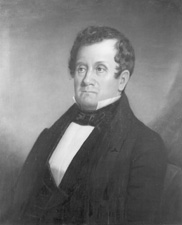
Historical · U.S. Senate · New Hampshire
John Page
Former U.S. Senator from New Hampshire · 1836–1837 · Jackson · Class 3
John Page represented New Hampshire in the United States Senate (1836–1837) for the Jackson party. The page below collects sourced biographical facts, term history, committee roles, and provenance for Page.
Bioguide ID: P000019
Key facts
- Full name
- John Page
- State
- New Hampshire
- Party
- Jackson
- Senate class
- Class III
- Senate service
- 1836–1837
- First Senate term
- 1836
- Status
- Left office
- Current term ends
- —
- Born
- 1787
- Bioguide ID
- P000019
- Committee assignments
- —
- Dataset version
- 1.20260602
Biographical narrative
962 words · sourced from the Wikipedia REST extract
John Page was an American farmer and politician who served as a U.S. Senator from New Hampshire and later as the 17th governor of the state. Born on May 21, 1787, in Haverhill, New Hampshire, Page's political career spanned several decades, during which he was involved in various local and state government roles. His tenure in the U.S. Senate was brief, lasting from 1836 to 1837, but it was a significant period in his political journey, reflecting the shifting political landscape of the time. Page's affiliations evolved throughout his career, transitioning from the Democratic-Republican Party to the Jacksonian Democrats and later to the Free Soil Party.
Early life and career
John Page was born to John Page and Hannah Rice Greene in Haverhill, New Hampshire. His early education took place in local schools, where he developed a foundation that would serve him throughout his life. Following his education, Page became a farmer, engaging in agricultural activities that were typical for many individuals in his community during that era. His commitment to his local community was evident from an early age, as he took on various roles that would eventually lead him into politics.
During the War of 1812, Page served as a lieutenant in a local militia company. His unit was tasked with guarding the border with Canada, a critical responsibility aimed at preventing contraband trade and deterring potential British invasions. This military service not only showcased his dedication to his country but also provided him with leadership experience that would be valuable in his future political endeavors.
In addition to his military service, Page held a federal position as a tax assessor during and after the war. This role allowed him to gain insights into the workings of government and public finance, further preparing him for his future political career. His political involvement began in earnest when he was elected to the New Hampshire House of Representatives, where he served from 1818 to 1820. This initial foray into politics marked the beginning of a long-standing commitment to public service.
Page's local political career continued to flourish as he took on various roles within his community. He served as Register of Deeds for Grafton County in 1827 and again from 1829 to 1835. His influence extended to the town of Haverhill, where he held the position of Selectman for fourteen non-consecutive terms and served as the town clerk for an extended period. These roles allowed him to build a strong network within the community and gain a deeper understanding of local governance.
In 1835, Page returned to the state legislature, and in 1836, he was appointed to the Governor’s Council, a position he held again in 1838. His growing political stature set the stage for his election to the United States Senate later that same year.
Senate tenure
John Page's tenure in the U.S. Senate began in 1836 when he was elected as a Democrat to fill the vacancy left by Isaac Hill, who resigned to become governor. Page's appointment was part of a political agreement that allowed him to serve the remainder of Hill's term while deferring to Franklin Pierce for the subsequent full term. Page officially took office on June 8, 1836, and served until March 3, 1837.
During his brief time in the Senate, Page was involved in various legislative activities, although the specifics of his contributions are not extensively documented. Notably, he served as the chairman of the Committee on Agriculture, a position that underscored his background as a farmer and his interest in agricultural issues. This role likely involved overseeing legislation related to farming practices, land use, and rural development, which were critical concerns for many constituents in New Hampshire and across the nation at that time.
Page's Senate career was relatively short, as he was succeeded by Franklin Pierce, who was elected to a full six-year term in 1837. Despite the brevity of his Senate service, Page's election reflected the political dynamics of the era, as well as his ability to navigate the shifting allegiances within the Democratic Party.
Legislative focus and committees
Throughout his political career, John Page's legislative focus was shaped by his background as a farmer and his commitment to local governance. His role as chairman of the Committee on Agriculture during his Senate tenure highlighted his dedication to agricultural issues, which were vital to the economy and way of life in New Hampshire and the broader United States during the 19th century.
Page's political affiliations evolved over time, reflecting the changing landscape of American politics. Initially aligned with the Democratic-Republican Party, he transitioned to the Jacksonian Democrats, which emphasized populism and agrarian interests. Later in his career, he became associated with the Free Soil Party, which opposed the expansion of slavery into the territories, indicating a shift in his political priorities as national issues began to dominate the political discourse.
After his Senate term, Page continued his public service by being elected governor of New Hampshire in 1839, a position he held until 1842. His governorship allowed him to further influence state policies and address the needs of his constituents. Following his time in office, he returned to farming in Haverhill, where he continued to be involved in his community until his death.
John Page passed away on September 8, 1865, in Haverhill, New Hampshire. He was buried in Ladd Street Cemetery, leaving behind a legacy of public service that spanned local, state, and national levels. His contributions to New Hampshire's political landscape, particularly during a time of significant change in American politics, remain a part of the state's history. Page's family included nine children, one of whom, John A. Page, went on to serve as Vermont State Treasurer, indicating a continued legacy of public service within his family.
Notable legislation
Sponsored and co-sponsored legislation for John Page is pending operator curation. The biographical narrative above carries the same provenance trail until per-bill rows are written.
Sources
- [1]https://en.wikipedia.org/wiki/John_Page_(New_Hampshire_politician)Wikipedia · retrieved 2026-06-02
Notable quotes
Sourced quotes for John Page are pending operator curation. Narrative-scope provenance remains attached below.
Sources
- [1]https://en.wikipedia.org/wiki/John_Page_(New_Hampshire_politician)Wikipedia · retrieved 2026-06-02
Key positions
Curated policy positions for John Page are pending operator review. The biographical narrative above carries the same provenance trail until per-topic positions are written.
Sources
- [1]https://en.wikipedia.org/wiki/John_Page_(New_Hampshire_politician)Wikipedia · retrieved 2026-06-02
Terms served
- 1836–1837U.S. Senate · Term 1 · Jackson · Class III
Sources & provenance
Every attributable claim above carries a per-section [N] marker that resolves to the corresponding URL below. Each entry records the upstream provider, the canonical URL, and the timestamp at which the source was retrieved by the ingest pipeline.
Key facts
- https://bioguide.congress.gov/search/bio/P000019bioguide · retrieved 2026-06-02
- https://www.govtrack.us/congress/members/408430govtrack · retrieved 2026-06-02
Biographical narrative
- https://en.wikipedia.org/wiki/John_Page_(New_Hampshire_politician)wikipedia · retrieved 2026-06-02
Find your senator
Every U.S. state elects two senators. Browse New Hampshire’s delegation, the full former-senator roster, or explore the role and term length.
Related on The Candidate
- Preceded by John ParrottEarlier holder of the New Hampshire Class III Senate seat · Republican.Open
- Succeeded by Franklin PierceLater holder of the New Hampshire Class III Senate seat · Democratic.Open
- Aaron CraginFormer U.S. Senator from New Hampshire · RepublicanOpen
- Austin PikeFormer U.S. Senator from New Hampshire · RepublicanOpen
- Bainbridge WadleighFormer U.S. Senator from New Hampshire · RepublicanOpen
- Benning JennessFormer U.S. Senator from New Hampshire · DemocraticOpen