
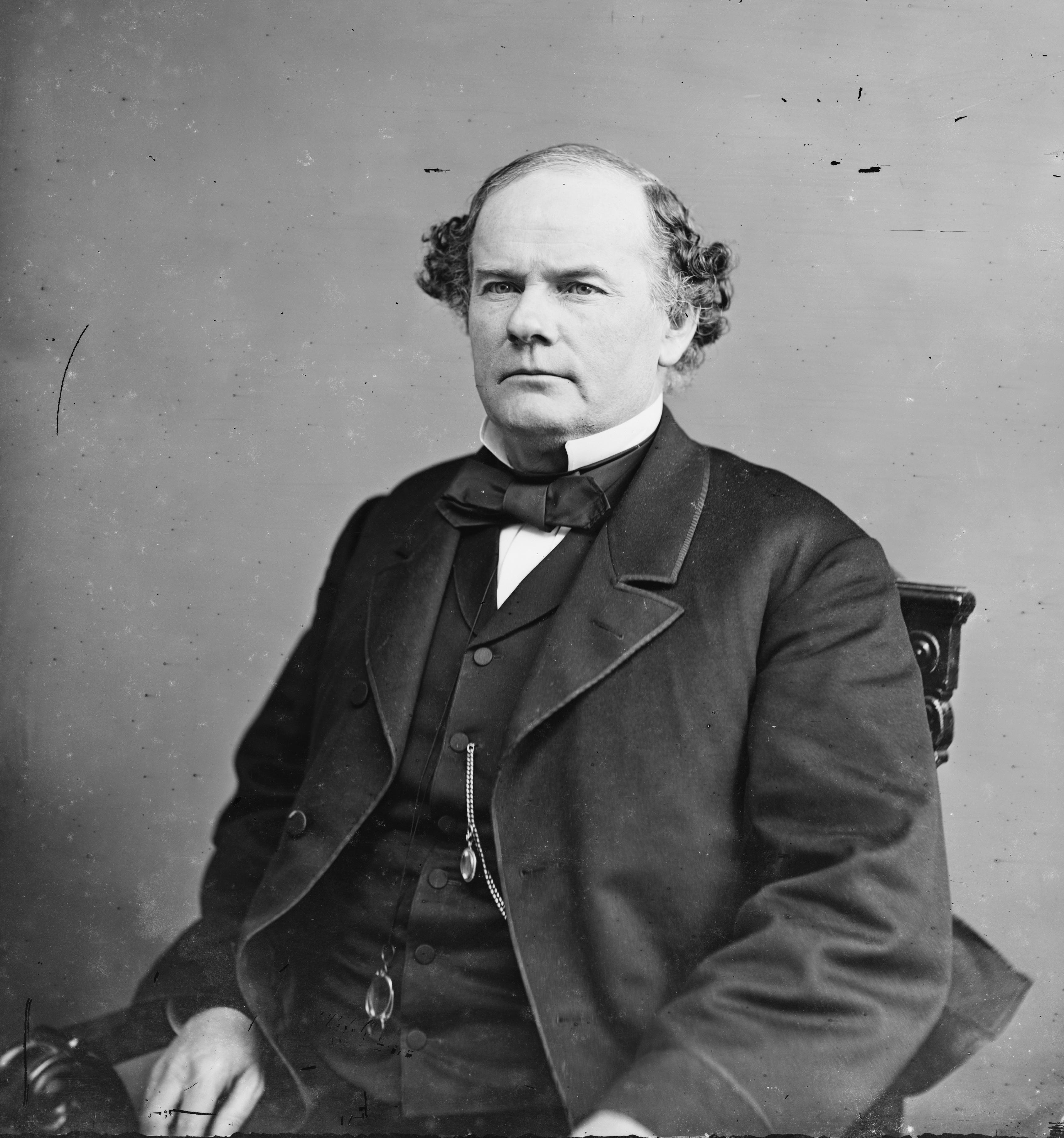
Historical · U.S. Senate · New Jersey
Alexander Cattell
Former U.S. Senator from New Jersey · 1866–1871 · Republican · Class 2
Alexander Cattell represented New Jersey in the United States Senate (1866–1871) for the Republican party. The page below collects sourced biographical facts, term history, committee roles, and provenance for Cattell.
Bioguide ID: C000254
Key facts
- Full name
- Alexander Cattell
- State
- New Jersey
- Party
- Republican
- Senate class
- Class II
- Senate service
- 1866–1871
- First Senate term
- 1866
- Status
- Left office
- Current term ends
- —
- Born
- 1816
- Bioguide ID
- C000254
- Committee assignments
- —
- Dataset version
- 1.20260602
Biographical narrative
976 words · sourced from the Wikipedia REST extract
Alexander Cattell was a prominent figure in 19th-century American politics, serving as a United States Senator from New Jersey. A member of the Republican Party, Cattell's political career was marked by his involvement in both state and national governance. His tenure in the Senate lasted from 1866 until 1871, during which he contributed to various legislative efforts and held significant positions within the Senate's committee structure. After leaving the Senate, Cattell continued to serve the public in various capacities, including roles in civil service and education.
Early life and career
Alexander Cattell was born on February 12, 1816, in Salem, New Jersey. His early education provided him with a solid academic foundation, which he would later build upon in his professional pursuits. Cattell initially engaged in mercantile activities in Salem, where he developed a keen understanding of business operations and financial management. This experience in commerce would later inform his approach to public service and governance.
In 1840, Cattell began his political career by being elected to the New Jersey General Assembly. His commitment to public service was further demonstrated when he served as the clerk of the Assembly from 1842 to 1844. His involvement in the state constitutional convention in 1844 marked a significant milestone in his early political career, as he contributed to the foundational legal framework of New Jersey.
In 1846, Cattell relocated to Philadelphia, where he continued his career in business and banking. His move to Philadelphia allowed him to expand his professional network and engage in more substantial financial ventures. During his time in the city, he was elected to the Philadelphia Common Council, serving from 1848 to 1854. This role provided him with valuable experience in municipal governance and public administration.
Cattell's entrepreneurial spirit led him to organize the Corn Exchange Bank, where he served as president from 1858 until 1871. His leadership at the bank not only solidified his reputation as a capable financial manager but also positioned him as a key player in the economic landscape of the region. His experiences in both business and local government laid the groundwork for his future political endeavors.
Senate tenure
Cattell's transition from state politics to the national stage occurred in 1866 when he was elected as a Republican to the United States Senate. He succeeded John P. Stockton, whose Senate seat had been declared vacant. Cattell officially took office on September 19, 1866, and served until March 3, 1871. His election to the Senate came during a tumultuous period in American history, marked by the aftermath of the Civil War and the ongoing Reconstruction efforts.
During his time in the Senate, Cattell was involved in various legislative discussions and decisions that shaped the future of the nation. He held the position of chairman of the Joint Committee on the Library during the Forty-first Congress, a role that underscored his commitment to the preservation and promotion of knowledge and culture within the United States. This committee was responsible for overseeing the operations of the Library of Congress, which plays a vital role in the nation's intellectual and cultural heritage.
Cattell's Senate career was characterized by his focus on issues pertinent to his constituents and the broader national context. However, he chose not to seek reelection at the end of his term in 1871, marking the conclusion of his formal legislative career. His decision to step away from the Senate reflected a personal choice rather than any political controversy, allowing him to transition into other roles in public service.
Legislative focus and committees
Throughout his Senate tenure, Cattell's legislative focus was shaped by the prevailing issues of his time. The post-Civil War era was marked by significant challenges, including the integration of formerly enslaved individuals into society, the rebuilding of war-torn regions, and the establishment of civil rights. While specific legislative initiatives attributed to Cattell are not detailed in the available records, his role as chairman of the Joint Committee on the Library suggests an interest in cultural and educational matters.
In addition to his responsibilities in the Senate, Cattell's public service continued after his term ended. He was appointed by President Ulysses S. Grant to serve on the first United States Civil Service Commission, where he contributed to the development of a more structured and merit-based approach to public employment. His tenure on the commission lasted two years, during which he worked to implement reforms aimed at improving the efficiency and integrity of the federal workforce.
Following his service on the Civil Service Commission, Cattell accepted the position of United States financial agent in London, where he served during 1873 and 1874. This role allowed him to leverage his financial expertise on an international stage, representing American interests abroad and managing financial matters related to the United States.
Cattell's later career included significant involvement in education and taxation in New Jersey. He served on the New Jersey Board of Tax Assessors from 1884 to 1891, and he held the position of president of the board from 1889 to 1891. His leadership in this role demonstrated his ongoing commitment to public service and governance at the state level. In 1891, he was appointed to the State Board of Education, where he contributed to educational policy and oversight for a term of three years.
Cattell passed away on April 8, 1894, in Jamestown, New York. His contributions to public service and governance left a lasting impact on both New Jersey and the nation. He was interred in Colestown Cemetery in Cherry Hill, New Jersey. Cattell's legacy includes not only his political achievements but also his dedication to civic engagement and community development throughout his life. His family background included five brothers and two sisters, with one of his brothers, William Cassady Cattell, serving as the sixth president of Lafayette College, further emphasizing the family's commitment to education and public service.
Notable legislation
Sponsored and co-sponsored legislation for Alexander Cattell is pending operator curation. The biographical narrative above carries the same provenance trail until per-bill rows are written.
Sources
- [1]https://en.wikipedia.org/wiki/Alexander_G._CattellWikipedia · retrieved 2026-06-02
Notable quotes
Sourced quotes for Alexander Cattell are pending operator curation. Narrative-scope provenance remains attached below.
Sources
- [1]https://en.wikipedia.org/wiki/Alexander_G._CattellWikipedia · retrieved 2026-06-02
Key positions
Curated policy positions for Alexander Cattell are pending operator review. The biographical narrative above carries the same provenance trail until per-topic positions are written.
Sources
- [1]https://en.wikipedia.org/wiki/Alexander_G._CattellWikipedia · retrieved 2026-06-02
Terms served
- 1866–1871U.S. Senate · Term 1 · Republican · Class II
Sources & provenance
Every attributable claim above carries a per-section [N] marker that resolves to the corresponding URL below. Each entry records the upstream provider, the canonical URL, and the timestamp at which the source was retrieved by the ingest pipeline.
Key facts
- https://bioguide.congress.gov/search/bio/C000254bioguide · retrieved 2026-06-02
- https://www.govtrack.us/congress/members/402398govtrack · retrieved 2026-06-02
Biographical narrative
- https://en.wikipedia.org/wiki/Alexander_G._Cattellwikipedia · retrieved 2026-06-02
Find your senator
Every U.S. state elects two senators. Browse New Jersey’s delegation, the full former-senator roster, or explore the role and term length.
Related on The Candidate
- Preceded by John Ten EyckEarlier holder of the New Jersey Class II Senate seat · Republican.Open
- Succeeded by John McPhersonLater holder of the New Jersey Class II Senate seat · Democratic.Open
- Aaron KitchellFormer U.S. Senator from New Jersey · RepublicanOpen
- Aaron OgdenFormer U.S. Senator from New Jersey · FederalistOpen
- Albert HawkesFormer U.S. Senator from New Jersey · RepublicanOpen
- Arthur MooreFormer U.S. Senator from New Jersey · DemocraticOpen