
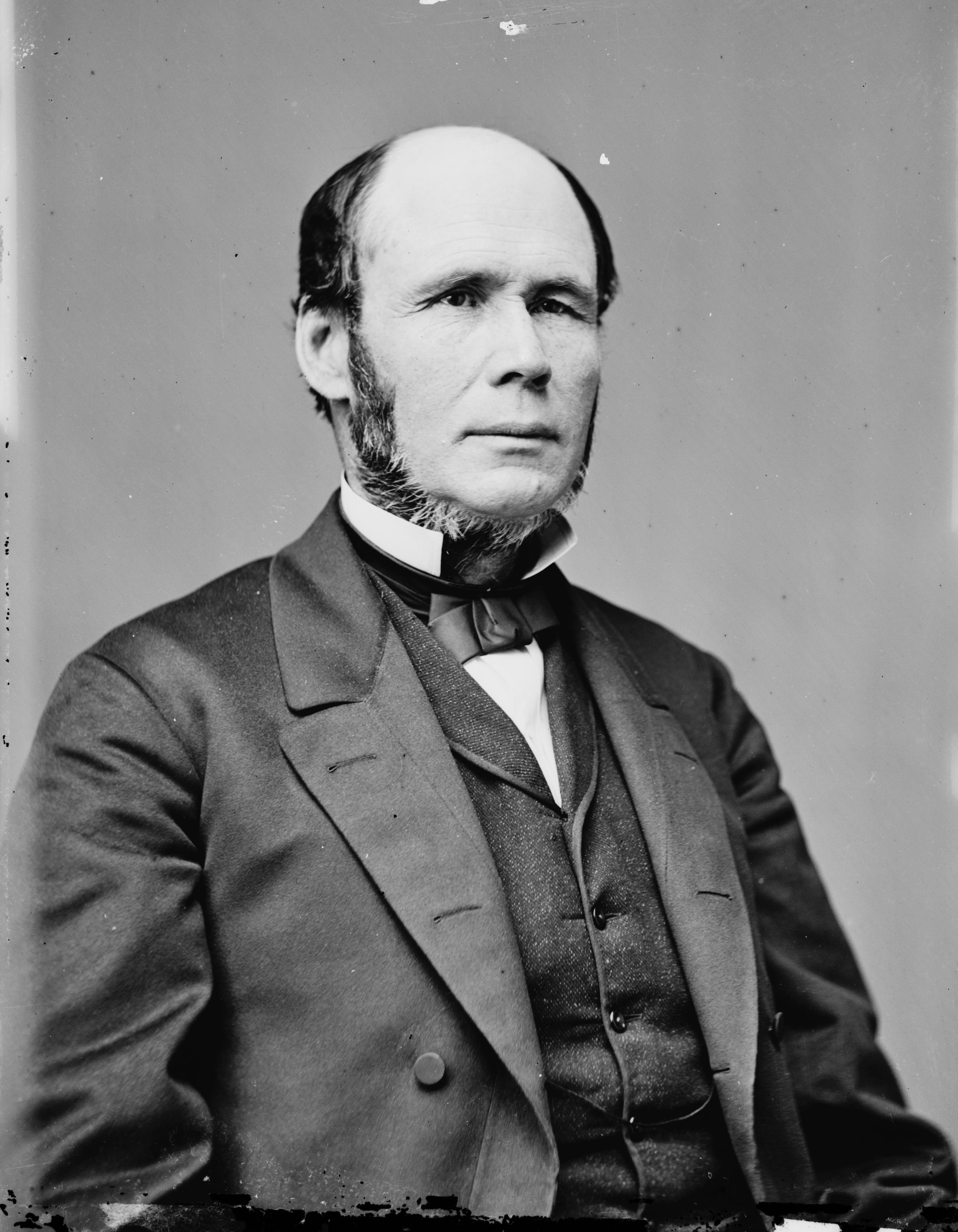
Historical · U.S. Senate · New Jersey
John Ten Eyck
Former U.S. Senator from New Jersey · 1859–1865 · Republican · Class 2
John Ten Eyck represented New Jersey in the United States Senate (1859–1865) for the Republican party. The page below collects sourced biographical facts, term history, committee roles, and provenance for Eyck.
Bioguide ID: T000122
Key facts
- Full name
- John Ten Eyck
- State
- New Jersey
- Party
- Republican
- Senate class
- Class II
- Senate service
- 1859–1865
- First Senate term
- 1859
- Status
- Left office
- Current term ends
- —
- Born
- 1814
- Bioguide ID
- T000122
- Committee assignments
- —
- Dataset version
- 1.20260602
Biographical narrative
1,005 words · sourced from the Wikipedia REST extract
John Ten Eyck was a United States Senator from New Jersey who served from 1859 to 1865 during a tumultuous period in American history marked by the Civil War. A member of the Republican Party, Ten Eyck's political career began in the context of the shifting political landscape of the 1850s, and he played a role in the legislative developments of his time, particularly concerning issues related to slavery and the war.
Early life and career
John Ten Eyck was born on March 12, 1814, in Freehold Township, New Jersey. He was the son of William Ten Eyck and Leah Conover Ten Eyck. The Ten Eyck family, of Dutch American descent, had a long-standing presence in the realms of law, business, and politics, particularly within New Jersey and New York. This background likely influenced Ten Eyck's eventual pursuit of a career in law and public service.
Ten Eyck received his early education through private tutors, which was common for individuals of his background during that era. He later studied law under Joseph Fitz Randolph, a prominent figure in New Jersey's legal community. After completing his studies, Ten Eyck was admitted to the bar in 1835, marking the beginning of his legal career. He established a successful law practice in Burlington, New Jersey, initially partnering with Garret D. Wall before operating his own firm. His legal expertise and community involvement led to his appointment as the prosecuting attorney for Burlington County, a position he held from 1839 to 1849.
In addition to his legal work, Ten Eyck was active in the political sphere. He participated as a delegate in the New Jersey constitutional convention of 1844, which was a significant event in the state's political history. Originally affiliated with the Whig Party, Ten Eyck transitioned to the Republican Party upon its formation in the 1850s. He was an early supporter of John C. Frémont during the 1856 presidential election, reflecting his alignment with the party's anti-slavery platform.
Senate tenure
Ten Eyck's tenure in the United States Senate began on March 4, 1859, following his election by a joint session of the New Jersey State Legislature. His election occurred in a politically charged atmosphere, as various factions, including the Republican Party, traditional Whigs, and members of the Free Soil and American parties, were vying for control of the legislature. The Opposition Party, which sought to prevent the election of a Democrat, ultimately selected Ten Eyck as a compromise candidate. His moderate stance and lack of strong ties to any particular faction made him a suitable choice for the role.
During his time in the Senate, which coincided with the American Civil War, Ten Eyck served on the Judiciary and Commerce committees. He entered the Senate with a reputation as a moderate, holding views that opposed the expansion of slavery into new territories while acknowledging its constitutional protection in states where it already existed. Although he personally opposed the Fugitive Slave Act of 1850, he supported its enforcement, believing it was constitutionally mandated.
As the Civil War progressed, Ten Eyck's views on slavery evolved. He complied with the New Jersey State Legislature's instructions to support the Crittenden Compromise in early 1861, although he expressed concerns about its constitutionality. His legislative actions included voting to end slavery in Washington, D.C., and supporting the Thirteenth Amendment, which ultimately abolished slavery throughout the United States.
In the summer of 1863, when Confederate forces invaded Pennsylvania, Ten Eyck took a proactive stance by advocating for the formation of a militia unit in Burlington County to assist in the defense of Pennsylvania. He personally enlisted as a private to encourage local participation, and the unit was named the "Ten Eyck Guards" in his honor. He marched with the unit to Pennsylvania and completed his service upon their return home after the Confederate retreat.
Ten Eyck's Senate term concluded on March 3, 1865. His time in office was marked by significant national challenges and legislative debates that would shape the future of the United States.
Legislative focus and committees
Throughout his Senate career, Ten Eyck was involved in several key legislative issues, particularly those related to the Civil War and the contentious topic of slavery. His committee assignments on the Judiciary and Commerce committees placed him at the intersection of critical legislative discussions during a transformative period in American history.
Initially perceived as a moderate, Ten Eyck's stance on slavery reflected the complexities of the political landscape of his time. He opposed the expansion of slavery but maintained that the Constitution allowed for its existence in states where it was already established. His support for the Fugitive Slave Act, despite his personal opposition, illustrated the tension between his legal principles and moral beliefs.
As the war intensified, Ten Eyck's anti-slavery views became more pronounced. His actions in support of the Thirteenth Amendment and his vote to end slavery in Washington, D.C., demonstrated a shift towards a more definitive stance against the institution of slavery. His involvement in the formation of the Ten Eyck Guards further exemplified his commitment to the Union cause and the defense of his state during the war.
After leaving the Senate, Ten Eyck returned to his legal practice and continued to engage in public service. He participated as a delegate in the 1866 National Union Convention, which sought to promote reconciliation following the Civil War. In 1873, he was appointed to a commission responsible for revising the New Jersey Constitution, eventually serving as its president. The commission's proposed changes were ratified by voters in 1875, reflecting Ten Eyck's ongoing influence in state governance.
John Ten Eyck passed away on August 24, 1879, at his home in Mount Holly Township, New Jersey. His contributions to the legal and political landscape of New Jersey and the United States during a critical period in history remain part of his legacy. He was interred in St. Andrew's Cemetery in Mount Holly. Ten Eyck was married to Julia Gadsby, with whom he had six children, furthering his family's legacy in the region.
Notable legislation
Sponsored and co-sponsored legislation for John Ten Eyck is pending operator curation. The biographical narrative above carries the same provenance trail until per-bill rows are written.
Sources
- [1]https://en.wikipedia.org/wiki/John_C._Ten_EyckWikipedia · retrieved 2026-06-02
Notable quotes
Sourced quotes for John Ten Eyck are pending operator curation. Narrative-scope provenance remains attached below.
Sources
- [1]https://en.wikipedia.org/wiki/John_C._Ten_EyckWikipedia · retrieved 2026-06-02
Key positions
Curated policy positions for John Ten Eyck are pending operator review. The biographical narrative above carries the same provenance trail until per-topic positions are written.
Sources
- [1]https://en.wikipedia.org/wiki/John_C._Ten_EyckWikipedia · retrieved 2026-06-02
Terms served
- 1859–1865U.S. Senate · Term 1 · Republican · Class II
Sources & provenance
Every attributable claim above carries a per-section [N] marker that resolves to the corresponding URL below. Each entry records the upstream provider, the canonical URL, and the timestamp at which the source was retrieved by the ingest pipeline.
Key facts
- https://bioguide.congress.gov/search/bio/T000122bioguide · retrieved 2026-06-02
- https://www.govtrack.us/congress/members/410705govtrack · retrieved 2026-06-02
Biographical narrative
- https://en.wikipedia.org/wiki/John_C._Ten_Eyckwikipedia · retrieved 2026-06-02
Find your senator
Every U.S. state elects two senators. Browse New Jersey’s delegation, the full former-senator roster, or explore the role and term length.
Related on The Candidate
- Preceded by Jacob MillerEarlier holder of the New Jersey Class II Senate seat · Whig.Open
- Succeeded by Alexander CattellLater holder of the New Jersey Class II Senate seat · Republican.Open
- Aaron KitchellFormer U.S. Senator from New Jersey · RepublicanOpen
- Aaron OgdenFormer U.S. Senator from New Jersey · FederalistOpen
- Albert HawkesFormer U.S. Senator from New Jersey · RepublicanOpen
- Republican PartyFederal candidates and office holders on the Republican line.Open