
Historical · U.S. Senate · New Jersey
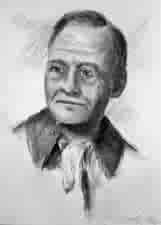
Ephraim Bateman
Former U.S. Senator from New Jersey · 1826–1829 · Adams · Class 1
Ephraim Bateman represented New Jersey in the United States Senate (1826–1829) for the Adams party. The page below collects sourced biographical facts, term history, committee roles, and provenance for Bateman.
Bioguide ID: B000228
Key facts
- Full name
- Ephraim Bateman
- State
- New Jersey
- Party
- Adams
- Senate class
- Class I
- Senate service
- 1826–1829
- First Senate term
- 1826
- Status
- Left office
- Current term ends
- —
- Born
- 1780
- Bioguide ID
- B000228
- Committee assignments
- —
- Dataset version
- 1.20260602
Biographical narrative
965 words · sourced from the Wikipedia REST extract
Ephraim Bateman was an American politician who served as a U.S. Senator from New Jersey from 1826 until 1829. He was affiliated with the Adams Party and had a notable political career that included multiple terms in the United States House of Representatives prior to his Senate tenure. Bateman's life was marked by his early education, his involvement in local governance, and his eventual rise to the national political stage. His career was cut short by health issues, leading to his resignation from the Senate.
Early life and career
Ephraim Bateman was born on July 9, 1780, in Cedarville, New Jersey, which is situated in Lawrence Township within Cumberland County. His early education took place in local schools, where he received foundational instruction that would serve him throughout his life. Bateman also attended Nathaniel Ogden's Latin school, which provided him with a more advanced education, particularly in classical languages.
In 1796, at the age of sixteen, Bateman began an apprenticeship as a tailor, a trade that would have equipped him with skills in craftsmanship and business. Following this apprenticeship, he transitioned into education, teaching in the local school from 1799 to 1801. This experience in teaching likely contributed to his understanding of community needs and the importance of education in society.
In 1801, Bateman shifted his focus to medicine, studying under a local physician. He furthered his medical education at the University of Pennsylvania during the years 1802 and 1803. After completing his studies, he returned to Cedarville to practice medicine, establishing himself as a member of the local professional community. His medical practice not only provided him with a livelihood but also allowed him to build relationships with the residents of Cedarville, which would later benefit his political career.
Bateman's early involvement in local governance began in the New Jersey General Assembly, where he served multiple terms between 1808 and 1813. His leadership skills were recognized when he was elected as the speaker of the Assembly in 1813. This role would have required him to manage legislative proceedings and represent the interests of his constituents, further solidifying his reputation as a capable leader.
Senate tenure
Ephraim Bateman's political career took a significant turn when he was elected to the United States Congress. He first entered the House of Representatives, serving from March 4, 1815, to March 3, 1823. During his time in the House, he was re-elected to three successive terms, indicating a level of support from his constituents and a growing influence in national politics. His tenure in the House allowed him to engage with key legislative issues of the time and to represent the interests of New Jersey on a national stage.
In 1826, Bateman's political journey continued as he was elected to the United States Senate. He filled the vacancy left by the death of Senator Joseph McIlvaine. Bateman's election was not without controversy; it was contested by several members of the New Jersey Legislature and citizens who raised concerns about the legitimacy of his election. They argued that Bateman had cast the deciding vote for himself while presiding over the joint election meeting against Theodore Frelinghuysen. A select committee investigated the matter and ultimately declared the election legal, allowing Bateman to take his seat in the Senate.
Bateman's Senate term lasted from November 9, 1826, until January 12, 1829. His time in the Senate was marked by his participation in various legislative discussions and decisions, although specific details regarding the legislation he supported or opposed are not documented in the available records. Unfortunately, his health began to decline during this period, leading to his resignation from the Senate in early 1829. Bateman's departure from the Senate was a significant moment in his career, as it cut short his potential influence in the legislative arena.
Legislative focus and committees
Throughout his political career, Ephraim Bateman was involved in various legislative matters that reflected the interests and concerns of his constituents in New Jersey. While specific details of his legislative focus during his Senate tenure are not extensively documented, his previous experience in the House of Representatives likely informed his approach to governance in the Senate.
As a member of the New Jersey General Assembly and later the U.S. Congress, Bateman would have dealt with a range of issues pertinent to his state and the nation. His background in medicine may have influenced his perspective on health-related legislation, while his experience in education could have shaped his views on educational policies. Additionally, his work as a tailor and his understanding of local economies may have provided him with insights into trade and commerce, which were critical issues during his time in office.
In the Senate, Bateman served on various committees, although specific committee assignments are not detailed in the available records. His participation in these committees would have allowed him to engage with legislative matters more closely and to advocate for policies that aligned with his constituents' needs. The committees he served on likely covered a range of topics, from economic issues to social policies, reflecting the diverse interests of the New Jersey populace.
Ephraim Bateman's career was characterized by a commitment to public service, beginning with his early work in education and medicine and culminating in his roles in state and national government. His journey from a local tailor and teacher to a U.S. Senator illustrates the potential for individuals to rise through the ranks of public service based on their dedication and the support of their communities. Bateman's life came to an end on January 28, 1829, in Cedarville, New Jersey, where he was interred in the Old Stone Church Cemetery in Fairfield Township. His legacy remains as a reflection of the political landscape of early 19th-century America and the contributions of local leaders to national governance.
Notable legislation
Sponsored and co-sponsored legislation for Ephraim Bateman is pending operator curation. The biographical narrative above carries the same provenance trail until per-bill rows are written.
Sources
- [1]https://en.wikipedia.org/wiki/Ephraim_BatemanWikipedia · retrieved 2026-06-02
Notable quotes
Sourced quotes for Ephraim Bateman are pending operator curation. Narrative-scope provenance remains attached below.
Sources
- [1]https://en.wikipedia.org/wiki/Ephraim_BatemanWikipedia · retrieved 2026-06-02
Key positions
Curated policy positions for Ephraim Bateman are pending operator review. The biographical narrative above carries the same provenance trail until per-topic positions are written.
Sources
- [1]https://en.wikipedia.org/wiki/Ephraim_BatemanWikipedia · retrieved 2026-06-02
Terms served
- 1815–1817U.S. House · District -1 · Term 1 · Republican
- 1817–1819U.S. House · District -1 · Term 2 · Republican
- 1819–1821U.S. House · District -1 · Term 3 · Republican
- 1821–1823U.S. House · District -1 · Term 4 · Republican
- 1826–1827U.S. Senate · Term 5 · Adams · Class I
- 1827–1829U.S. Senate · Term 6 · Adams · Class I
Sources & provenance
Every attributable claim above carries a per-section [N] marker that resolves to the corresponding URL below. Each entry records the upstream provider, the canonical URL, and the timestamp at which the source was retrieved by the ingest pipeline.
Key facts
- https://bioguide.congress.gov/search/bio/B000228bioguide · retrieved 2026-06-02
- https://www.govtrack.us/congress/members/401224govtrack · retrieved 2026-06-02
Biographical narrative
- https://en.wikipedia.org/wiki/Ephraim_Batemanwikipedia · retrieved 2026-06-02
Find your senator
Every U.S. state elects two senators. Browse New Jersey’s delegation, the full former-senator roster, or explore the role and term length.
Related on The Candidate
- Preceded by Joseph McIlvaineEarlier holder of the New Jersey Class I Senate seat · Adams.Open
- Succeeded by William DaytonLater holder of the New Jersey Class I Senate seat · Whig.Open
- Aaron KitchellFormer U.S. Senator from New Jersey · RepublicanOpen
- Aaron OgdenFormer U.S. Senator from New Jersey · FederalistOpen
- Albert HawkesFormer U.S. Senator from New Jersey · RepublicanOpen
- Alexander CattellFormer U.S. Senator from New Jersey · RepublicanOpen