
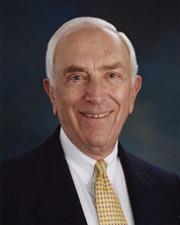
Historical · U.S. Senate · New Jersey
Frank Lautenberg
Former U.S. Senator from New Jersey · 1982–2013 · Democratic · Class 2
Frank Lautenberg represented New Jersey in the United States Senate (1982–2013) for the Democratic party. The page below collects sourced biographical facts, term history, committee roles, and provenance for Lautenberg.
Bioguide ID: L000123
Key facts
- Full name
- Frank Lautenberg
- State
- New Jersey
- Party
- Democratic
- Senate class
- Class II
- Senate service
- 1982–2013
- First Senate term
- 1982
- Status
- Left office
- Current term ends
- —
- Born
- 1924
- Bioguide ID
- L000123
- Committee assignments
- —
- Dataset version
- 1.20260601-3
Biographical narrative
978 words · sourced from the Wikipedia REST extract
Frank R. Lautenberg was a prominent American businessman and politician who served as a United States Senator from New Jersey. A member of the Democratic Party, Lautenberg's political career spanned over three decades, during which he was known for his legislative initiatives and advocacy on various issues. He first took office in December 1982 and served until 2001, returning to the Senate in 2003 until his passing in June 2013. Lautenberg remains notable for being New Jersey's longest-serving senator, with a total of 28 years, 5 months, and 8 days in office.
Early life and career
Frank R. Lautenberg was born on January 23, 1924, in Paterson, New Jersey, to Jewish immigrant parents, Mollie and Sam Lautenberg, who had come to the United States from Poland and Russia. He was named after his maternal grandfather and a close family friend who was active in the Paterson community. Lautenberg's early life was marked by hardship; when he was 19 years old, his father passed away from cancer, prompting his mother to open a sandwich shop to support the family.
Lautenberg graduated from Nutley High School in 1941 and subsequently served in the United States Army during World War II. He was a member of the 3185th Signal Service Battalion, where he contributed to the war effort from 1942 until 1946. After his military service, Lautenberg utilized the benefits of the GI Bill to pursue higher education. He attended Columbia Business School, graduating in 1949 with a degree in economics.
Following his education, Lautenberg began his professional career as a salesman for Prudential Insurance. He later became the first salesman at Automatic Data Processing (ADP), a payroll-management company, where he eventually rose to the position of chairman and CEO in 1975. His leadership at ADP helped establish the company as a significant player in the payroll processing industry.
In addition to his business endeavors, Lautenberg was active in public service and community organizations. He served as the executive commissioner of the Port Authority of New York and New Jersey from 1978 to 1982. His commitment to Jewish and pro-Israel organizations was evident through his roles on various boards, including the Jewish Agency for Israel and the American Friends of the Hebrew University. Lautenberg's leadership was recognized when he became the youngest chair in the history of the United Jewish Appeal in 1974, significantly increasing its charitable contributions during his tenure. He was also appointed to the President's Commission on the Holocaust in the late 1970s.
Senate tenure
Lautenberg's political career in the Senate began when he ran for the Democratic nomination in 1982. He faced a competitive primary with nine other candidates, including former State Banking Commissioner Angelo Bianchi and former Congressman Joseph A. LeFante. Lautenberg's campaign was bolstered by his personal financial investment, which helped him secure a plurality of the vote with 26%, edging out his closest rival, Andrew Maguire, who received 23%. The seat had become vacant following the resignation of Democrat Harrison A. Williams, who left amid the Abscam scandal. Republican Governor Thomas Kean appointed Nicholas F. Brady to fill the vacancy, but Brady did not seek election for the seat.
In the general election, Lautenberg faced popular Republican congresswoman Millicent Fenwick. Despite early polling that favored Fenwick, Lautenberg's campaign strategy focused on emphasizing the unpopularity of President Reagan and framing Fenwick as a candidate who would support a Republican majority in the Senate. Lautenberg won the election by a narrow margin of 51% to 48%, marking a significant upset. He was sworn into office shortly thereafter, gaining an advantage in seniority over other freshman senators.
During his first term, Lautenberg was active in promoting legislation, notably the National Minimum Drinking Age Act, which was passed in 1984. He also made an appearance at the Democratic National Convention that year, although he was overshadowed by other speakers. Lautenberg successfully secured re-election in 1988 against Republican candidate Pete Dawkins, a former college football star. His campaign, managed by Democratic consultant James Carville, focused on aggressive advertising and messaging that ultimately helped him regain a strong position in the polls.
Lautenberg served three consecutive terms before retiring from the Senate in 2001. However, he returned to the Senate in January 2003 after being called upon to run again due to the political circumstances surrounding his colleague Robert Torricelli's re-election campaign. Lautenberg won the election and continued to serve until his death in 2013, having been re-elected in 2008.
Legislative focus and committees
Throughout his Senate career, Lautenberg was known for his advocacy on various issues, particularly those related to public safety, transportation, and consumer protection. He was a vocal opponent of drunk driving and worked to implement stricter regulations aimed at reducing alcohol-related accidents. His efforts included supporting legislation that raised the minimum drinking age and promoting educational campaigns about the dangers of impaired driving.
Lautenberg was also a strong proponent of public transportation and environmental initiatives. He advocated for increased funding for Amtrak and urban public transportation systems, recognizing the importance of accessible and efficient transit options for communities. His commitment to environmental issues was reflected in his support for stronger regulations aimed at protecting natural resources and promoting sustainability.
In addition to his focus on transportation and public safety, Lautenberg was involved in consumer protection legislation. He championed measures designed to safeguard consumers from unfair practices and enhance product safety. His legislative work often included investigations into corporate wrongdoing, particularly in the financial sector, where he sought to hold Wall Street accountable for unethical behavior.
Lautenberg's tenure in the Senate was marked by his dedication to addressing the needs of his constituents and advocating for progressive policies. He served on several committees during his time in office, contributing to discussions and decisions that shaped national policy in various areas. His legislative legacy continues to influence discussions on public safety, transportation, and consumer rights.
Notable legislation
Sponsored and co-sponsored legislation for Frank Lautenberg is pending operator curation. The biographical narrative above carries the same provenance trail until per-bill rows are written.
Sources
- [1]https://en.wikipedia.org/wiki/Frank_LautenbergWikipedia · retrieved 2026-06-01
Notable quotes
Sourced quotes for Frank Lautenberg are pending operator curation. Narrative-scope provenance remains attached below.
Sources
- [1]https://en.wikipedia.org/wiki/Frank_LautenbergWikipedia · retrieved 2026-06-01
Key positions
Curated policy positions for Frank Lautenberg are pending operator review. The biographical narrative above carries the same provenance trail until per-topic positions are written.
Sources
- [1]https://en.wikipedia.org/wiki/Frank_LautenbergWikipedia · retrieved 2026-06-01
Terms served
- 1982–1983U.S. Senate · Term 1 · Democratic · Class I
- 1983–1989U.S. Senate · Term 2 · Democratic · Class I
- 1989–1995U.S. Senate · Term 3 · Democratic · Class I
- 1995–2001U.S. Senate · Term 4 · Democratic · Class I
- 2003–2009U.S. Senate · Term 5 · Democratic · Class II
- 2009–2013U.S. Senate · Term 6 · Democratic · Class II
Sources & provenance
Every attributable claim above carries a per-section [N] marker that resolves to the corresponding URL below. Each entry records the upstream provider, the canonical URL, and the timestamp at which the source was retrieved by the ingest pipeline.
Key facts
- https://bioguide.congress.gov/search/bio/L000123bioguide · retrieved 2026-06-01
- http://www.lautenberg.senate.govsenate.gov · retrieved 2026-06-01
Biographical narrative
- https://en.wikipedia.org/wiki/Frank_Lautenbergwikipedia · retrieved 2026-06-01
Find your senator
Every U.S. state elects two senators. Browse New Jersey’s delegation, the full former-senator roster, or explore the role and term length.
Related on The Candidate
- Preceded by Clifford CaseEarlier holder of the New Jersey Class II Senate seat · Republican.Open
- Succeeded by Jeffrey ChiesaLater holder of the New Jersey Class II Senate seat · Republican.Open
- Aaron KitchellFormer U.S. Senator from New Jersey · RepublicanOpen
- Aaron OgdenFormer U.S. Senator from New Jersey · FederalistOpen
- Albert HawkesFormer U.S. Senator from New Jersey · RepublicanOpen
- Alexander CattellFormer U.S. Senator from New Jersey · RepublicanOpen