
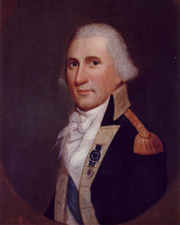
Historical · U.S. Senate · New Jersey
Frederick Frelinghuysen
Former U.S. Senator from New Jersey · 1793–1797 · Federalist · Class 2
Frederick Frelinghuysen represented New Jersey in the United States Senate (1793–1797) for the Federalist party. The page below collects sourced biographical facts, term history, committee roles, and provenance for Frelinghuysen.
Bioguide ID: F000368
Key facts
- Full name
- Frederick Frelinghuysen
- State
- New Jersey
- Party
- Federalist
- Senate class
- Class II
- Senate service
- 1793–1797
- First Senate term
- 1793
- Status
- Left office
- Current term ends
- —
- Born
- 1753
- Bioguide ID
- F000368
- Committee assignments
- —
- Dataset version
- 1.20260602
Biographical narrative
937 words · sourced from the Wikipedia REST extract
Frederick Frelinghuysen was an American lawyer, soldier, and politician who served as a United States Senator from New Jersey. A member of the Federalist Party, he held office in the Senate from 1793 until his resignation in 1796. Frelinghuysen was also notable for his military service during the American Revolutionary War and his involvement in various political roles throughout his career, including serving as a delegate to the Continental Congress and as a member of the New Jersey General Assembly.
Early life and career
Frederick Frelinghuysen was born on April 13, 1753, at the Old Dutch Parsonage near Somerville in the Province of New Jersey. He was the son of John Frelinghuysen and Dinah Van Berg, both of whom had roots in Amsterdam. His father, John, was the son of Theodorus Jacobus Frelinghuysen, an immigrant minister who played a significant role in establishing the Frelinghuysen family in New Jersey. Frederick was educated at the College of New Jersey, which is now known as Princeton University, graduating in 1770. Following his graduation, he took on the role of the sole instructor at Queen's College in New Brunswick, now Rutgers University, from 1771 to 1774.
Frelinghuysen began studying law and was admitted to the bar in 1774, establishing a legal practice in Somerset County, New Jersey. His legal career was briefly interrupted by the onset of the American Revolutionary War. In 1775, he became a member of the provincial congress of New Jersey, serving in this capacity until 1776. During the war, he served as an artillery captain in the New Jersey militia, participating in key battles such as those at Trenton and Monmouth. His military service was complemented by his political involvement, as he was elected as a delegate to the Second Continental Congress in 1779.
In addition to his military and congressional roles, Frelinghuysen served as a clerk for the Court of Common Pleas in Somerset County from 1781 to 1789. He was also active in the New Jersey General Assembly, serving in 1784 and again from 1800 to 1804. His contributions to the state included being a member of the New Jersey convention that ratified the United States Constitution in 1787. He represented Somerset County in the New Jersey Legislative Council, now known as the New Jersey Senate, from 1790 to 1792. Frelinghuysen's military leadership continued as he was appointed a brigadier general during a campaign against western Indians in Ohio in 1790, and he was later commissioned as a major general in the New Jersey militia during the Whiskey Rebellion in 1794.
Senate tenure
Frederick Frelinghuysen was elected to the United States Senate, where he served from March 4, 1793, until November 12, 1796, when he resigned from his position. His election to the Senate came during a formative period in American politics, as the nation was still establishing its government and political norms following the ratification of the Constitution. During his time in the Senate, Frelinghuysen was part of the Federalist Party, which was one of the first two political parties in the United States, alongside the Democratic-Republicans.
Frelinghuysen's tenure in the Senate was marked by the challenges of a young nation navigating its identity and governance. He was involved in discussions and decisions that would shape the early legislative framework of the United States. However, specific details regarding his voting record or the particular issues he championed during his Senate term are not extensively documented. His resignation in 1796 marked the end of his time in the Senate, and he did not seek re-election.
In addition to his Senate service, Frelinghuysen was a candidate for governor of New Jersey in 1793, where he was the runner-up in the election. His political career continued after his Senate tenure, as he was appointed the United States Attorney for the District of New Jersey in 1801, a role he held until his death.
Legislative focus and committees
While specific legislative initiatives and committee assignments during Frederick Frelinghuysen's time in the Senate are not detailed in available records, his background suggests a focus on issues pertinent to his state and the emerging nation. As a member of the Federalist Party, Frelinghuysen likely aligned with the party's emphasis on a strong central government, economic development, and the establishment of a national bank, which were significant topics of discussion during the 1790s.
Frelinghuysen's previous experience as a military officer and his involvement in the Continental Congress would have informed his perspectives on national defense and military affairs. His legal background may have also influenced his views on judicial matters and the rule of law. Additionally, his participation in the ratification of the Constitution indicates a commitment to the foundational principles of American governance.
Frelinghuysen's contributions to the New Jersey Legislative Council and the General Assembly prior to his Senate service reflect a deep engagement with state-level issues, which would have continued to inform his legislative priorities in the Senate. His military service and leadership roles in the militia suggest that he may have been particularly attuned to issues related to national security and the organization of state militias.
Frederick Frelinghuysen's life and career were characterized by a commitment to public service, both in military and political capacities. His legacy includes his contributions to the early governance of New Jersey and the United States, as well as his role in shaping the political landscape of his time. He passed away on April 13, 1804, on his 51st birthday, and is buried at the Weston Burying Ground in New Jersey. His descendants continued his legacy in public service, with several family members later serving in significant political roles.
Notable legislation
Sponsored and co-sponsored legislation for Frederick Frelinghuysen is pending operator curation. The biographical narrative above carries the same provenance trail until per-bill rows are written.
Sources
- [1]https://en.wikipedia.org/wiki/Frederick_Frelinghuysen_(general)Wikipedia · retrieved 2026-06-02
Notable quotes
Sourced quotes for Frederick Frelinghuysen are pending operator curation. Narrative-scope provenance remains attached below.
Sources
- [1]https://en.wikipedia.org/wiki/Frederick_Frelinghuysen_(general)Wikipedia · retrieved 2026-06-02
Key positions
Curated policy positions for Frederick Frelinghuysen are pending operator review. The biographical narrative above carries the same provenance trail until per-topic positions are written.
Sources
- [1]https://en.wikipedia.org/wiki/Frederick_Frelinghuysen_(general)Wikipedia · retrieved 2026-06-02
Terms served
- 1793–1797U.S. Senate · Term 1 · Federalist · Class II
Sources & provenance
Every attributable claim above carries a per-section [N] marker that resolves to the corresponding URL below. Each entry records the upstream provider, the canonical URL, and the timestamp at which the source was retrieved by the ingest pipeline.
Key facts
- https://bioguide.congress.gov/search/bio/F000368bioguide · retrieved 2026-06-02
- https://www.govtrack.us/congress/members/404314govtrack · retrieved 2026-06-02
Biographical narrative
- https://en.wikipedia.org/wiki/Frederick_Frelinghuysen_(general)wikipedia · retrieved 2026-06-02
Find your senator
Every U.S. state elects two senators. Browse New Jersey’s delegation, the full former-senator roster, or explore the role and term length.
Related on The Candidate
- Preceded by Philemon DickinsonEarlier holder of the New Jersey Class II Senate seat · Pro-Administration.Open
- Succeeded by Jonathan DaytonLater holder of the New Jersey Class II Senate seat · Federalist.Open
- Aaron KitchellFormer U.S. Senator from New Jersey · RepublicanOpen
- Aaron OgdenFormer U.S. Senator from New Jersey · FederalistOpen
- Albert HawkesFormer U.S. Senator from New Jersey · RepublicanOpen
- Alexander CattellFormer U.S. Senator from New Jersey · RepublicanOpen