
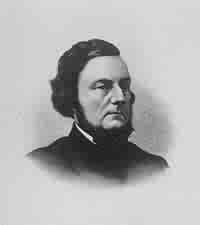
Historical · U.S. Senate · New Jersey
James Wall
Former U.S. Senator from New Jersey · 1863–1863 · Democratic · Class 1
James Wall represented New Jersey in the United States Senate (1863–1863) for the Democratic party. The page below collects sourced biographical facts, term history, committee roles, and provenance for Wall.
Bioguide ID: W000072
Key facts
- Full name
- James Wall
- State
- New Jersey
- Party
- Democratic
- Senate class
- Class I
- Senate service
- 1863–1863
- First Senate term
- 1863
- Status
- Left office
- Current term ends
- —
- Born
- 1820
- Bioguide ID
- W000072
- Committee assignments
- —
- Dataset version
- 1.20260602
Biographical narrative
1,021 words · sourced from the Wikipedia REST extract
James Wall was a notable American politician who served as a United States Senator from New Jersey during a tumultuous period in American history. A member of the Democratic Party, Wall's political career was marked by his involvement in the Peace movement during the American Civil War. He was born on May 26, 1820, in Trenton, New Jersey, and was the son of Garret Dorset Wall, who also held a position as a U.S. Senator. Wall's tenure in the Senate was brief, lasting from January 14 to March 3, 1863, and he was not successful in securing re-election. His life and career reflect the complexities of American politics in the 19th century, particularly regarding issues of war, peace, and civil liberties.
Early life and career
James Wall was born in Trenton, New Jersey, where he received his early education through private tutoring in Flushing, Queens. He later attended the College of New Jersey, now known as Princeton University, graduating in 1838. Following his graduation, Wall pursued a career in law, studying diligently and gaining admission to the bar in 1841. He began practicing law in Trenton, where he quickly established himself in the legal community.
In 1847, Wall relocated to Burlington, New Jersey, where he continued his legal practice and became active in local politics. His political career began to take shape when he was elected as the Mayor of Burlington in 1850. Although he was nominated for the Democratic nomination for Congress in the same year, he declined to run. Wall's political aspirations continued, and he made an unsuccessful bid for election to the Thirty-fourth United States Congress in 1854.
Wall's political affiliations and actions during the 1860 presidential election revealed his alignment with the Democratic Party's more conservative wing. He supported John C. Breckinridge, who was the Democratic candidate advocating for the preservation of slavery in the Southern states. This alignment with the pro-slavery faction placed Wall in a contentious position as the nation moved closer to civil war.
In addition to his political endeavors, Wall was involved in journalism. He played a significant role in the editorial direction of the New York Daily News, a publication that advocated for peace during the Civil War. However, this involvement led to significant repercussions. In August 1861, the government suppressed the newspaper, reflecting the tense political climate of the time. Wall's editorial stance and perceived secessionist sympathies resulted in his arrest, as reported by The New York Times in September 1861. He was detained for several weeks at Fort Lafayette, a military prison, before being released after pledging allegiance to the Union.
Senate tenure
Wall's entry into the United States Senate came as a result of the death of Senator John Renshaw Thomson. The New Jersey legislature elected Wall to fill the vacancy, and he took office in January 1863. His Senate term was relatively short, lasting until March 3 of the same year. During this brief period, Wall was involved in the Senate's discussions and decisions during a critical phase of the Civil War.
Despite his appointment, Wall was unable to secure re-election. His political career in the Senate was marked by the challenges of navigating a deeply divided nation. The Civil War era was characterized by intense debates over issues such as states' rights, the preservation of the Union, and the future of slavery. Wall's alignment with the Democratic Party and his previous advocacy for peace likely influenced his political standing during this time. The Democratic Party was experiencing internal strife, with factions that either supported the war or sought to negotiate peace.
After his Senate term ended, Wall returned to his legal practice in Burlington. His political ambitions did not completely dissipate, but he did not hold any further elected office. Instead, he continued to engage in literary pursuits, reflecting his earlier interests in writing and journalism.
Legislative focus and committees
During his time in the Senate, Wall's legislative focus was shaped by the prevailing issues of the Civil War. As a member of the Democratic Party, he was part of a faction that often opposed the war efforts and sought to promote peace. This position placed him at odds with many of his contemporaries, particularly those who supported a more aggressive military approach to preserving the Union. Wall's involvement in the Peace movement was indicative of his belief in negotiation and diplomacy over conflict.
While specific details regarding Wall's committee assignments during his Senate tenure are not extensively documented, it is likely that his political views influenced his participation in discussions surrounding war-related legislation. The Senate during this period was engaged in significant debates regarding military funding, civil liberties, and the treatment of dissenters. Wall's experiences as a political prisoner and his editorial work may have informed his perspectives on civil liberties and the rights of individuals during wartime.
Wall's legislative contributions were limited by the brevity of his Senate term, and he did not have the opportunity to establish a long-term legislative legacy. However, his brief tenure in the Senate coincided with critical moments in American history, and his alignment with the Democratic Party's peace faction placed him within a unique context of political discourse.
After leaving the Senate, Wall continued to write and publish works that reflected his views on constitutional issues and governance. His publications included titles that discussed the origins of the Constitution and the importance of adhering to its principles. These works indicate his ongoing engagement with political thought and his desire to contribute to the discourse surrounding American governance.
James Wall's life and career illustrate the complexities of American politics during the 19th century, particularly in the context of the Civil War. His brief tenure in the Senate, coupled with his earlier political and journalistic activities, provides insight into the challenges faced by politicians during a time of national crisis. Wall's legacy is characterized by his commitment to peace and civil liberties, as well as his involvement in the broader political landscape of his time. He passed away on June 9, 1872, in Elizabeth, New Jersey, and was buried in Saint Mary's Episcopal Churchyard in Burlington, New Jersey.
Notable legislation
Sponsored and co-sponsored legislation for James Wall is pending operator curation. The biographical narrative above carries the same provenance trail until per-bill rows are written.
Sources
- [1]https://en.wikipedia.org/wiki/James_Walter_WallWikipedia · retrieved 2026-06-02
Notable quotes
Sourced quotes for James Wall are pending operator curation. Narrative-scope provenance remains attached below.
Sources
- [1]https://en.wikipedia.org/wiki/James_Walter_WallWikipedia · retrieved 2026-06-02
Key positions
Curated policy positions for James Wall are pending operator review. The biographical narrative above carries the same provenance trail until per-topic positions are written.
Sources
- [1]https://en.wikipedia.org/wiki/James_Walter_WallWikipedia · retrieved 2026-06-02
Terms served
- 1863–1863U.S. Senate · Term 1 · Democratic · Class I
Sources & provenance
Every attributable claim above carries a per-section [N] marker that resolves to the corresponding URL below. Each entry records the upstream provider, the canonical URL, and the timestamp at which the source was retrieved by the ingest pipeline.
Key facts
- https://bioguide.congress.gov/search/bio/W000072bioguide · retrieved 2026-06-02
- https://www.govtrack.us/congress/members/411251govtrack · retrieved 2026-06-02
Biographical narrative
- https://en.wikipedia.org/wiki/James_Walter_Wallwikipedia · retrieved 2026-06-02
Find your senator
Every U.S. state elects two senators. Browse New Jersey’s delegation, the full former-senator roster, or explore the role and term length.
Related on The Candidate
- Preceded by John ThomsonEarlier holder of the New Jersey Class I Senate seat · Democratic.Open
- Succeeded by John StocktonLater holder of the New Jersey Class I Senate seat · Democratic.Open
- Aaron KitchellFormer U.S. Senator from New Jersey · RepublicanOpen
- Aaron OgdenFormer U.S. Senator from New Jersey · FederalistOpen
- Albert HawkesFormer U.S. Senator from New Jersey · RepublicanOpen
- Alexander CattellFormer U.S. Senator from New Jersey · RepublicanOpen