
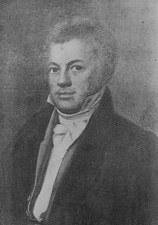
Historical · U.S. Senate · New York
Charles Dudley
Former U.S. Senator from New York · 1829–1833 · Jackson · Class 1
Charles Dudley represented New York in the United States Senate (1829–1833) for the Jackson party. The page below collects sourced biographical facts, term history, committee roles, and provenance for Dudley.
Bioguide ID: D000511
Key facts
- Full name
- Charles Dudley
- State
- New York
- Party
- Jackson
- Senate class
- Class I
- Senate service
- 1829–1833
- First Senate term
- 1829
- Status
- Left office
- Current term ends
- —
- Born
- 1780
- Bioguide ID
- D000511
- Committee assignments
- —
- Dataset version
- 1.20260602
Biographical narrative
909 words · sourced from the Wikipedia REST extract
Charles Dudley was a prominent American businessman and politician who served as a U.S. Senator from New York. A member of the Jacksonian party, Dudley held office during a transformative period in American politics, contributing to the early development of the Democratic Party. His political career was marked by significant roles at both the local and state levels, including serving as mayor of Albany and a member of the New York State Senate. Dudley’s tenure in the U.S. Senate lasted from 1829 to 1833, during which he supported the Jackson administration and engaged in the political dynamics of his time.
Early life and career
Charles Dudley was born on May 23, 1780, at Johnson Hall in Eccleshall, Staffordshire, England, during the American Revolutionary War. He was born to Loyalist parents; his father, also named Charles Dudley, was an Englishman who served as Collector of the King's Customs in Newport, Rhode Island. His mother, Catherine Cooke, hailed from a prominent Rhode Island colonial family. The Dudley family faced significant upheaval during the war, as Dudley’s father abandoned his position in Newport in November 1775 and sought refuge on a British warship. The family subsequently relocated to England, where they remained until the father's death in 1790.
In 1795, Dudley’s mother returned to Rhode Island, bringing her fifteen-year-old son with her. In Newport, Dudley received his education and began to establish his career. At the dawn of the 19th century, he worked as a clerk in a counting room and undertook voyages to the East Indies as a supercargo, which involved overseeing cargo shipments. Eventually, Dudley moved to Albany, New York, where he entered the mercantile business and became connected with a prominent political family through marriage.
Dudley entered public service in his late thirties, aligning himself with the Albany Regency, a political faction led by Martin Van Buren that sought to gain control of the Democratic-Republican Party in New York. His political involvement began to take shape as he served as a presidential elector in the 1816 election, casting votes for James Monroe and Daniel D. Tompkins. Dudley’s local political career included serving as an alderman in Albany from 1819 to 1820, and he held the office of mayor from 1821 to 1824. After a brief hiatus, he returned to the mayoral office from 1828 to 1829 and was a member of the New York State Senate from 1820 to 1825.
Senate tenure
Dudley’s journey to the U.S. Senate began after he ran unsuccessfully for a seat in the United States House of Representatives in 1828. Following Martin Van Buren's resignation from the Senate to assume the governorship of New York, Dudley was elected to fill the vacancy. He officially took his seat on January 15, 1829, representing New York as a member of the Jacksonian party. His Senate term lasted until March 3, 1833.
During his time in the Senate, Dudley played a relatively inconspicuous role, typical of many businessmen who transitioned into political life during this era. He was known for his loyalty to the Jackson administration, supporting its policies and initiatives. His tenure coincided with significant political changes in the United States, particularly the emergence of the Democratic Party following the split of the Democratic-Republicans in 1824. Although Dudley did not gain widespread recognition for specific legislative achievements, his involvement in the Senate contributed to the broader political landscape of the time.
After completing his term in the Senate, Dudley chose to retire from public office. He returned to Albany, where he continued to engage with the political developments surrounding the Democratic Party, which was in the process of solidifying its identity and platform. His retirement marked the end of his formal political career, but he remained interested in the evolving political scene.
Legislative focus and committees
While specific details regarding Dudley’s committee assignments and legislative focus during his Senate tenure are not extensively documented, his alignment with the Jackson administration suggests that he was involved in issues pertinent to the party's agenda. The Jacksonian era was characterized by a focus on populism, states' rights, and opposition to entrenched interests, which likely influenced Dudley’s political activities and positions.
Dudley’s background as a businessman may have informed his perspectives on economic policies and trade, although specific legislative initiatives he supported are not detailed in available records. His role as a senator during a time of significant political realignment in the United States positioned him within the broader context of the Jacksonian movement, which sought to expand democratic participation and challenge the established political order.
After leaving the Senate, Dudley’s involvement in politics continued informally as he observed the developments surrounding the Democratic Party. His connections to influential political figures, including Martin Van Buren, likely facilitated his ongoing engagement with political matters in New York and beyond.
In summary, Charles Dudley’s political career was marked by his service as a U.S. Senator during a pivotal time in American history. His early life experiences, business background, and involvement in local politics laid the foundation for his eventual role in the Senate. While his contributions may not have been widely recognized, Dudley’s alignment with the Jackson administration and his participation in the political dynamics of his time reflect the complexities of early 19th-century American politics. Dudley passed away on January 23, 1841, in Albany, New York, leaving behind a legacy intertwined with the formative years of the Democratic Party and the evolving political landscape of the United States.
Notable legislation
Sponsored and co-sponsored legislation for Charles Dudley is pending operator curation. The biographical narrative above carries the same provenance trail until per-bill rows are written.
Sources
- [1]https://en.wikipedia.org/wiki/Charles_E._DudleyWikipedia · retrieved 2026-06-02
Notable quotes
Sourced quotes for Charles Dudley are pending operator curation. Narrative-scope provenance remains attached below.
Sources
- [1]https://en.wikipedia.org/wiki/Charles_E._DudleyWikipedia · retrieved 2026-06-02
Key positions
Curated policy positions for Charles Dudley are pending operator review. The biographical narrative above carries the same provenance trail until per-topic positions are written.
Sources
- [1]https://en.wikipedia.org/wiki/Charles_E._DudleyWikipedia · retrieved 2026-06-02
Terms served
- 1829–1833U.S. Senate · Term 1 · Jackson · Class I
Sources & provenance
Every attributable claim above carries a per-section [N] marker that resolves to the corresponding URL below. Each entry records the upstream provider, the canonical URL, and the timestamp at which the source was retrieved by the ingest pipeline.
Key facts
- https://bioguide.congress.gov/search/bio/D000511bioguide · retrieved 2026-06-02
- https://www.govtrack.us/congress/members/403621govtrack · retrieved 2026-06-02
Biographical narrative
- https://en.wikipedia.org/wiki/Charles_E._Dudleywikipedia · retrieved 2026-06-02
Find your senator
Every U.S. state elects two senators. Browse New York’s delegation, the full former-senator roster, or explore the role and term length.
Related on The Candidate
- Preceded by Martin Van BurenEarlier holder of the New York Class I Senate seat · Jackson.Open
- Succeeded by Nathaniel TallmadgeLater holder of the New York Class I Senate seat · Whig.Open
- Aaron BurrFormer U.S. Senator from New York · RepublicanOpen
- Alfonse D’AmatoFormer U.S. Senator from New York · RepublicanOpen
- Charles GoodellFormer U.S. Senator from New York · RepublicanOpen
- Chauncey DepewFormer U.S. Senator from New York · RepublicanOpen