
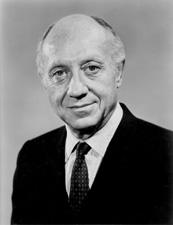
Historical · U.S. Senate · New York
Jacob Javits
Former U.S. Senator from New York · 1957–1981 · Republican · Class 3
Jacob Javits represented New York in the United States Senate (1957–1981) for the Republican party. The page below collects sourced biographical facts, term history, committee roles, and provenance for Javits.
Bioguide ID: J000064
Key facts
- Full name
- Jacob Javits
- State
- New York
- Party
- Republican
- Senate class
- Class III
- Senate service
- 1957–1981
- First Senate term
- 1957
- Status
- Left office
- Current term ends
- —
- Born
- 1904
- Bioguide ID
- J000064
- Committee assignments
- —
- Dataset version
- 1.20260602
Biographical narrative
923 words · sourced from the Wikipedia REST extract
Jacob K. Javits was a prominent American politician who served as a United States Senator from New York. A member of the Republican Party, he held office from 1957 until the conclusion of his last term in January 1981. Over his political career, Javits was known for his moderate stance and was influential in various legislative efforts, contributing significantly to the political landscape of his time.
Early life and career
Jacob K. Javits was born on May 18, 1904. He grew up in a Jewish family in New York City, where he was exposed to the diverse cultural and political environment of the city. His early life was marked by a strong emphasis on education, which laid the foundation for his future endeavors. Javits attended New York University, where he earned a degree in law. After completing his education, he began his career in public service and law, initially working as a lawyer.
Before entering the Senate, Javits held several political positions that helped shape his political ideology and experience. He served in the New York State Assembly, where he began to establish his reputation as a dedicated public servant. His political career continued to evolve as he was elected to the U.S. House of Representatives, where he served for multiple terms. This experience in the House provided him with valuable insights into the legislative process and the workings of federal government, which would be instrumental in his later role as a senator.
Javits's ascent to the Senate was marked by his commitment to public service and his ability to connect with constituents. He was known for his pragmatic approach to politics, often seeking bipartisan solutions to complex issues. His background in law and his experience in various levels of government equipped him with the skills necessary to navigate the challenges of the Senate.
Senate tenure
Jacob K. Javits was elected to the United States Senate in 1956, marking the beginning of a significant chapter in his political career. He officially took office in January 1957 and served until January 1981, completing a total of four terms in the Senate. Throughout his tenure, Javits was recognized for his moderate Republican stance, which often placed him at the center of political debates during a time of considerable change in American society.
During his time in the Senate, Javits was involved in a wide range of legislative initiatives. He was known for his ability to work across party lines, which allowed him to build coalitions and garner support for various measures. His tenure coincided with significant events in American history, including the civil rights movement, the Vietnam War, and the Watergate scandal, all of which influenced his legislative priorities and actions.
Javits's approach to governance was characterized by a focus on civil rights, social justice, and economic development. He advocated for policies that aimed to improve the quality of life for all Americans, particularly those in marginalized communities. His efforts in the Senate were often aimed at addressing issues such as healthcare, education, and labor rights, reflecting his commitment to social equity.
Throughout his time in office, Javits faced various challenges, including shifts in political power and changing public opinions. Despite these challenges, he remained a steadfast advocate for his constituents and continued to push for legislation that aligned with his values. His ability to adapt to the evolving political landscape contributed to his longevity in the Senate.
Legislative focus and committees
Jacob K. Javits's legislative focus during his Senate tenure was broad, encompassing a variety of issues that were pertinent to the American public. He was particularly known for his work in areas such as civil rights, healthcare, and education. Javits was an advocate for legislation that aimed to enhance social welfare and promote equality, reflecting his belief in the government's role in addressing societal issues.
In addition to his focus on civil rights, Javits was also involved in economic policy and labor issues. He recognized the importance of a strong economy and worked on initiatives that aimed to support workers and promote fair labor practices. His commitment to economic development was evident in his support for various programs designed to stimulate growth and create job opportunities.
Javits served on several Senate committees, which allowed him to influence a wide range of legislative matters. His committee assignments provided him with the platform to advocate for his policy priorities and engage with other lawmakers on critical issues. Through his committee work, he was able to contribute to discussions on national security, foreign relations, and domestic policy, further solidifying his role as a key figure in the Senate.
Throughout his legislative career, Javits was known for his ability to articulate complex issues clearly and persuasively. His legal background and experience in public service equipped him with the skills necessary to navigate the intricacies of the legislative process. He was often called upon to provide insight and guidance on matters of national importance, and his contributions were recognized by both colleagues and constituents.
In summary, Jacob K. Javits's career as a U.S. Senator from New York was marked by his dedication to public service and his commitment to addressing the needs of his constituents. His legislative focus on civil rights, economic development, and social welfare reflected his belief in the government's role in promoting equality and improving the quality of life for all Americans. His tenure in the Senate was characterized by a pragmatic approach to governance, a willingness to work across party lines, and a steadfast commitment to the principles he believed in.
Notable legislation
Sponsored and co-sponsored legislation for Jacob Javits is pending operator curation. The biographical narrative above carries the same provenance trail until per-bill rows are written.
Sources
- [1]https://en.wikipedia.org/wiki/Jacob_JavitsWikipedia · retrieved 2026-06-02
Notable quotes
Sourced quotes for Jacob Javits are pending operator curation. Narrative-scope provenance remains attached below.
Sources
- [1]https://en.wikipedia.org/wiki/Jacob_JavitsWikipedia · retrieved 2026-06-02
Key positions
Curated policy positions for Jacob Javits are pending operator review. The biographical narrative above carries the same provenance trail until per-topic positions are written.
Sources
- [1]https://en.wikipedia.org/wiki/Jacob_JavitsWikipedia · retrieved 2026-06-02
Terms served
- 1947–1949U.S. House · District 21 · Term 1 · Republican
- 1949–1951U.S. House · District 21 · Term 2 · Republican
- 1951–1953U.S. House · District 21 · Term 3 · Republican
- 1953–1955U.S. House · District 21 · Term 4 · Republican
- 1957–1963U.S. Senate · Term 5 · Republican · Class III
- 1963–1969U.S. Senate · Term 6 · Republican · Class III
- 1969–1975U.S. Senate · Term 7 · Republican · Class III
- 1975–1981U.S. Senate · Term 8 · Republican · Class III
Sources & provenance
Every attributable claim above carries a per-section [N] marker that resolves to the corresponding URL below. Each entry records the upstream provider, the canonical URL, and the timestamp at which the source was retrieved by the ingest pipeline.
Key facts
- https://bioguide.congress.gov/search/bio/J000064bioguide · retrieved 2026-06-02
- https://www.govtrack.us/congress/members/405969govtrack · retrieved 2026-06-02
Biographical narrative
- https://en.wikipedia.org/wiki/Jacob_Javitswikipedia · retrieved 2026-06-02
Find your senator
Every U.S. state elects two senators. Browse New York’s delegation, the full former-senator roster, or explore the role and term length.
Related on The Candidate
- Preceded by Herbert LehmanEarlier holder of the New York Class III Senate seat · Democratic.Open
- Succeeded by Alfonse D’AmatoLater holder of the New York Class III Senate seat · Republican.Open
- Aaron BurrFormer U.S. Senator from New York · RepublicanOpen
- Charles DudleyFormer U.S. Senator from New York · JacksonOpen
- Charles GoodellFormer U.S. Senator from New York · RepublicanOpen
- Republican PartyFederal candidates and office holders on the Republican line.Open