
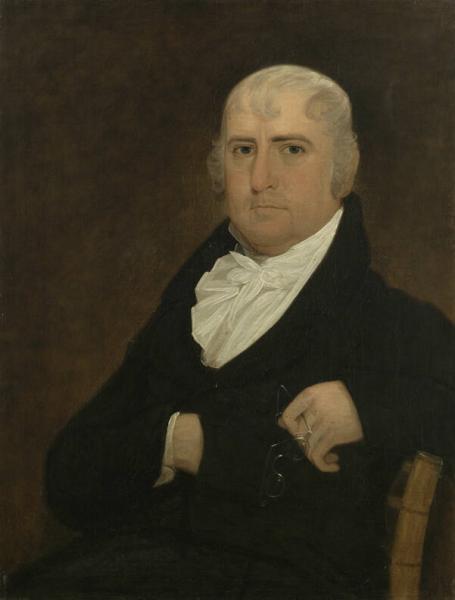
Historical · U.S. Senate · New York
John Laurance
Former U.S. Senator from New York · 1796–1801 · Federalist · Class 3
John Laurance represented New York in the United States Senate (1796–1801) for the Federalist party. The page below collects sourced biographical facts, term history, committee roles, and provenance for Laurance.
Bioguide ID: L000120
Key facts
- Full name
- John Laurance
- State
- New York
- Party
- Federalist
- Senate class
- Class III
- Senate service
- 1796–1801
- First Senate term
- 1796
- Status
- Left office
- Current term ends
- —
- Born
- —
- Bioguide ID
- L000120
- Committee assignments
- —
- Dataset version
- 1.20260602
Biographical narrative
928 words · sourced from the Wikipedia REST extract
John Laurance was a prominent figure in early American politics, serving as a U.S. Senator from New York as a member of the Federalist Party. His career spanned various roles, including military service during the American Revolutionary War, judicial appointments, and legislative responsibilities at both the state and federal levels. Laurance's tenure in the Senate was marked by his involvement in the foundational years of the United States government, contributing to the establishment of the nation’s legal and political frameworks.
Early life and career
John Laurance was born in 1750 near Falmouth, Cornwall, England. He immigrated to the Province of New York in 1767, settling in New York City. His education included academic studies followed by legal training, which he began in 1772 under the mentorship of Cadwallader Colden, who was the Lieutenant Governor of New York at the time. Laurance was admitted to the bar and began practicing law in New York City on July 4, 1776, just as the American Revolution was gaining momentum.
In 1775, Laurance married Elizabeth McDougall, the daughter of General Alexander McDougall, further intertwining his life with notable figures of the era. His legal career was briefly interrupted by his military service during the American Revolutionary War, where he served as a commissioned officer from 1775 to 1782. Initially appointed as a second lieutenant in the 4th New York Regiment, he participated in the Invasion of Quebec. By 1776, he had risen to the rank of captain and paymaster in the 1st New York Regiment, serving under his father-in-law.
Laurance's military career included significant responsibilities as Judge Advocate General from 1777 to 1782, where he oversaw military trials, including high-profile cases such as those involving Charles Lee and Benedict Arnold. He was also involved in the trial of Major John André, who was convicted of espionage. Laurance attained the rank of colonel before resigning his commission in 1782. After the war, he returned to private legal practice in New York City, where he continued to build his career.
In addition to his legal work, Laurance was active in various civic roles. He served in the New York State Assembly from 1782 to 1785 and was a regent of the University of the State of New York in 1784. He was also a trustee of Columbia College (now Columbia University) from 1784 until his death in 1810. His political involvement extended to the New York State Senate, where he served from 1788 to 1790, and he was a member of New York City's Board of Aldermen during this period.
Senate tenure
Laurance's entry into the U.S. Senate came after he was elected as a Federalist to fill the vacancy left by the resignation of Senator Rufus King. He officially took office on November 9, 1796. His Senate career was relatively brief, lasting until August 1800, when he resigned. During his time in the Senate, Laurance held the position of President pro tempore in December 1798, a role that underscored his influence within the legislative body during its formative years.
His tenure in the Senate coincided with a critical period in American history, as the nation was establishing its governmental structures and policies. Laurance's contributions during this time were part of the broader efforts of the Federalist Party, which advocated for a strong central government and the ratification of the U.S. Constitution. Although specific legislative achievements during his Senate term are not detailed, his participation in the Senate was part of the essential work of shaping early American governance.
After resigning from the Senate in 1800, Laurance returned to private legal practice in New York City, where he continued to engage in various professional activities until his death in 1810. His departure from the Senate marked the end of his formal legislative career, but he remained a respected figure in the legal community.
Legislative focus and committees
While specific details regarding Laurance's legislative focus and committee assignments during his Senate tenure are not provided, it is known that his political alignment with the Federalist Party influenced his legislative priorities. The Federalists were known for their support of a strong federal government, economic development, and the establishment of a national bank, among other policies. Laurance's background as a lawyer and military officer likely informed his perspectives on legal and military matters, which were significant issues during the early years of the republic.
In addition to his legislative work, Laurance's earlier roles, including his service in the Continental Army and as Judge Advocate General, suggest a strong commitment to national defense and legal integrity. His experiences in these capacities may have shaped his views on governance and law, contributing to the broader Federalist agenda during his time in the Senate.
Laurance's involvement in the early Congresses of the Confederation, prior to his Senate service, also indicates his long-standing engagement with the legislative process. He served as a delegate to the 6th, 7th, and 8th Congresses of the Confederation, which provided him with valuable experience in national governance and legislative affairs.
In summary, John Laurance's career encompassed a range of roles that contributed to the establishment of the United States as a nation. His military service, legal practice, and political involvement reflect the complexities of early American governance and the challenges faced by the fledgling republic. Laurance's legacy, while not extensively documented in historical narratives, remains an important part of the story of the United States Senate and its early members. He passed away on November 11, 1810, in New York City, leaving behind a legacy intertwined with the foundational years of American democracy.
Notable legislation
Sponsored and co-sponsored legislation for John Laurance is pending operator curation. The biographical narrative above carries the same provenance trail until per-bill rows are written.
Sources
- [1]https://en.wikipedia.org/wiki/John_LauranceWikipedia · retrieved 2026-06-02
Notable quotes
Sourced quotes for John Laurance are pending operator curation. Narrative-scope provenance remains attached below.
Sources
- [1]https://en.wikipedia.org/wiki/John_LauranceWikipedia · retrieved 2026-06-02
Key positions
Curated policy positions for John Laurance are pending operator review. The biographical narrative above carries the same provenance trail until per-topic positions are written.
Sources
- [1]https://en.wikipedia.org/wiki/John_LauranceWikipedia · retrieved 2026-06-02
Terms served
- 1789–1791U.S. House · District 2 · Term 1
- 1791–1793U.S. House · District 2 · Term 2
- 1796–1801U.S. Senate · Term 3 · Federalist · Class III
Sources & provenance
Every attributable claim above carries a per-section [N] marker that resolves to the corresponding URL below. Each entry records the upstream provider, the canonical URL, and the timestamp at which the source was retrieved by the ingest pipeline.
Key facts
- https://bioguide.congress.gov/search/bio/L000120bioguide · retrieved 2026-06-02
- https://www.govtrack.us/congress/members/406626govtrack · retrieved 2026-06-02
Biographical narrative
- https://en.wikipedia.org/wiki/John_Laurancewikipedia · retrieved 2026-06-02
Find your senator
Every U.S. state elects two senators. Browse New York’s delegation, the full former-senator roster, or explore the role and term length.
Related on The Candidate
- Succeeded by De ClintonLater holder of the New York Class III Senate seat · Republican.Open
- Aaron BurrFormer U.S. Senator from New York · RepublicanOpen
- Alfonse D’AmatoFormer U.S. Senator from New York · RepublicanOpen
- Charles DudleyFormer U.S. Senator from New York · JacksonOpen
- Charles GoodellFormer U.S. Senator from New York · RepublicanOpen
- Senators from New YorkEvery former U.S. Senator who has represented New York.Open