
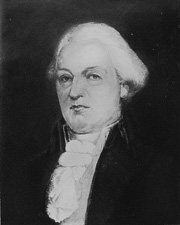
Historical · U.S. Senate · New York
Theodorus Bailey
Former U.S. Senator from New York · 1803–1805 · Republican · Class 1
Theodorus Bailey represented New York in the United States Senate (1803–1805) for the Republican party. The page below collects sourced biographical facts, term history, committee roles, and provenance for Bailey.
Bioguide ID: B000049
Key facts
- Full name
- Theodorus Bailey
- State
- New York
- Party
- Republican
- Senate class
- Class I
- Senate service
- 1803–1805
- First Senate term
- 1803
- Status
- Left office
- Current term ends
- —
- Born
- 1758
- Bioguide ID
- B000049
- Committee assignments
- —
- Dataset version
- 1.20260602
Biographical narrative
856 words · sourced from the Wikipedia REST extract
Theodorus Bailey was a prominent American lawyer and politician who served as a U.S. Senator from New York. He was a member of the Republican Party and held office during the early 19th century. His political career included multiple terms in the U.S. House of Representatives before his brief tenure in the Senate. In addition to his legislative roles, Bailey was also involved in military service during the American Revolutionary War and held various positions in state and local government.
Early life and career
Theodorus Bailey was born on October 12, 1758, in the vicinity of Fishkill, New York, which was then part of the Province of New York. He received his early education in local rural schools, where he developed a foundation in various subjects that would serve him well in his future career. Following his schooling, Bailey pursued a legal education and was admitted to the bar in 1778. He began practicing law in Poughkeepsie, New York, where he established his legal career.
During the American Revolutionary War, Bailey served with the New York Militia, contributing to the fight for American independence. His military service not only showcased his commitment to the cause but also helped him gain recognition in his community. After the war, he continued his involvement in military affairs, serving in the state militia from 1786 until 1805, where he eventually attained the rank of brigadier general.
Bailey's political career began in earnest when he ran for a seat in Congress in March 1789. However, he was defeated by the Federalist candidate Egbert Benson. He attempted to reclaim a congressional seat in a rematch in 1790 but was unsuccessful once again. Despite these early setbacks, Bailey's political fortunes changed when he was elected as a Democratic-Republican to the 3rd and 4th United States Congresses, serving from March 4, 1793, to March 3, 1797. His tenure in the House of Representatives allowed him to gain valuable legislative experience.
Following his time in the House, Bailey was elected to the 6th United States Congress, where he served from March 4, 1799, to March 3, 1801. In April 1801, he was elected to the New York State Assembly, but he vacated this position before the State Legislature convened. Instead, he was elected to the 7th United States Congress to fill a vacancy created by the resignation of Thomas Tillotson, serving from December 7, 1801, to March 3, 1803.
Senate tenure
Bailey's most notable role came when he was elected as a U.S. Senator from New York in 1803. His Senate term began on March 4, 1803, and lasted until January 16, 1804. During this brief period, he was part of the Senate Class 1, which was one of the original classes established by the Constitution. His time in the Senate was marked by the political dynamics of the early 19th century, a period characterized by the emergence of the Republican Party as a significant force in American politics.
Bailey's tenure in the Senate was relatively short, as he resigned from his position in early 1804 to accept an appointment as Postmaster of New York City. This transition marked a shift in his career from legislative duties to administrative responsibilities within the postal system. His resignation from the Senate was a notable event, as it reflected the fluid nature of political appointments and the various roles that public officials could occupy during this period.
Legislative focus and committees
While specific details regarding Bailey's legislative focus and committee assignments during his time in the Senate are not extensively documented, it can be inferred that his background as a lawyer and his experience in the House of Representatives would have informed his contributions to legislative discussions and decisions. Senators during this era were often involved in a range of issues, including matters related to governance, military affairs, and the burgeoning economic landscape of the young nation.
Bailey's prior experience in the U.S. House of Representatives likely provided him with insights into the legislative process and the importance of collaboration among lawmakers. His involvement in military service may have also influenced his perspectives on issues related to national defense and state militias, which were significant concerns during the early years of the Republic.
After resigning from the Senate, Bailey continued to serve as Postmaster of New York City, a position he held until his death on September 6, 1828. His long career in public service, spanning military, legislative, and administrative roles, reflects the diverse pathways available to individuals in the early American political landscape.
Bailey's personal life included marriage to Rebecca Tallmadge, with whom he had two daughters. His family connections were notable, as his wife was related to several prominent figures in New York's political and judicial history. After his passing, Bailey was interred at Dutch Burying Ground in Manhattan, and later re-interred at Poughkeepsie Rural Cemetery.
In summary, Theodorus Bailey's life and career encapsulate the experiences of a public servant in the formative years of the United States. His contributions to both state and national governance, along with his military service, highlight the multifaceted roles that individuals played in shaping the early Republic.
Notable legislation
Sponsored and co-sponsored legislation for Theodorus Bailey is pending operator curation. The biographical narrative above carries the same provenance trail until per-bill rows are written.
Sources
- [1]https://en.wikipedia.org/wiki/Theodorus_Bailey_(politician)Wikipedia · retrieved 2026-06-02
Notable quotes
Sourced quotes for Theodorus Bailey are pending operator curation. Narrative-scope provenance remains attached below.
Sources
- [1]https://en.wikipedia.org/wiki/Theodorus_Bailey_(politician)Wikipedia · retrieved 2026-06-02
Key positions
Curated policy positions for Theodorus Bailey are pending operator review. The biographical narrative above carries the same provenance trail until per-topic positions are written.
Sources
- [1]https://en.wikipedia.org/wiki/Theodorus_Bailey_(politician)Wikipedia · retrieved 2026-06-02
Terms served
- 1793–1795U.S. House · District 5 · Term 1
- 1795–1797U.S. House · District 5 · Term 2 · Republican
- 1799–1801U.S. House · District 5 · Term 3 · Republican
- 1801–1803U.S. House · District 5 · Term 4 · Republican
- 1803–1805U.S. Senate · Term 5 · Republican · Class I
Sources & provenance
Every attributable claim above carries a per-section [N] marker that resolves to the corresponding URL below. Each entry records the upstream provider, the canonical URL, and the timestamp at which the source was retrieved by the ingest pipeline.
Key facts
- https://bioguide.congress.gov/search/bio/B000049bioguide · retrieved 2026-06-02
- https://www.govtrack.us/congress/members/401054govtrack · retrieved 2026-06-02
Biographical narrative
- https://en.wikipedia.org/wiki/Theodorus_Bailey_(politician)wikipedia · retrieved 2026-06-02
Find your senator
Every U.S. state elects two senators. Browse New York’s delegation, the full former-senator roster, or explore the role and term length.
Related on The Candidate
- Preceded by Gouverneur MorrisEarlier holder of the New York Class I Senate seat · Federalist.Open
- Succeeded by Obadiah GermanLater holder of the New York Class I Senate seat · Republican.Open
- Aaron BurrFormer U.S. Senator from New York · RepublicanOpen
- Alfonse D’AmatoFormer U.S. Senator from New York · RepublicanOpen
- Charles DudleyFormer U.S. Senator from New York · JacksonOpen
- Charles GoodellFormer U.S. Senator from New York · RepublicanOpen