
Historical · U.S. Senate · New York
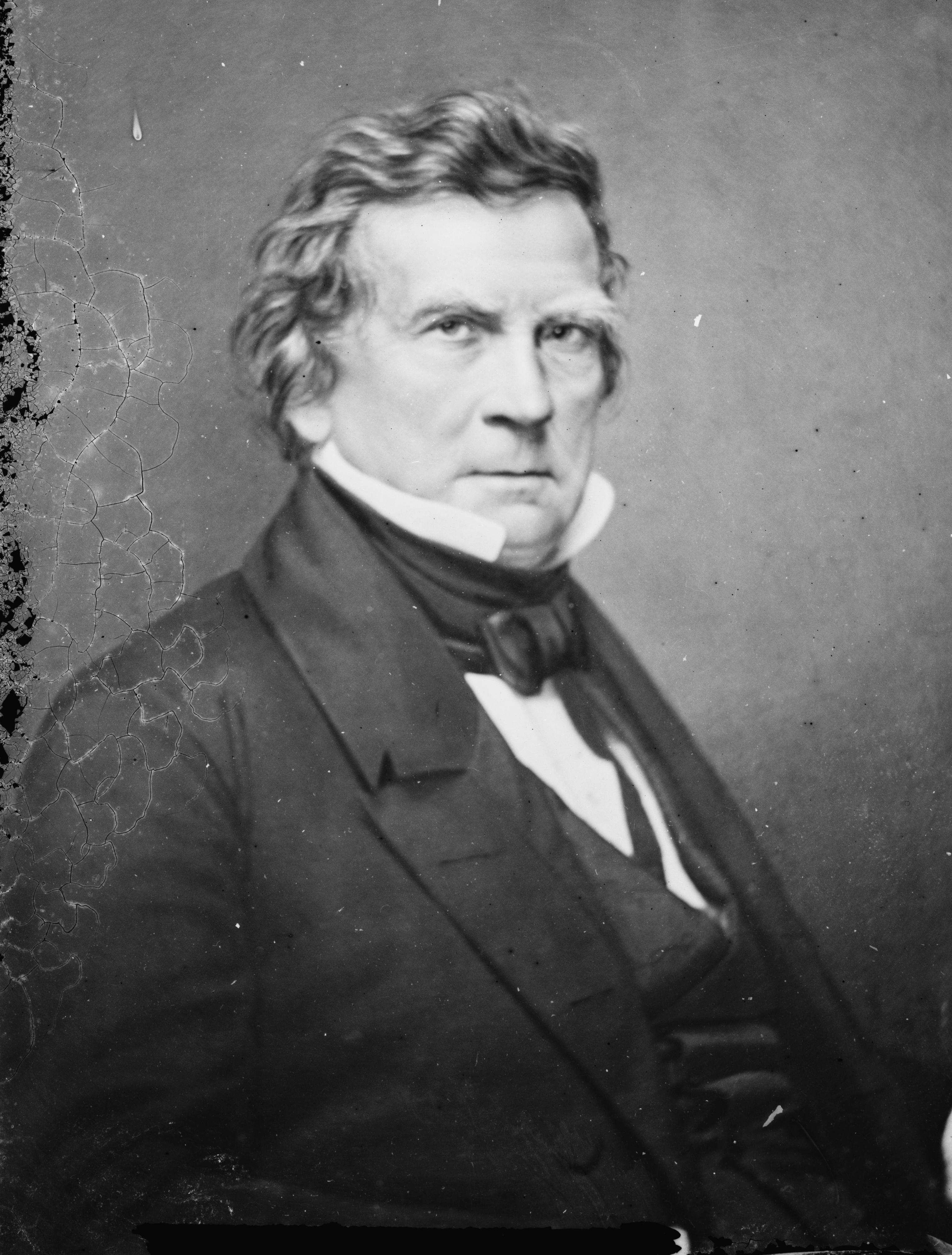
William Marcy
Former U.S. Senator from New York · 1831–1833 · Jackson · Class 3
William Marcy represented New York in the United States Senate (1831–1833) for the Jackson party. The page below collects sourced biographical facts, term history, committee roles, and provenance for Marcy.
Bioguide ID: M000127
Key facts
- Full name
- William Marcy
- State
- New York
- Party
- Jackson
- Senate class
- Class III
- Senate service
- 1831–1833
- First Senate term
- 1831
- Status
- Left office
- Current term ends
- —
- Born
- 1786
- Bioguide ID
- M000127
- Committee assignments
- —
- Dataset version
- 1.20260602
Biographical narrative
880 words · sourced from the Wikipedia REST extract
William Marcy was an American lawyer, politician, and judge who served as a U.S. Senator from New York, as well as holding various significant positions in state and federal government. His political career spanned several decades, during which he was involved in key events and decisions that shaped the political landscape of his time. Marcy's tenure included roles as the Governor of New York, U.S. Secretary of War, and U.S. Secretary of State, where he played a pivotal role in important negotiations such as the Gadsden Purchase.
Early life and career
William Marcy was born on December 12, 1786, in Southbridge, Massachusetts, to Jedediah Marcy, a farmer, and Ruth Learned Marcy. He received his early education in local schools before attending The Woodstock Academy in Connecticut. Following his graduation from Brown University in 1808, Marcy took on various roles, including teaching in Dedham, Massachusetts, and Newport, Rhode Island. His legal career began after he studied law under attorney William L. Bliss in Troy, New York, where he was admitted to the bar in 1811 and subsequently established a legal practice.
Marcy's military service during the War of 1812 saw him rise through the ranks of the 155th New York Infantry Regiment, starting as an ensign and eventually attaining the rank of lieutenant colonel. His involvement included participation in significant military actions, such as the storming of the British post at St. Regis, Canada. After the war, he continued to serve in the militia, further solidifying his reputation as a committed public servant.
In addition to his military service, Marcy held various local political positions. He served as the City Recorder of Troy during two non-consecutive terms between 1816 and 1823. His political affiliations aligned with the Anti-Dewitt Clinton faction of the Democratic-Republican Party, known as the Bucktails. This alignment led to his removal from office in 1818 after Clinton's election as governor. Marcy also contributed to the media landscape by serving as the editor of the Troy Budget newspaper.
Marcy's personal life included two marriages. His first wife, Dolly Newell, passed away in 1821. He later married Cornelia Knower in 1824, with whom he had three children: Samuel, Edmund, and Cornelia. Samuel Marcy served as a U.S. Navy officer and was killed during the American Civil War, while Edmund died under tragic circumstances while seeking treatment for illness.
Senate tenure
William Marcy's political career took a significant turn when he was elected to the U.S. Senate by the New York state legislature in 1831. He served as a senator from March 4, 1831, until December 31, 1833, representing the Jacksonian wing of the Democratic Party. During his brief tenure in the Senate, Marcy was a member of the Committee on the Judiciary in the 22nd Congress. His support for President Andrew Jackson was evident when he defended Jackson's nomination of Martin Van Buren as minister to the United Kingdom, coining the phrase "to the victor belong the spoils," which later became associated with the concept of the spoils system in American politics.
Marcy's time in the Senate was marked by his alignment with the Democratic Party's evolving ideologies, particularly as the party transitioned from the Democratic-Republicans. His political career in the Senate was relatively short-lived, as he resigned to assume the governorship of New York, to which he was elected in 1832. His departure from the Senate marked a shift in focus towards state-level politics, where he would have a more lasting impact.
Legislative focus and committees
Following his resignation from the Senate, Marcy served as the Governor of New York from 1833 until 1838. His governorship was characterized by significant legislative initiatives, particularly in the area of banking reform. He played a crucial role in addressing the issue of bank charters, ultimately leading to the enactment of a general banking law in 1838. This legislation aimed to eliminate monopolistic practices that had characterized the previous banking system in the state.
Marcy's political influence extended beyond his governorship. He was recognized as a leading figure in the Albany Regency, a group of Democratic politicians who dominated New York state politics during the 1820s and 1830s. His leadership within the party was further solidified as he became associated with the Hunker faction, which was characterized by a conservative approach to issues, particularly regarding slavery and patronage.
After his governorship, Marcy continued to serve in prominent roles, including as U.S. Secretary of War under President James K. Polk from 1845 to 1849. In this capacity, he oversaw military operations during the Mexican-American War, a conflict that had significant implications for U.S. territorial expansion. Following his tenure as Secretary of War, he returned to legal practice before being appointed U.S. Secretary of State under President Franklin Pierce in 1853. In this role, he was involved in several important diplomatic negotiations, including the Gadsden Purchase, which facilitated the acquisition of land that is now part of Arizona and New Mexico.
Marcy's political career came to a close in 1857 when he left the Cabinet. He passed away shortly thereafter on July 4, 1857. His legacy includes his contributions to state and federal governance, particularly in the areas of banking reform and territorial expansion, as well as his role in shaping the Democratic Party's evolution during a pivotal period in American history.
Notable legislation
Sponsored and co-sponsored legislation for William Marcy is pending operator curation. The biographical narrative above carries the same provenance trail until per-bill rows are written.
Sources
- [1]https://en.wikipedia.org/wiki/William_L._MarcyWikipedia · retrieved 2026-06-02
Notable quotes
Sourced quotes for William Marcy are pending operator curation. Narrative-scope provenance remains attached below.
Sources
- [1]https://en.wikipedia.org/wiki/William_L._MarcyWikipedia · retrieved 2026-06-02
Key positions
Curated policy positions for William Marcy are pending operator review. The biographical narrative above carries the same provenance trail until per-topic positions are written.
Sources
- [1]https://en.wikipedia.org/wiki/William_L._MarcyWikipedia · retrieved 2026-06-02
Terms served
- 1831–1833U.S. Senate · Term 1 · Jackson · Class III
Sources & provenance
Every attributable claim above carries a per-section [N] marker that resolves to the corresponding URL below. Each entry records the upstream provider, the canonical URL, and the timestamp at which the source was retrieved by the ingest pipeline.
Key facts
- https://bioguide.congress.gov/search/bio/M000127bioguide · retrieved 2026-06-02
- https://www.govtrack.us/congress/members/407151govtrack · retrieved 2026-06-02
Biographical narrative
- https://en.wikipedia.org/wiki/William_L._Marcywikipedia · retrieved 2026-06-02
Find your senator
Every U.S. state elects two senators. Browse New York’s delegation, the full former-senator roster, or explore the role and term length.
Related on The Candidate
- Preceded by Nathan SanfordEarlier holder of the New York Class III Senate seat · Adams.Open
- Succeeded by Silas Wright Jr.Later holder of the New York Class III Senate seat · Democratic.Open
- Aaron BurrFormer U.S. Senator from New York · RepublicanOpen
- Alfonse D’AmatoFormer U.S. Senator from New York · RepublicanOpen
- Charles DudleyFormer U.S. Senator from New York · JacksonOpen
- Charles GoodellFormer U.S. Senator from New York · RepublicanOpen