
Historical · U.S. Senate · New York
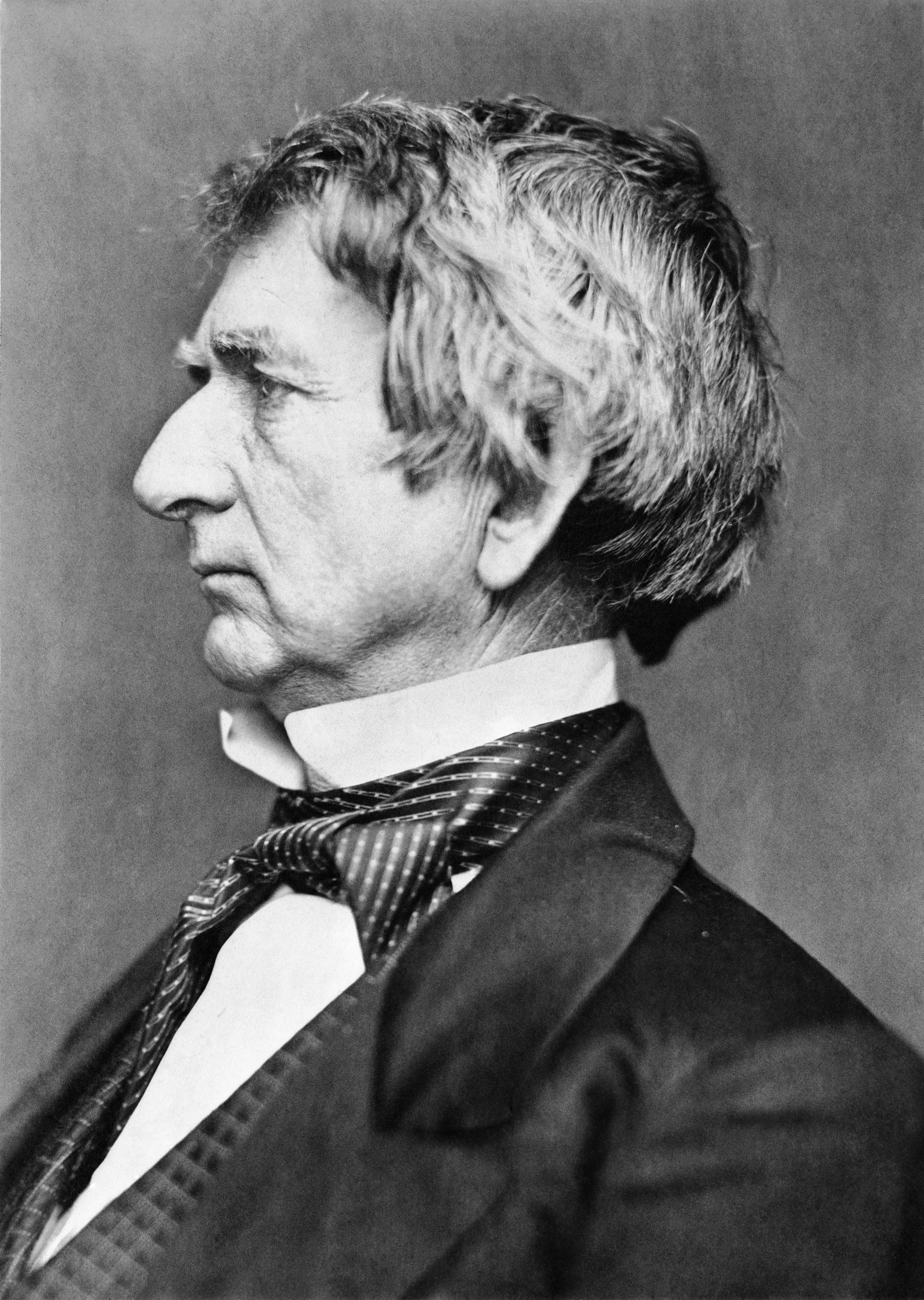
William Seward
Former U.S. Senator from New York · 1849–1861 · Republican · Class 3
William Seward represented New York in the United States Senate (1849–1861) for the Republican party. The page below collects sourced biographical facts, term history, committee roles, and provenance for Seward.
Bioguide ID: S000261
Key facts
- Full name
- William Seward
- State
- New York
- Party
- Republican
- Senate class
- Class III
- Senate service
- 1849–1861
- First Senate term
- 1849
- Status
- Left office
- Current term ends
- —
- Born
- 1801
- Bioguide ID
- S000261
- Committee assignments
- —
- Dataset version
- 1.20260602
Biographical narrative
1,069 words · sourced from the Wikipedia REST extract
William Seward was a prominent American politician who served as a U.S. Senator from New York and later as Secretary of State under President Abraham Lincoln. A member of the Republican Party, Seward was known for his strong opposition to the expansion of slavery in the United States and played a significant role in the political landscape during the years leading up to and during the American Civil War. His tenure in the Senate was marked by his commitment to the Union and his influential role in shaping early Republican policies. After leaving the Senate, he continued to serve the nation as Secretary of State, where he was involved in key diplomatic efforts, including the negotiation of the Alaska Purchase.
Early life and career
William Seward was born on May 16, 1801, in Florida, New York, a small village in Orange County. He was the fourth son of Samuel Sweezy Seward and Mary Jennings Seward. His father was a prosperous landowner and a slaveholder, reflecting the complex social and economic fabric of New York State at the time, where slavery was not fully abolished until 1827. The village of Florida, situated approximately 60 miles north of New York City, was a rural community with a limited population. Seward's early education took place in local schools, where he demonstrated a keen intellect and a passion for learning.
At the age of 15, he enrolled at Union College in Schenectady, New York, where he quickly distinguished himself as a bright student and was elected to the Phi Beta Kappa honor society. During his time at college, he developed friendships that would later influence his political career. However, financial disputes with his father led him to leave school temporarily. In 1819, he traveled to Georgia to work as a teacher, where he experienced both the hospitality of the local community and the harsh realities of slavery. After a brief stint in Georgia, he returned to New York, where he resumed his studies and graduated from Union College with high honors in 1820.
Following his graduation, Seward spent two years studying law in Goshen and New York City. He passed the bar examination in late 1822 and sought to establish his legal practice in Western New York, ultimately settling in Auburn, Cayuga County. There, he joined the law practice of retired judge Elijah Miller and married Miller's daughter, Frances, in 1824. Seward's legal career began to flourish as he became involved in local politics, and he was elected to the New York State Senate in 1830 as a member of the Anti-Masonic Party. This early political engagement laid the groundwork for his future roles in state and national politics.
Senate tenure
William Seward was elected to the United States Senate in 1849, representing New York. His election came at a time when the nation was deeply divided over the issue of slavery, and Seward quickly established himself as a vocal opponent of its expansion. His strong anti-slavery stance garnered significant attention and controversy, particularly from Southern states, where his views were met with hostility. During his first term, Seward's commitment to abolition and civil rights became increasingly evident as he advocated for legislation that aimed to protect the rights of free blacks and limit the reach of slavery.
In 1855, Seward was re-elected to the Senate, further solidifying his position as a leading figure in the emerging Republican Party. His political influence grew as he became involved in key debates and discussions surrounding the contentious issue of slavery, particularly as tensions escalated leading up to the Civil War. Seward was considered a frontrunner for the Republican presidential nomination in 1860, but ultimately lost to Abraham Lincoln. Despite this setback, he played a crucial role in Lincoln's campaign and was appointed Secretary of State following Lincoln's election.
Seward's time in the Senate was marked by his unwavering dedication to the Union cause. He sought to prevent Southern states from seceding and worked diligently to maintain national unity. His efforts included advocating for policies that would support the war effort and deter foreign intervention. Seward's tenure in the Senate ended on March 3, 1861, just as the nation was on the brink of civil conflict, but his influence continued as he transitioned into his role as Secretary of State.
Legislative focus and committees
During his time in the Senate, William Seward was known for his strong advocacy on issues related to civil rights and the abolition of slavery. He was a prominent voice against the expansion of slavery into new territories, arguing that it was a moral and political threat to the nation. His legislative focus included efforts to protect the rights of free blacks and to ensure that abolitionists were not persecuted under state laws. Seward's commitment to civil rights was evident in his support for legislation that aimed to provide legal protections for fugitive slaves and to guarantee jury trials for those accused of being runaway slaves.
Seward's involvement in various Senate committees allowed him to influence key legislative decisions. He was engaged in discussions surrounding the Compromise of 1850, which sought to address the growing tensions between free and slave states. His opposition to the compromise reflected his belief that it would only serve to perpetuate the institution of slavery. As a member of the Senate, he also participated in debates on issues related to immigration and the rights of immigrants, advocating for policies that would support their integration into American society.
In addition to his legislative work, Seward's role in the Senate was characterized by his ability to articulate the Republican Party's vision during its formative years. He was instrumental in shaping the party's platform and was a key figure in the political landscape of the time. His leadership and advocacy helped to solidify the Republican Party's stance on slavery and civil rights, laying the groundwork for future legislative efforts.
Seward's Senate career came to an end in 1861, but his influence continued as he took on the role of Secretary of State. His experiences in the Senate informed his diplomatic strategies during the Civil War, as he worked to maintain foreign relations and prevent recognition of the Confederacy by other nations. His legacy as a senator is marked by his unwavering commitment to the Union and his efforts to promote civil rights, which would continue to resonate in American politics long after his departure from the Senate.
Notable legislation
Sponsored and co-sponsored legislation for William Seward is pending operator curation. The biographical narrative above carries the same provenance trail until per-bill rows are written.
Sources
- [1]https://en.wikipedia.org/wiki/William_H._SewardWikipedia · retrieved 2026-06-02
Notable quotes
Sourced quotes for William Seward are pending operator curation. Narrative-scope provenance remains attached below.
Sources
- [1]https://en.wikipedia.org/wiki/William_H._SewardWikipedia · retrieved 2026-06-02
Key positions
Curated policy positions for William Seward are pending operator review. The biographical narrative above carries the same provenance trail until per-topic positions are written.
Sources
- [1]https://en.wikipedia.org/wiki/William_H._SewardWikipedia · retrieved 2026-06-02
Terms served
- 1849–1855U.S. Senate · Term 1 · Whig · Class III
- 1855–1861U.S. Senate · Term 2 · Republican · Class III
Sources & provenance
Every attributable claim above carries a per-section [N] marker that resolves to the corresponding URL below. Each entry records the upstream provider, the canonical URL, and the timestamp at which the source was retrieved by the ingest pipeline.
Key facts
- https://bioguide.congress.gov/search/bio/S000261bioguide · retrieved 2026-06-02
- https://www.govtrack.us/congress/members/409762govtrack · retrieved 2026-06-02
Biographical narrative
- https://en.wikipedia.org/wiki/William_H._Sewardwikipedia · retrieved 2026-06-02
Find your senator
Every U.S. state elects two senators. Browse New York’s delegation, the full former-senator roster, or explore the role and term length.
Related on The Candidate
- Preceded by John DixEarlier holder of the New York Class III Senate seat · Democratic.Open
- Succeeded by Ira HarrisLater holder of the New York Class III Senate seat · Republican.Open
- Aaron BurrFormer U.S. Senator from New York · RepublicanOpen
- Alfonse D’AmatoFormer U.S. Senator from New York · RepublicanOpen
- Charles DudleyFormer U.S. Senator from New York · JacksonOpen
- Charles GoodellFormer U.S. Senator from New York · RepublicanOpen