
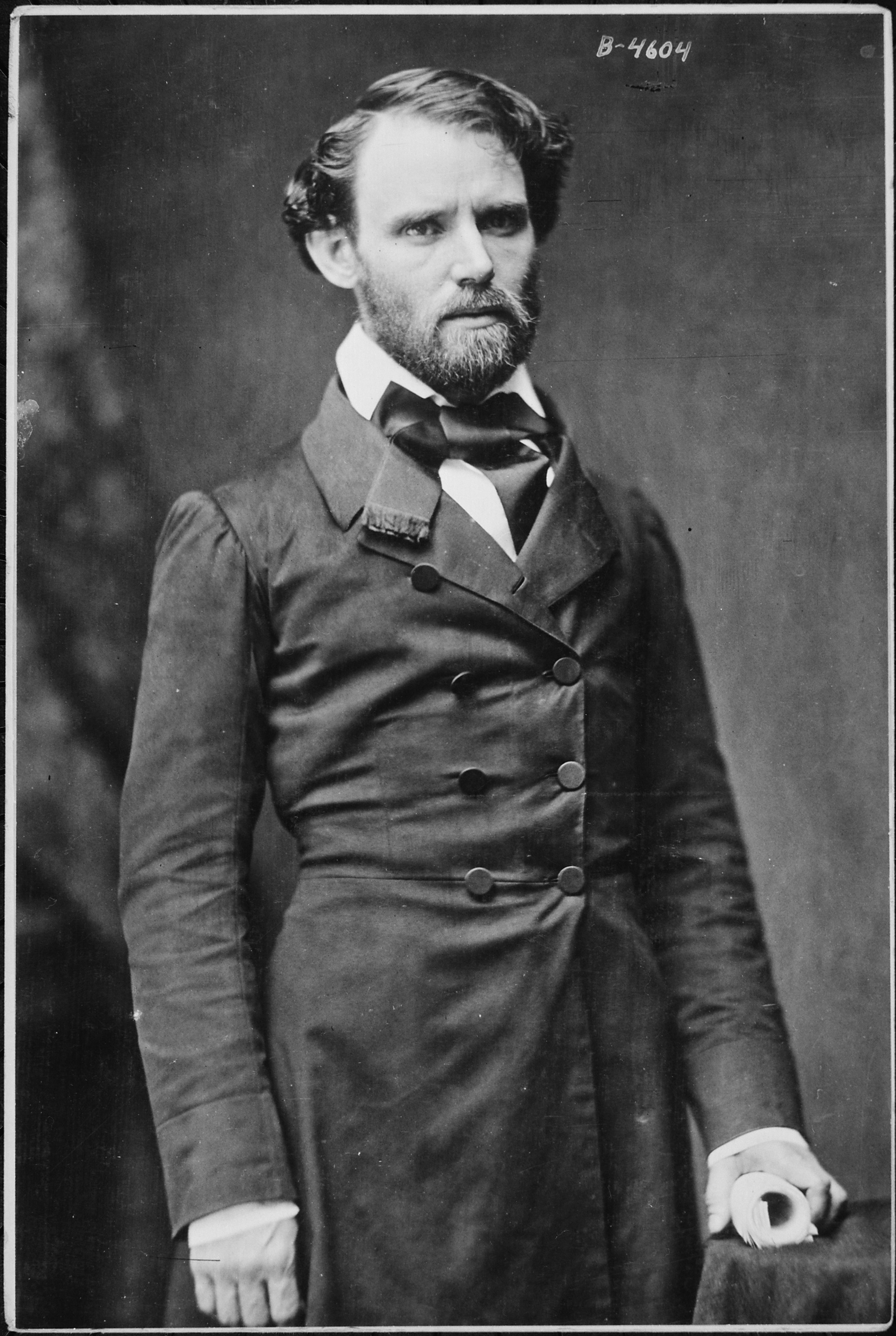
Historical · U.S. Senate · Ohio
George Pugh
Former U.S. Senator from Ohio · 1855–1861 · Democratic · Class 3
George Pugh represented Ohio in the United States Senate (1855–1861) for the Democratic party. The page below collects sourced biographical facts, term history, committee roles, and provenance for Pugh.
Bioguide ID: P000560
Key facts
- Full name
- George Pugh
- State
- Ohio
- Party
- Democratic
- Senate class
- Class III
- Senate service
- 1855–1861
- First Senate term
- 1855
- Status
- Left office
- Current term ends
- —
- Born
- 1822
- Bioguide ID
- P000560
- Committee assignments
- —
- Dataset version
- 1.20260602
Biographical narrative
965 words · sourced from the Wikipedia REST extract
George Pugh was a Democratic politician from Ohio who served as a U.S. Senator from 1855 to 1861. His political career unfolded during a tumultuous period in American history, marked by significant national debates over issues such as slavery and states' rights. Pugh's tenure in the Senate was characterized by his advocacy for Midwestern Democratic interests and his opposition to coercive measures against seceding Southern states during the Civil War.
Early life and career
George Ellis Pugh was born on November 28, 1822, in Cincinnati, Ohio. He was the son of Lot and Rachel Pugh, who were married in Hamilton County, Ohio, in 1814. Pugh grew up in a family that included three brothers and a sister. His ancestry traces back to Ellis Pugh, Sr., a Welsh immigrant and Quaker minister who settled in Pennsylvania in the late 17th century to escape religious persecution.
Pugh pursued his education at Miami University, where he laid the groundwork for his future career. After completing his studies, he began practicing law in 1843, establishing himself in the legal profession. His legal career coincided with his military service; he served as a captain in the 4th Ohio Regiment during the Mexican-American War. Pugh distinguished himself for his bravery at the Battle of Atlexco, earning commendations for his actions.
Following his military service, Pugh entered politics. He served in the Ohio House of Representatives from 1848 to 1850, where he began to build his reputation as a public servant. Subsequently, he was appointed as the State Attorney General, a position he held from 1852 to 1854. His legal and political experiences prepared him for a more prominent role in national politics, leading to his election to the United States Senate.
Senate tenure
Pugh's Senate career began in 1855 when he was elected to represent Ohio in the U.S. Senate. He served in the Senate until 1861, during which time he became a prominent voice for the Democratic Party, particularly representing the interests of Midwestern Democrats. His political alignment placed him in opposition to the Republican Party, which was gaining strength during this period.
Throughout his time in the Senate, Pugh was involved in significant debates and legislative discussions. He was a supporter of the Lecompton Constitution, which sought to admit Kansas as a slave state, although he ultimately voted against it in accordance with the directives of the Ohio legislature. This decision illustrated his commitment to party loyalty and responsiveness to his constituents.
Pugh was also active in discussions surrounding the contentious issue of popular sovereignty, which allowed territories to decide for themselves whether to permit slavery. He participated in debates with notable figures such as Stephen A. Douglas and Albert Gallatin Brown, defending the principles of popular sovereignty while also expressing his opposition to a federal slave code. His stance on these issues reflected the complex dynamics within the Democratic Party at the time, as it grappled with internal divisions over slavery and states' rights.
Despite his efforts, Pugh faced electoral challenges. In 1860, he lost his bid for re-election to Salmon P. Chase, a Republican. This defeat marked the end of his Senate career, but he continued to engage in political discourse during the remaining months of his term. Notably, he emerged as a vocal opponent of coercive measures to reintegrate seceding Southern states into the Union following the election of Abraham Lincoln. His arguments against such measures positioned him alongside other prominent Ohio Democrats, including Clement L. Vallandigham and George H. Pendleton.
Pugh's political fortunes declined in the years following his Senate tenure. He faced backlash from constituents in Ohio due to his Democratic affiliation and his defense of Vallandigham, who was a controversial figure during the Civil War. Pugh ran for the office of Lieutenant Governor in 1863 and sought election to the U.S. House of Representatives in 1864, but he was unsuccessful in both attempts. Following these defeats, he stepped back from public office for several years while continuing his legal practice.
In 1873, Pugh made a brief return to politics by being elected as a delegate to the Ohio State Constitutional Convention. However, he withdrew from the convention and declined to serve, indicating a retreat from the political arena. He passed away on July 19, 1876, in Cincinnati, Ohio, at the age of 53.
Legislative focus and committees
During his time in the Senate, Pugh's legislative focus was primarily on issues pertinent to the Democratic Party and the interests of his constituents in Ohio. He was particularly concerned with the principles of Western Democracy, advocating for the rights and perspectives of Midwestern Democrats in the face of rising Republican influence.
Pugh's involvement in the Senate included participation in debates surrounding the Lecompton Constitution and the contentious discussions on popular sovereignty. His opposition to a federal slave code highlighted his commitment to states' rights and the autonomy of territories in determining their own laws regarding slavery. He articulated his views on these matters during key debates, engaging with prominent senators of the time and contributing to the broader discourse on slavery and governance.
In addition to his legislative work, Pugh was known for his defense of fellow Democrats during a period of intense political strife. His participation in the defense of Clement L. Vallandigham, a fellow Ohioan and vocal opponent of the Civil War policies of the Lincoln administration, underscored his commitment to the Democratic Party and its principles, even in the face of public disfavor.
Pugh's Senate career was marked by a commitment to the ideals of his party and the interests of his constituents, navigating the complexities of a nation on the brink of civil war. His legacy, while overshadowed by the larger historical events of the time, reflects the challenges and dynamics of American politics in the mid-19th century.
Notable legislation
Sponsored and co-sponsored legislation for George Pugh is pending operator curation. The biographical narrative above carries the same provenance trail until per-bill rows are written.
Sources
- [1]https://en.wikipedia.org/wiki/George_E._PughWikipedia · retrieved 2026-06-02
Notable quotes
Sourced quotes for George Pugh are pending operator curation. Narrative-scope provenance remains attached below.
Sources
- [1]https://en.wikipedia.org/wiki/George_E._PughWikipedia · retrieved 2026-06-02
Key positions
Curated policy positions for George Pugh are pending operator review. The biographical narrative above carries the same provenance trail until per-topic positions are written.
Sources
- [1]https://en.wikipedia.org/wiki/George_E._PughWikipedia · retrieved 2026-06-02
Terms served
- 1855–1861U.S. Senate · Term 1 · Democratic · Class III
Sources & provenance
Every attributable claim above carries a per-section [N] marker that resolves to the corresponding URL below. Each entry records the upstream provider, the canonical URL, and the timestamp at which the source was retrieved by the ingest pipeline.
Key facts
- https://bioguide.congress.gov/search/bio/P000560bioguide · retrieved 2026-06-02
- https://www.govtrack.us/congress/members/408943govtrack · retrieved 2026-06-02
Biographical narrative
- https://en.wikipedia.org/wiki/George_E._Pughwikipedia · retrieved 2026-06-02
Find your senator
Every U.S. state elects two senators. Browse Ohio’s delegation, the full former-senator roster, or explore the role and term length.
Related on The Candidate
- Preceded by William AllenEarlier holder of the Ohio Class III Senate seat · Democratic.Open
- Succeeded by Stanley MatthewsLater holder of the Ohio Class III Senate seat · Republican.Open
- Alexander CampbellFormer U.S. Senator from Ohio · RepublicanOpen
- Allen ThurmanFormer U.S. Senator from Ohio · DemocraticOpen
- Alvin DonaheyFormer U.S. Senator from Ohio · DemocraticOpen
- Atlee PomereneFormer U.S. Senator from Ohio · DemocraticOpen