
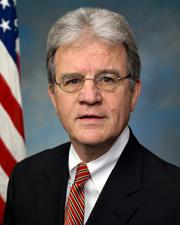
Historical · U.S. Senate · Oklahoma
Thomas Coburn
Former U.S. Senator from Oklahoma · 2005–2015 · Republican · Class 3
Thomas Coburn represented Oklahoma in the United States Senate (2005–2015) for the Republican party. The page below collects sourced biographical facts, term history, committee roles, and provenance for Coburn.
Bioguide ID: C000560
Key facts
- Full name
- Thomas Coburn
- State
- Oklahoma
- Party
- Republican
- Senate class
- Class III
- Senate service
- 2005–2015
- First Senate term
- 2005
- Status
- Left office
- Current term ends
- —
- Born
- 1948
- Bioguide ID
- C000560
- Committee assignments
- —
- Dataset version
- 1.20260601-3
Biographical narrative
953 words · sourced from the Wikipedia REST extract
Thomas Allen Coburn was an American politician and physician who served as a United States senator from Oklahoma from 2005 to 2015. A member of the Republican Party, Coburn previously held a position as a United States representative from 1995 to 2001. Known for his strong conservative views, he was recognized for his opposition to deficit spending and his advocacy for fiscal restraint. Coburn's political career spanned multiple terms in Congress, during which he became a prominent figure in conservative circles.
Early life and career
Tom Coburn was born on March 14, 1948, in Casper, Wyoming, to Anita Joy and Orin Wesley Coburn. His father was an optician and the founder of Coburn Optical Industries, which contributed to the family's prominence in the optical industry. Coburn's educational journey began at Oklahoma State University, where he earned a Bachelor of Science degree in accounting. During his time at the university, he was actively involved in student leadership, serving as president of the College of Business Student Council and was a member of the Sigma Nu fraternity.
In 1968, Coburn married Carolyn Denton, who was crowned Miss Oklahoma in 1967. The couple had three daughters: Callie, Katie, and Sarah, the latter of whom gained recognition as an operatic soprano. After completing his undergraduate studies, Coburn worked as a manufacturing manager at the Ophthalmic Division of Coburn Optical Industries in Colonial Heights, Virginia, from 1970 to 1978. Under his management, the division expanded significantly, growing from 13 employees to over 350 and capturing a substantial share of the U.S. market.
Coburn's career took a pivotal turn after he overcame a bout of malignant melanoma. He decided to pursue a medical degree, graduating with honors from the University of Oklahoma Medical School in 1983. Following his graduation, he established a private medical practice, Maternal & Family Practice, in Muskogee, Oklahoma. Throughout his career as an obstetrician, Coburn treated over 15,000 patients and delivered approximately 4,000 babies. He was also involved in his community, serving as a deacon at a Southern Baptist Church.
Coburn's medical career was not without controversy. One notable incident involved a sterilization procedure he performed on a 20-year-old woman during an emergency surgery for an ectopic pregnancy. The woman later sued Coburn, alleging that he did not obtain proper consent for the sterilization. Although the lawsuit was dismissed without a finding of liability against him, it became a significant issue during his Senate campaign. Additionally, Coburn faced allegations of Medicaid fraud related to the sterilization, which he denied, asserting that he had not filed a claim for the procedure.
Senate tenure
Coburn's political career began in earnest when he ran for the United States House of Representatives in 1994, representing Oklahoma's 2nd congressional district. He won the election, becoming the first Republican to hold the seat since 1921. Coburn was re-elected twice, serving in the House until 2001. He was known for his conservative stances, advocating for reduced federal spending and opposing abortion. His tenure in the House was marked by a reputation as a political maverick, often clashing with House leadership over his commitment to conservative principles.
After a brief hiatus from politics, Coburn returned to the political arena with a successful campaign for the United States Senate in 2004. He took office in January 2005 and was re-elected for a second term in 2010. Throughout his Senate career, Coburn remained committed to his conservative values, frequently opposing what he viewed as excessive government spending and advocating for fiscal responsibility. He was often referred to as "Dr. No" due to his tendency to block federal spending bills using procedural tactics.
In January 2014, Coburn announced his intention to resign from the Senate before the end of his term due to a recurrence of prostate cancer. He submitted a letter of resignation to the Governor of Oklahoma, effective at the conclusion of the 113th Congress. His resignation marked the end of his second term in the Senate, which concluded on January 3, 2015.
Legislative focus and committees
During his time in the Senate, Coburn was known for his strong advocacy for fiscal conservatism and social conservative values. He was a vocal opponent of deficit spending and sought to eliminate what he considered wasteful government programs. Coburn's legislative focus included issues such as government transparency, healthcare reform, and budgetary restraint. He was particularly concerned with the impact of federal spending on future generations and often emphasized the need for a balanced budget.
Coburn served on several Senate committees, where he utilized his medical background to influence healthcare policy. He was involved in discussions surrounding healthcare reform, advocating for changes that aligned with his conservative principles. His expertise as a physician informed his views on medical-related legislation, and he often sought to ensure that healthcare policies were fiscally responsible.
In addition to his work on healthcare, Coburn was an advocate for term limits and supported various measures aimed at reducing the size and scope of government. He was a proponent of gun rights and the death penalty, while opposing same-sex marriage and embryonic stem cell research. His legislative priorities reflected a commitment to traditional conservative values, and he often sought to align his policies with the principles of limited government and individual liberty.
After leaving the Senate, Coburn continued to engage in public policy discussions. He became a senior fellow at the Manhattan Institute for Policy Research, focusing on reforming the Food and Drug Administration. Additionally, he served as a senior advisor to Citizens for Self-Governance, where he advocated for a convention to propose amendments to the United States Constitution. Coburn's post-Senate career reflected his ongoing commitment to conservative principles and his desire to influence public policy beyond his time in elected office.
Notable legislation
Sponsored and co-sponsored legislation for Thomas Coburn is pending operator curation. The biographical narrative above carries the same provenance trail until per-bill rows are written.
Sources
- [1]https://en.wikipedia.org/wiki/Tom_CoburnWikipedia · retrieved 2026-06-01
Notable quotes
Sourced quotes for Thomas Coburn are pending operator curation. Narrative-scope provenance remains attached below.
Sources
- [1]https://en.wikipedia.org/wiki/Tom_CoburnWikipedia · retrieved 2026-06-01
Key positions
Curated policy positions for Thomas Coburn are pending operator review. The biographical narrative above carries the same provenance trail until per-topic positions are written.
Sources
- [1]https://en.wikipedia.org/wiki/Tom_CoburnWikipedia · retrieved 2026-06-01
Terms served
- 1995–1997U.S. House · District 2 · Term 1 · Republican
- 1997–1999U.S. House · District 2 · Term 2 · Republican
- 1999–2001U.S. House · District 2 · Term 3 · Republican
- 2005–2011U.S. Senate · Term 4 · Republican · Class III
- 2011–2015U.S. Senate · Term 5 · Republican · Class III
Sources & provenance
Every attributable claim above carries a per-section [N] marker that resolves to the corresponding URL below. Each entry records the upstream provider, the canonical URL, and the timestamp at which the source was retrieved by the ingest pipeline.
Key facts
- https://bioguide.congress.gov/search/bio/C000560bioguide · retrieved 2026-06-01
- http://www.coburn.senate.govsenate.gov · retrieved 2026-06-01
Biographical narrative
- https://en.wikipedia.org/wiki/Tom_Coburnwikipedia · retrieved 2026-06-01
Find your senator
Every U.S. state elects two senators. Browse Oklahoma’s delegation, the full former-senator roster, or explore the role and term length.
Related on The Candidate
- Preceded by Don NicklesEarlier holder of the Oklahoma Class III Senate seat · Republican.Open
- Almer MonroneyFormer U.S. Senator from Oklahoma · DemocraticOpen
- David BorenFormer U.S. Senator from Oklahoma · DemocraticOpen
- Dewey BartlettFormer U.S. Senator from Oklahoma · RepublicanOpen
- Republican PartyFederal candidates and office holders on the Republican line.Open
- Senators from OklahomaEvery former U.S. Senator who has represented Oklahoma.Open