
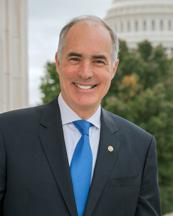
Historical · U.S. Senate · Pennsylvania
Bob Casey Jr.
Former U.S. Senator from Pennsylvania · 2007–2025 · Democratic · Class 1
Bob Casey Jr. represented Pennsylvania in the United States Senate (2007–2025) for the Democratic party. The page below collects sourced biographical facts, term history, committee roles, and provenance for Jr..
Bioguide ID: C001070
Key facts
- Full name
- Bob Casey Jr.
- State
- Pennsylvania
- Party
- Democratic
- Senate class
- Class I
- Senate service
- 2007–2025
- First Senate term
- 2007
- Status
- Left office
- Current term ends
- —
- Born
- 1960
- Bioguide ID
- C001070
- Committee assignments
- —
- Dataset version
- 1.20260601-3
Biographical narrative
913 words · sourced from the Wikipedia REST extract
Robert P. Casey Jr. is a former United States senator from Pennsylvania, representing the Democratic Party from 2007 until the conclusion of his term in January 2025. Born on April 13, 1960, in Scranton, Pennsylvania, Casey is the son of Bob Casey Sr., who served as the 42nd governor of Pennsylvania. His political career has been marked by a series of statewide elections, culminating in his tenure in the U.S. Senate, where he focused on various legislative issues and served on multiple committees.
Early life and career
Robert Patrick Casey Jr. was born in Scranton, Pennsylvania, into a large family as one of eight children. His parents, Ellen and Bob Casey Sr., instilled in him a sense of public service and community involvement. Casey's educational journey began at Scranton Preparatory School, where he graduated in 1978. He then attended the College of the Holy Cross in Worcester, Massachusetts, earning a Bachelor of Arts degree in 1982. Following his undergraduate studies, Casey joined the Jesuit Volunteer Corps, dedicating a year to teaching fifth grade and coaching basketball at the Gesu School in Philadelphia. This experience contributed to his commitment to education and community service.
After completing his time with the Jesuit Volunteer Corps, Casey pursued a legal education at the Columbus School of Law at The Catholic University of America in Washington, D.C., where he received his Juris Doctor in 1988. He began practicing law in Scranton, focusing on various legal matters until he entered the political arena.
Casey's political career commenced when he was elected as Pennsylvania's Auditor General in 1996. He won the Democratic nomination and subsequently secured victory in the general election, serving two terms from 1997 to 2005. During his tenure, he focused on accountability and transparency in government spending, earning a reputation for his commitment to fiscal responsibility.
In 2002, Casey sought to follow in his father's footsteps by running for governor of Pennsylvania. He faced former Philadelphia Mayor Ed Rendell in a highly competitive Democratic primary, which was noted for its high costs and intense campaigning. Despite strong support from the Pennsylvania Democratic Party, Casey ultimately lost the primary to Rendell, who went on to win the general election. Following his term as Auditor General, Casey was elected State Treasurer in 2004, a position he held until he transitioned to the U.S. Senate.
Senate tenure
Casey launched his campaign for the U.S. Senate in 2005, responding to calls from prominent Democratic leaders, including Senators Chuck Schumer and Harry Reid. He aimed to challenge the incumbent Republican senator, Rick Santorum, in the 2006 election. Casey's campaign was marked by significant endorsements, including one from Governor Ed Rendell, despite their previous rivalry in the gubernatorial primary.
In the Democratic primary, Casey faced challenges from two candidates who criticized his socially conservative views. However, he successfully secured the nomination with a substantial majority. In the general election, Casey won decisively against Santorum, achieving a victory margin that was historically significant for a Democratic candidate in Pennsylvania.
Following his initial election, Casey sought reelection in 2012. His campaign faced uncertainties, particularly due to the political climate and President Obama's fluctuating approval ratings in Pennsylvania. Nevertheless, Casey won the Democratic primary and faced Republican nominee Tom Smith in the general election, where he again emerged victorious.
In 2018, Casey ran for a third term in the Senate, making history as the first Democrat to achieve this milestone in Pennsylvania. He faced U.S. Congressman Lou Barletta in the general election and secured another victory, further solidifying his position in the Senate.
Casey's final term in the Senate concluded with the 2024 election cycle, where he sought reelection but narrowly lost to Republican nominee David McCormick by a small margin. His tenure in the Senate was characterized by a focus on various issues, including healthcare, education, and economic development.
Legislative focus and committees
During his time in the Senate, Robert P. Casey Jr. was involved in a range of legislative initiatives and served on several important committees. His work often reflected his commitment to addressing the needs of Pennsylvania constituents and advocating for policies that would benefit working families.
Casey was known for his focus on healthcare issues, particularly in advocating for access to affordable healthcare and addressing the opioid crisis, which significantly impacted Pennsylvania. He worked to promote legislation aimed at improving healthcare access and affordability, reflecting his belief in the importance of health as a fundamental right.
In addition to healthcare, Casey prioritized education, advocating for increased funding for public schools and support for early childhood education programs. He recognized the importance of education in fostering economic opportunity and aimed to ensure that all children had access to quality education.
Throughout his Senate career, Casey also engaged in discussions surrounding economic development, particularly in relation to job creation and support for small businesses. He sought to promote policies that would stimulate economic growth and provide opportunities for workers in Pennsylvania.
Casey served on various Senate committees, which allowed him to influence legislation in key areas. His committee assignments provided him with platforms to advocate for his constituents and address pressing issues facing the state and the nation.
Overall, Robert P. Casey Jr.'s career in the U.S. Senate was marked by a commitment to public service and a focus on the needs of Pennsylvania residents. His legislative efforts and committee work reflected his dedication to improving the lives of his constituents and addressing critical issues facing the state and the country.
Notable legislation
Sponsored and co-sponsored legislation for Bob Casey Jr. is pending operator curation. The biographical narrative above carries the same provenance trail until per-bill rows are written.
Sources
- [1]https://en.wikipedia.org/wiki/Bob_Casey_Jr.Wikipedia · retrieved 2026-06-01
Notable quotes
Sourced quotes for Bob Casey Jr. are pending operator curation. Narrative-scope provenance remains attached below.
Sources
- [1]https://en.wikipedia.org/wiki/Bob_Casey_Jr.Wikipedia · retrieved 2026-06-01
Key positions
Curated policy positions for Bob Casey Jr. are pending operator review. The biographical narrative above carries the same provenance trail until per-topic positions are written.
Sources
- [1]https://en.wikipedia.org/wiki/Bob_Casey_Jr.Wikipedia · retrieved 2026-06-01
Terms served
- 2007–2013U.S. Senate · Term 1 · Democratic · Class I
- 2013–2019U.S. Senate · Term 2 · Democratic · Class I
- 2019–2025U.S. Senate · Term 3 · Democratic · Class I
Sources & provenance
Every attributable claim above carries a per-section [N] marker that resolves to the corresponding URL below. Each entry records the upstream provider, the canonical URL, and the timestamp at which the source was retrieved by the ingest pipeline.
Key facts
- https://bioguide.congress.gov/search/bio/C001070bioguide · retrieved 2026-06-01
- https://www.casey.senate.govsenate.gov · retrieved 2026-06-01
Biographical narrative
- https://en.wikipedia.org/wiki/Bob_Casey_Jr.wikipedia · retrieved 2026-06-01
Find your senator
Every U.S. state elects two senators. Browse Pennsylvania’s delegation, the full former-senator roster, or explore the role and term length.
Related on The Candidate
- Preceded by Rick SantorumEarlier holder of the Pennsylvania Class I Senate seat · Republican.Open
- Abner LacockFormer U.S. Senator from Pennsylvania · RepublicanOpen
- Andrew GreggFormer U.S. Senator from Pennsylvania · RepublicanOpen
- Arlen SpecterFormer U.S. Senator from Pennsylvania · DemocraticOpen
- Boies PenroseFormer U.S. Senator from Pennsylvania · RepublicanOpen
- Democratic PartyFederal candidates and office holders on the Democratic line.Open