
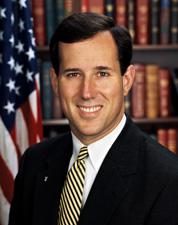
Historical · U.S. Senate · Pennsylvania
Rick Santorum
Former U.S. Senator from Pennsylvania · 1995–2007 · Republican · Class 1
Rick Santorum represented Pennsylvania in the United States Senate (1995–2007) for the Republican party. The page below collects sourced biographical facts, term history, committee roles, and provenance for Santorum.
Bioguide ID: S000059
Key facts
- Full name
- Rick Santorum
- State
- Pennsylvania
- Party
- Republican
- Senate class
- Class I
- Senate service
- 1995–2007
- First Senate term
- 1995
- Status
- Left office
- Current term ends
- —
- Born
- 1958
- Bioguide ID
- S000059
- Committee assignments
- —
- Dataset version
- 1.20260602
Biographical narrative
1,024 words · sourced from the Wikipedia REST extract
Rick Santorum is a former U.S. Senator from Pennsylvania, representing the Republican Party. He served two terms in the Senate, beginning in 1995 and concluding his last term in January 2007. Throughout his political career, Santorum was known for his conservative stance on various issues and was an active participant in legislative debates during his time in office. His tenure in the Senate was marked by his involvement in key policy discussions and his efforts to influence national legislation.
Early life and career
Rick Santorum was born on May 10, 1958. His early life and education laid the foundation for his future career in politics. Santorum pursued higher education at the Pennsylvania State University, where he earned a Bachelor of Arts degree in political science. He continued his studies at the Dickinson School of Law, obtaining his Juris Doctor degree. Following his graduation from law school, Santorum began his professional career in the legal field, working as an attorney.
Before entering the Senate, Santorum's political career began in the U.S. House of Representatives. He was elected to represent Pennsylvania's 18th congressional district in 1990. During his time in the House, he served one term, which provided him with valuable experience in legislative processes and the workings of Congress. His tenure in the House lasted until 1995, when he transitioned to the Senate after winning the election for Pennsylvania's Senate seat.
Senate tenure
Rick Santorum's Senate career commenced in January 1995, when he took office as a member of the 104th Congress. He was part of a Republican wave that swept through Congress during the mid-1990s, which significantly influenced the legislative agenda of the time. Santorum's approach in the Senate was characterized by his commitment to conservative principles, particularly in areas such as fiscal policy, social issues, and national security.
During his time in the Senate, Santorum was known for his active engagement in various legislative initiatives. He served on several committees, which allowed him to shape policy in key areas. His involvement in the Senate included participation in discussions surrounding budgetary matters, health care reform, and education policy. Santorum's legislative efforts were often aligned with the broader Republican agenda, focusing on reducing government spending and promoting conservative social values.
Santorum's first term in the Senate was marked by a series of significant legislative battles. He was involved in the debate over welfare reform, advocating for changes that aligned with his party's vision of reducing dependency on government assistance. Additionally, he was a vocal supporter of tax cuts and initiatives aimed at stimulating economic growth. His positions often reflected a commitment to traditional family values, which resonated with many constituents in Pennsylvania.
In 2000, Santorum was re-elected to the Senate, securing a second term. His re-election campaign emphasized his accomplishments and his commitment to conservative principles. Throughout his second term, he continued to focus on issues such as national security, particularly in the aftermath of the September 11 attacks in 2001. Santorum was a strong advocate for measures aimed at enhancing national defense and counter-terrorism efforts.
However, his second term also faced challenges, including a changing political landscape and increasing scrutiny from constituents. As the years progressed, Santorum's positions on various issues became subjects of debate, particularly as the nation grappled with complex social and economic challenges. Despite these challenges, he remained a prominent figure within the Republican Party and continued to advocate for his policy priorities.
Santorum's Senate tenure concluded on January 3, 2007, marking the end of his time in elected office. His departure from the Senate was a significant moment in his political career, as he had established himself as a key voice for conservative values during his years in Washington, D.C. Following his Senate career, Santorum continued to engage in public life through various platforms, including media appearances and advocacy work.
Legislative focus and committees
Throughout his time in the Senate, Rick Santorum was involved in a range of legislative issues, reflecting his commitment to the priorities of his constituents and the Republican Party. His legislative focus included key areas such as fiscal responsibility, social conservatism, and national security. Santorum's positions often aligned with the broader Republican agenda, emphasizing limited government intervention and traditional values.
In terms of fiscal policy, Santorum was a proponent of tax cuts and measures aimed at reducing government spending. He advocated for policies that he believed would stimulate economic growth and promote job creation. His efforts in this area were part of a larger Republican strategy during the 1990s and early 2000s, which sought to reshape the federal budget and reduce the deficit.
Social issues were also a significant aspect of Santorum's legislative focus. He was known for his strong stance on issues such as abortion and marriage, advocating for policies that aligned with his conservative beliefs. Santorum's positions on these matters often resonated with his constituents, particularly those who valued traditional family structures and sought to influence national discourse on social issues.
In addition to his work on fiscal and social issues, Santorum was actively involved in national security discussions. Following the events of September 11, 2001, he became a vocal advocate for measures aimed at enhancing the nation's defense capabilities. His involvement in this area reflected a broader Republican emphasis on national security in the post-9/11 era, as lawmakers sought to address emerging threats and ensure the safety of American citizens.
Santorum served on several Senate committees during his tenure, which provided him with opportunities to influence legislation directly. His committee assignments allowed him to engage with a variety of issues and collaborate with colleagues on bipartisan initiatives. Through his committee work, he contributed to discussions on health care, education, and other critical areas of public policy.
Overall, Rick Santorum's Senate career was characterized by his commitment to conservative principles and his active engagement in legislative debates. His focus on fiscal responsibility, social conservatism, and national security shaped his contributions to the Senate and reflected the priorities of his constituents in Pennsylvania. Following his departure from the Senate, Santorum remained a notable figure in American politics, continuing to advocate for the values and policies he championed during his time in office.
Notable legislation
Sponsored and co-sponsored legislation for Rick Santorum is pending operator curation. The biographical narrative above carries the same provenance trail until per-bill rows are written.
Sources
- [1]https://en.wikipedia.org/wiki/Rick_SantorumWikipedia · retrieved 2026-06-02
Notable quotes
Sourced quotes for Rick Santorum are pending operator curation. Narrative-scope provenance remains attached below.
Sources
- [1]https://en.wikipedia.org/wiki/Rick_SantorumWikipedia · retrieved 2026-06-02
Key positions
Curated policy positions for Rick Santorum are pending operator review. The biographical narrative above carries the same provenance trail until per-topic positions are written.
Sources
- [1]https://en.wikipedia.org/wiki/Rick_SantorumWikipedia · retrieved 2026-06-02
Terms served
- 1991–1993U.S. House · District 18 · Term 1 · Republican
- 1993–1995U.S. House · District 18 · Term 2 · Republican
- 1995–2001U.S. Senate · Term 3 · Republican · Class I
- 2001–2007U.S. Senate · Term 4 · Republican · Class I
Sources & provenance
Every attributable claim above carries a per-section [N] marker that resolves to the corresponding URL below. Each entry records the upstream provider, the canonical URL, and the timestamp at which the source was retrieved by the ingest pipeline.
Key facts
- https://bioguide.congress.gov/search/bio/S000059bioguide · retrieved 2026-06-02
- http://santorum.senate.gov/senate.gov · retrieved 2026-06-02
Biographical narrative
- https://en.wikipedia.org/wiki/Rick_Santorumwikipedia · retrieved 2026-06-02
Find your senator
Every U.S. state elects two senators. Browse Pennsylvania’s delegation, the full former-senator roster, or explore the role and term length.
Related on The Candidate
- Preceded by Harris WoffordEarlier holder of the Pennsylvania Class I Senate seat · Democratic.Open
- Succeeded by Bob Casey Jr.Later holder of the Pennsylvania Class I Senate seat · Democratic.Open
- Abner LacockFormer U.S. Senator from Pennsylvania · RepublicanOpen
- Andrew GreggFormer U.S. Senator from Pennsylvania · RepublicanOpen
- Arlen SpecterFormer U.S. Senator from Pennsylvania · DemocraticOpen
- Republican PartyFederal candidates and office holders on the Republican line.Open